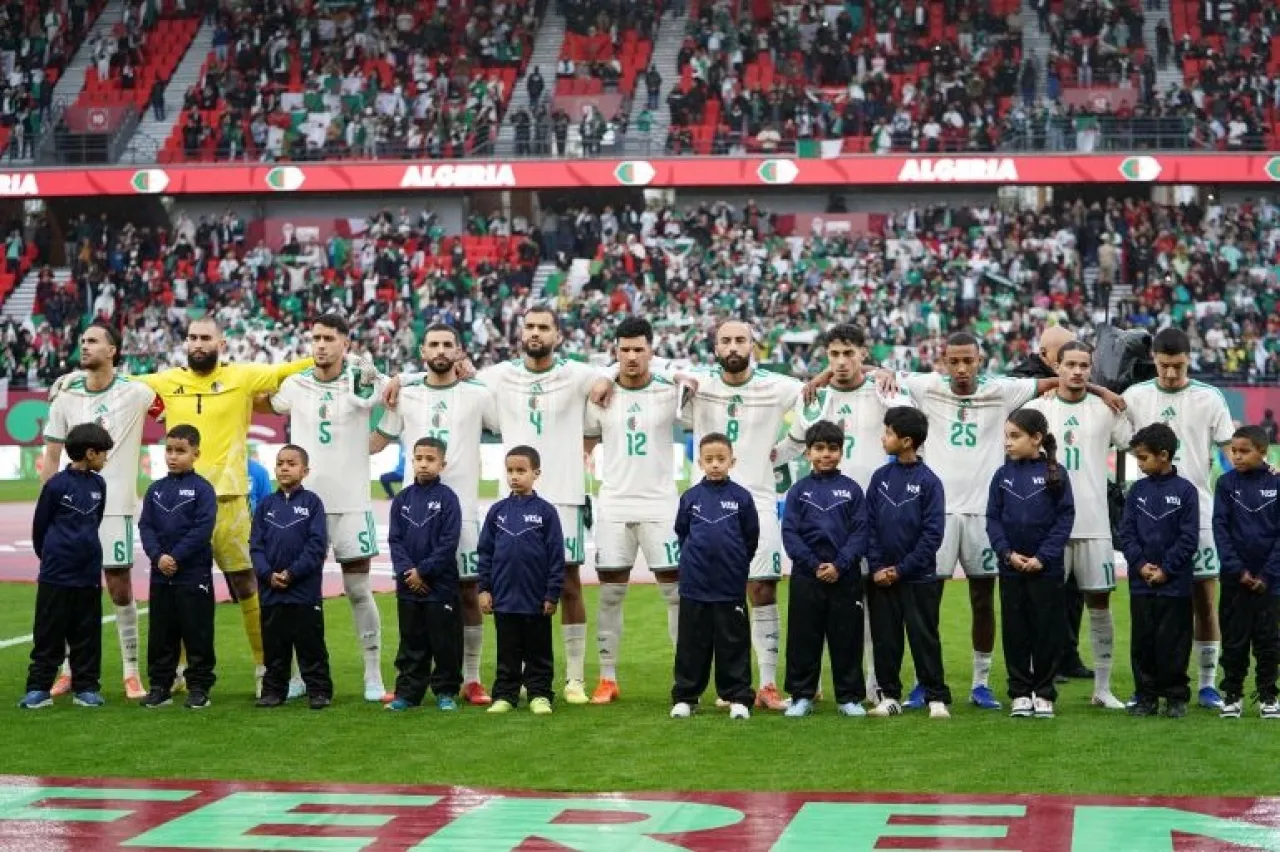
Khaberni - Two decades ago, a new and strange phenomenon emerged, but over time it became one of the usual rituals of soccer matches, which is the players entering the field accompanied by children.
This scene has become a major attraction in matches, with some children even stealing the spotlight from the stars of the game, whether by a humorous gesture, a spontaneous reaction, or an expression filled with wonder, joy, and sometimes shock and disbelief, especially when it involves standing next to great players like the Argentine Lionel Messi, Portuguese Cristiano Ronaldo, or French Kylian Mbappé, among others.
In the following lines, we will shed more light on this phenomenon, which many view as wonderful and beautiful. When did it start? Who are these children? And how are they selected?
The tradition of players entering with children before matches
The phenomenon of accompanying children into stadiums first occurred in 1999 before the FA Cup final between Manchester United and Newcastle United, where two children, one with each team, entered the field with the players.
Approximately a year later, the number of children entering the pitch doubled during the UEFA Euro 2000, hosted by the Netherlands and Belgium, as it was decided that each player would accompany a child before some matches.
This phenomenon took on a global dimension after children entered the pitch with players during the 2002 World Cup finals held for the first time in two countries, South Korea and Japan, following a joint campaign between FIFA and the United Nations International Children's Emergency Fund "UNICEF".
This campaign, titled "Say Yes to Children," aimed to protect children's lives globally and draw the leaders and heads of the state to the need to enhance their rights and thus attempt to reduce poverty rates and inequality.
During the 2002 World Cup, 11 children entered the field with each team before each match wearing jerseys with "FIFA/UNICEF" logos and the campaign title. Since then, this has become a traditional practice in many continental tournaments such as the UEFA Champions League, and in domestic leagues across most continents.
It should be noted that this tradition is not obligatory; it is not related to any law or regulation and depends on the national team or club's desire to do so before matches.
How are the children chosen?
According to the Spanish site "Eltiempo," many clubs have agreements with non-profit child organizations, and thus the latter are responsible for choosing the children.
At the same time, other clubs specifically select talented children from their academies, a practice that has become more common recently, just as it happened in a video that went viral on social media showing Spanish prodigy Lamine Yamal of Barcelona when he was a child holding hands with his compatriot, the veteran Sergio Ramos, before one of the Clásico matches between "Barça" and Real Madrid.
Recently, widely circulated photos showed promising Egyptian player Hamza Abdel Kareem, who recently moved to Barcelona, accompanied by Senegalese star Sadio Mané during one of "The Lions of Teranga" matches in the Africa Cup of Nations 2019 held in Egypt.
Meanwhile, the British "Telegraph" uncovered another aspect of the story, reporting in 2020 that some English league clubs exploited this tradition negatively, making them subject to severe criticism.
The newspaper reported that some clubs, like West Ham United, charged fees up to more than 700 euros (about 756 dollars) paid annually by the parents of children who were club members, who wanted to see their children next to the players as they entered the field before matches began.
Meanwhile, there are clubs that do this for free, based on a draw conducted by the administration to select children from club members.
Human and commercial aspects
Some clubs have exploited this phenomenon to enhance their image and present themselves as community-minded institutions that care generally about children’s rights, particularly those with disabilities.
Sometimes the clubs host a sick child or one with physical disabilities or even a homeless child, allowing them a close view of the players and an opportunity for a friendly chat before they take them to the stands to watch the game among the fans.
This phenomenon has not been spared from commercial exploitation either. McDonald's sent approximately 1408 children to the 2014 World Cup finals in Brazil to engage them in football-related activities and the World Cup, which was ostensibly the reason, while the main goal was to promote its brand globally.
Why do players walk with children?
On the other hand, the players appear to be extremely happy holding hands with the children, often playing with them, joking, laughing, and patting their heads.
These simple acts increase the player's standing with the fans, making him appear as a role model and showing he has a strong "human sense" towards this group. This also helps him to become an ambassador for some of the charitable organizations that implement humanitarian projects to protect and enhance childhood, which also boosts his financial status in banks.