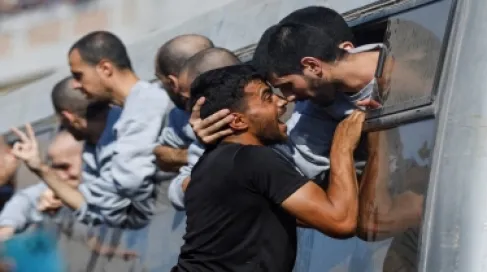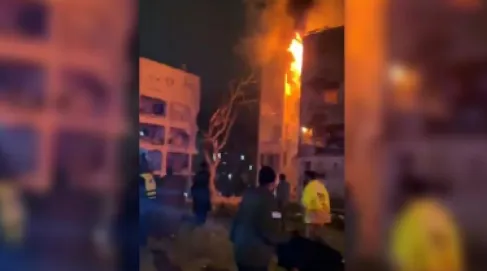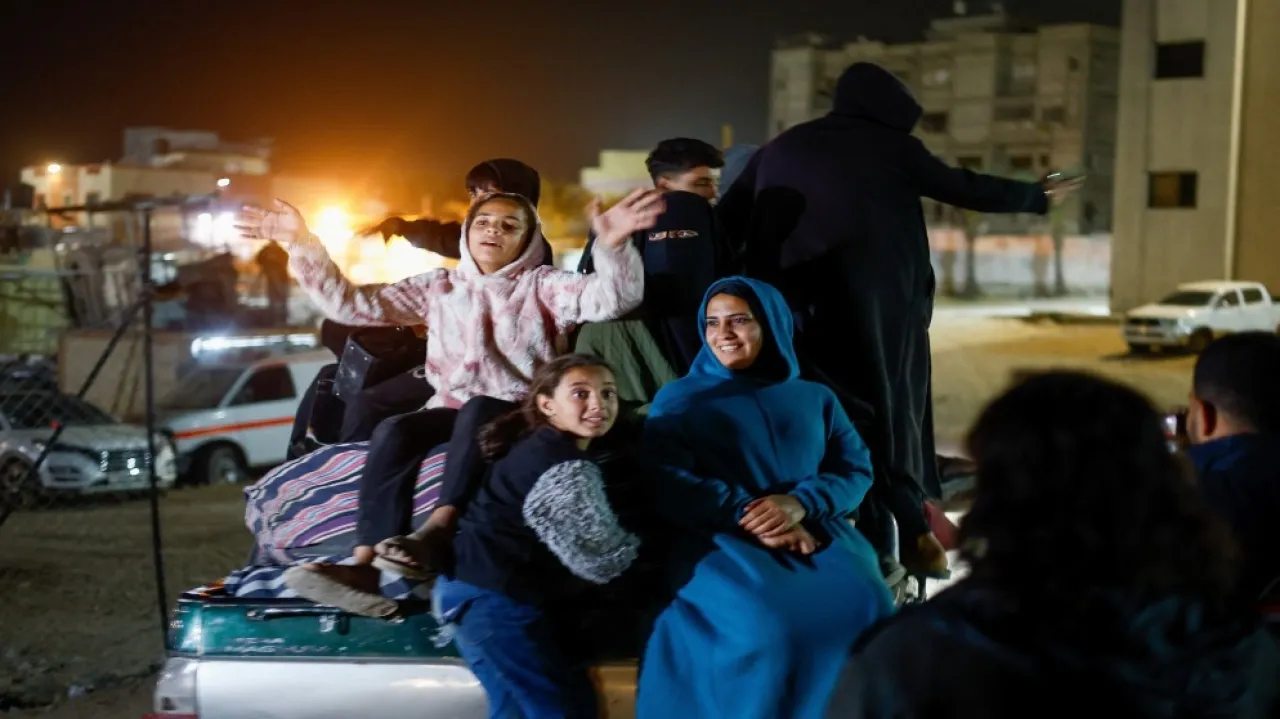
Khaberni - Palestinian women said, among the few who were allowed to return to Gaza after Israel reopened the Rafah crossing under a ceasefire agreement reached last year, that the Israeli occupation forces blindfolded them, handcuffed them, and interrogated them during their return journey to Gaza.
One of the women mentioned that their journey from Egypt on Monday through the border crossing and passing through the "yellow line" area, controlled by Israel, faced long delays and confiscation of gifts including toys.
Huda Abu Abed (56 years old) said over the phone from the tent where her family lives in Khan Yunis in southern Gaza Strip, "It was a night of terror, humiliation, and oppression."
Her account was confirmed by the narration of another woman and comments from a third woman.
The Israeli army denied that its forces acted inappropriately or mistreated the Palestinians when crossing into Gaza, but did not address the specific claims made by the two women interviewed.
Interrogation
About 50 Palestinians were expected to enter the sector on Monday, and by night, Palestinian and Egyptian sources said that only three women and nine children were allowed to pass, and 38 others were still stuck waiting to pass security procedures.
Among the 50 Palestinians waiting to leave Gaza, most of them to receive medical treatment, only five patients with seven of their relatives managed to cross the border into Egypt on Monday.
Huda said that the returnees, who were limited to one suitcase each, initially faced problems at the crossing; European border monitors confiscated the toys they were carrying as gifts.
Abu Abed spent a year in Egypt receiving treatment for a heart condition but returned before fully recovering; due to her longing for her family.
Her daughter also traveled to Egypt for treatment. She said that her son was martyred in December 2024 and she could not bid him farewell, explaining that she has two other children in Gaza.
Once they crossed the border and reached Gaza, the twelve returnees boarded a bus through an area controlled by Israel and through the "yellow line" that separates the areas controlled by Israel and Hamas.
Another woman named Sabah al-Raqab, 41 years old, said that the bus accompanied by two SUVs, stopped at a checkpoint guarded by Palestinian gunmen who identified themselves as belonging to the Popular Forces, known as Abu Shabab group.
Sabah and Huda said that their names were called through a loudspeaker and each was led by two men and a woman from Abu Shabab group to a security point where the occupation forces were waiting for them. Then their eyes were blindfolded and their hands were tied.
They said they were questioned about their association with Hamas and the attack of October 7, 2023, and other matters.
Sabah, who returned to her seven children living in a tent after leaving Gaza two years ago on what she expected to be a short medical treatment trip, said, "The officer asked me why do you want to return to Gaza when it is destroyed, I told him I'm returning because I want to be with my children and family."
Huda said the interrogation lasted more than two hours.
In a statement denying any wrongdoing, the Israeli army said it did not detect any incidents related to inappropriate behavior, mistreatment, arrests, or property confiscation by the Israeli security establishment.
It added, "There is an identification and screening process at the Rigavim examination center managed by the security establishment in an area controlled (by the Israeli army)."
It explained that the process is similar to the screening conducted by European officials as part of an agreed-upon mechanism by all parties.
About 20,000 Palestinians from Gaza hope to travel abroad for treatment. Despite the slow reopening of the crossing, many of them said that this step brought them relief.