Khaberni - Amid escalating tensions between the United States and Iran, the issue of a naval blockade has resurfaced as a possible tool of pressure on Tehran.
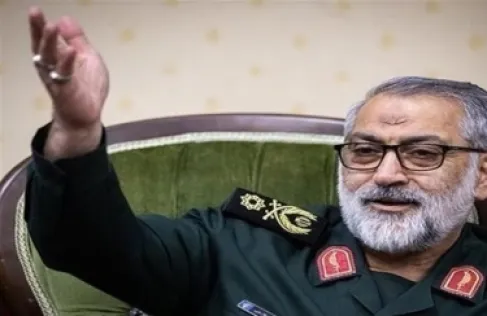
However, the Iranian response was sharp and direct, as the Iranian Chief of Staff, Abdul Rahim Mousavi, warned that any military escalation or attempt to impose a blockade on his country would ignite flames "that burn America and its allies," asserting that Iran is "a strong and extensive country that cannot be blockaded."
In a notably escalating tone, Mousavi emphasized that those who talk about imposing a naval blockade on Iran "need to revise their lessons in geography and geopolitics," referring to the complexities of Iran's geographical location and its regional and international entanglements.
These statements open the door to fundamental questions: Can a naval blockade actually be imposed on Iran as has happened with other countries like Venezuela? Or does Iran's geopolitical location, and its indirect control over the Strait of Hormuz, make any potential blockade an adventure that not only crosses Iranian borders but impacts the global economy as a whole, arguably constituting a "blockade of the world"?
The Danger of Blockade
International security researcher Aref Dehghandar explained that imposing a naval blockade on Iran is not a simple practical option, but rather it is linked to geopolitical realities and complex strategic calculations.
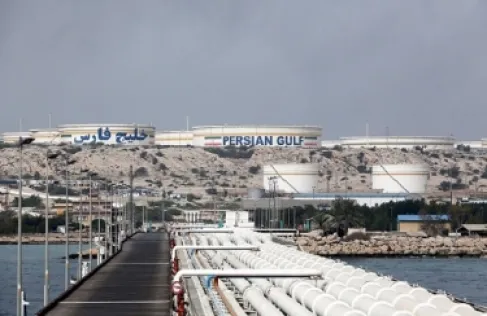
He added that Iran enjoys a strategic location that allows it to control the Persian Gulf, the Sea of Oman, and the Strait of Hormuz, which is a vital energy corridor.
He added that unlike countries like Venezuela, which have limited and controllable access to the sea, Iran owns long coastlines, multiple ports, strategic islands, and significant operational depth at sea.
Therefore, imposing a naval blockade on Iran is not only difficult and costly, but it may have repercussions that affect regional security and the global economy, according to the researcher.
Dehghandar pointed out that Iran always emphasizes that it does not seek to escalate tensions in its southern waters, and that the preferred option is a diplomatic solution.
However, he added that if the United States continues its maximum pressure policy, or adopts a blockade or military action, Iran’s response - from a military planners' perspective - would be an inevitable reaction in defense of its existence and survival.
The researcher clarified that this perception of existential threat - as reflected by Iranian leadership warnings about the risks of any conflict turning into a regional war - can be understood through the lens of neoclassical realism, where international pressures - through leaders' perception - translate into foreign policy strategies and tactics.
In this context, Iran’s deterrent tools - according to Dehghandar - include smart control over the Strait of Hormuz, asymmetric naval capabilities, strategic islands, coast-to-sea missiles, and a network of fast boats, designed for deterrence rather than escalation, aimed at preventing conflicts through enhanced deterrence capabilities.
Naval Maneuvers
On his part, and in a comment concerning the possibility of imposing a naval blockade on Iran and its potential responses; Professor of International Relations Jawad Hirean Nia explained that there is a technical aspect to what the United States can do.
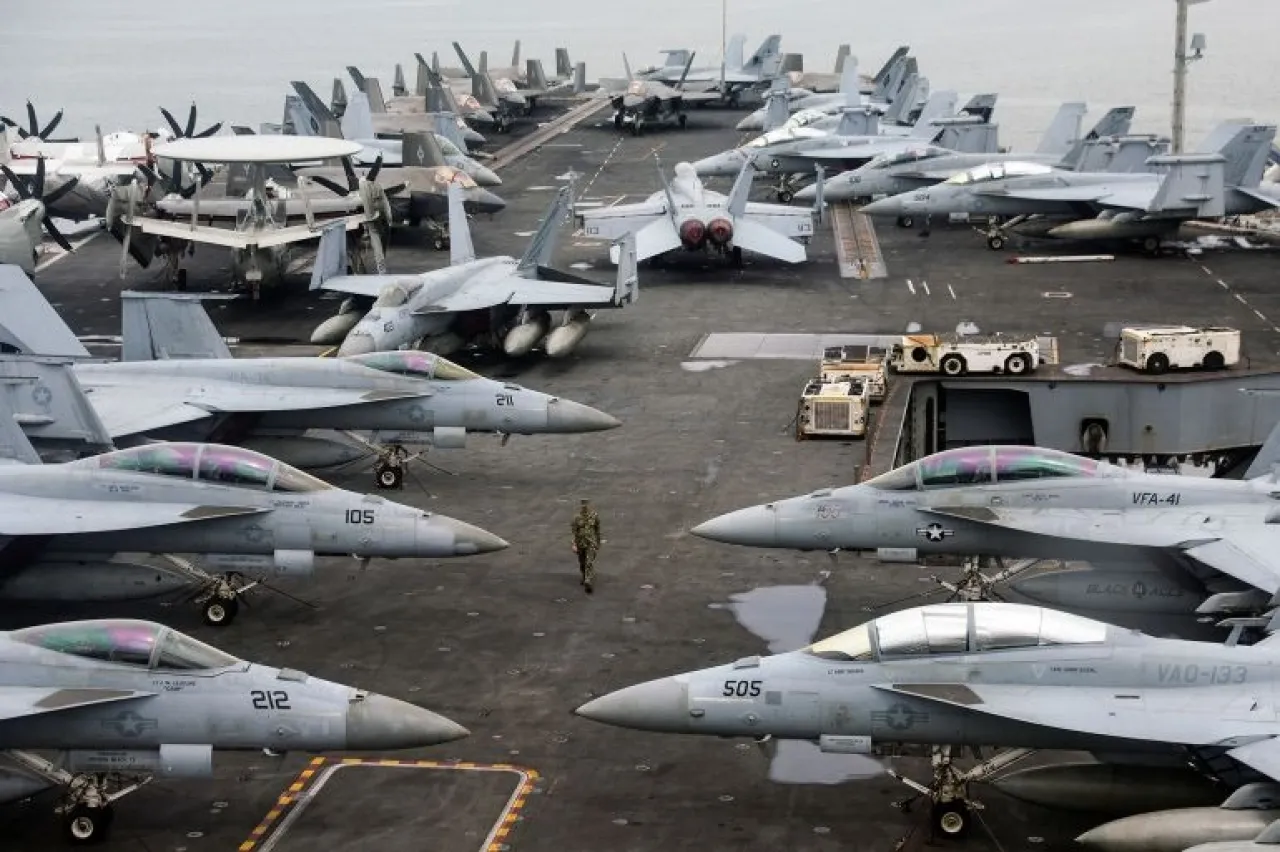
He said that America is technically - to a large extent - capable of imposing a naval blockade on Iran in the Persian Gulf and the Sea of Oman, by deploying its fleets in remote areas like the Indian Ocean and the Sea of Oman, away from the range of Iran's missiles, and threatening Iran from these positions.
But he added that the main issue lies in Iran's reaction. According to him, Iran - has a strong naval force equipped with fast boats and ships prepared to confront American fleets, unlike Venezuela which can be blockaded easily, according to Al Jazeera.
He also mentioned that Iran's allies in the region - like the Houthis in Yemen - can impact the Bab al-Mandab Strait making navigation unsafe, harming global navigation and increasing pressure on the United States to retreat from any blockade.
He added that these movements coincide with Iran's warnings for the first time about the possibility that any military confrontation could turn into a regional conflict, as Iranian officials - like the Foreign Minister Abbas Araghchi - have stressed that any war would bring instability to the entire region.
Regarding the possibility of closing the Strait of Hormuz, Hirean Nia explained that Iran controls the northern part of the strait, and has a joint presence with Oman in the southern part, which enhances the possibility of making the strait unsafe according to an extreme scenario, but doing so would be very costly and would affect oil and energy exports and global navigation, possibly leading to an increase in energy prices.
He also mentioned that the American blockade would not be able to stop Iranian oil exports completely, as Iran could export its oil through the Sea of Oman or via neighboring countries, but the blockade could significantly reduce the volume of its exports and adversely affect its economy.
The Diplomatic Option
In conclusion, the analysis highlights that imposing a naval blockade on Iran is not just a matter of technical or military aspects, but is linked to complex geopolitical and strategic balances.
While the United States has the ability to pose a maritime threat, Iran's naval power, regional alliances, and ability to affect navigation in the Strait of Hormuz and Bab al-Mandab, make any blockade risky and costly. Moreover, any military escalation could extend across the region and affect the stability of global energy markets, according to analysts.