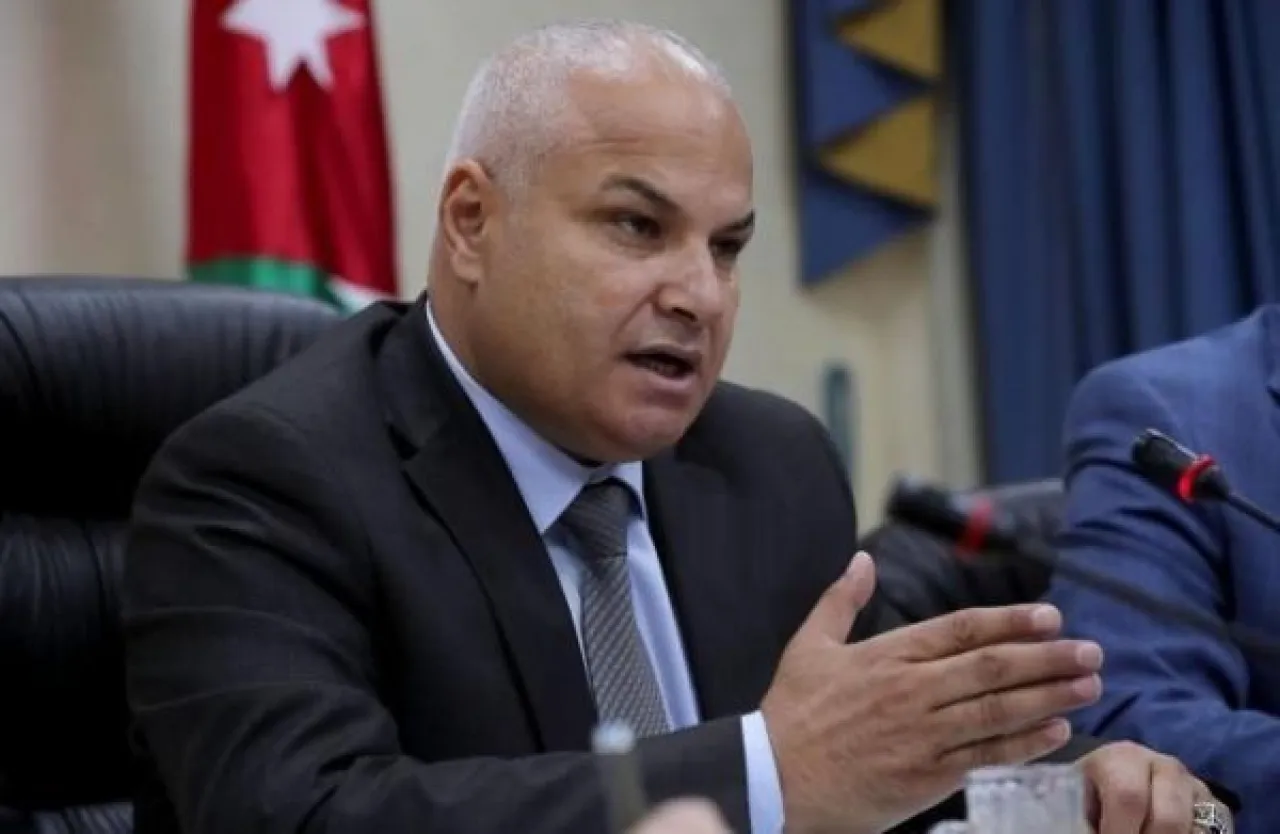
Khaberni - The Minister of Labor and Chairman of the Board of the Social Security Corporation, Khaled Al-Bakkar, stated that 54% of the workforce in Jordan is employed in the informal economy, while the informal economic activity represents about 27.4% of the gross domestic product for the year 2020.
This was stated during his sponsorship of the closing ceremony of the Sustained++ program on Monday, which was implemented by the Social Security Corporation in partnership with the International Labour Organization with support from the United Kingdom, the Kingdom of Norway, and the Kingdom of the Netherlands, celebrating the results and achievements that expanded coverage in social security and enhanced the transition to the formal economy,
Al-Bakkar affirmed that this represents one of the most significant challenges facing the labor market in Jordan, in addition to changing work patterns and the skills required by local and regional markets.
He explained that the Sustained++ program represents the project "Transition to the formal economy through social security registration," which has enriched Jordan's experience in providing necessary incentives to expand the social security coverage base and increase social benefits that contribute to the gradual transition from the informal to the formal economy.
He indicated that the economic modernization vision for the period 2022-2033 was set to address challenges facing the Jordanian economy, under the slogan "A better future," based on two strategic pillars: unleashing full economic potential and enhancing the quality of life for all citizens, focusing on sustainability in all its forms, aiming to integrate over one million young men and women in the labor market during its implementation and targeting an economic growth rate of 5.6%.
He pointed out that recently, under the royal patronage, the second phase of the economic modernization vision and the implementation program for the period 2026-2029 was launched, which included 25 sectors and 8 engines, among these engines are "urban development and quality of life and women empowerment and social protection," emphasizing the importance of social protection for the Jordanian government and its provision for everyone, especially achieving the transition to the formal economy, through social protection tools including social security.
Al-Bakkar emphasized the necessity of devising effective solutions to address how to organize workers in the informal economy by providing a decent work environment through a clear and measurable plan, where the Ministry of Labor, in cooperation with partners, has proposed including measures and programs that contribute to stimulating the private sector to respond within the social protection programs coverage base.
He clarified that the Social Security Corporation has leveraged all its capabilities, including the Sustained++ program, which offered subsidy support for subscriptions and inclusion incentives for about 46,000 workers totaling about 24 million Jordanian dinars, in addition to social protection programs linked to maternity insurance such as the Care program, reduced subscriptions system, inclusion of craftsmen and professionals through the tier system, inclusion through flexible work, and programmed campaigns to raise awareness of social security and the importance of occupational health and safety.
In turn, the Deputy Head of Mission at the Embassy of the Kingdom of Norway to Jordan, Anneken Kleveland-Jasser, stated that "Sustained++" highlights the role of directed and time-limited incentives when applied by strong national institutions in achieving tangible results for workers and employers.
Meanwhile, the Deputy Head of Mission at the Embassy of the Kingdom of the Netherlands, Pieter de Vries, affirmed that the project is in line with broader developmental efforts saying: The Netherlands continues to stand by Jordan in its efforts to host Syrian refugees through the Partnership Horizon, through which we provide our support to the "Sustained++" program, which is based on our commitment to finding sustainable and long-term solutions that enhance social protection systems and support decent work for all, especially the most vulnerable groups, and we are proud to support a program that actually makes a real and sustainable difference in the lives of a significant number of workers and employers.
In a related context, Melissa Butler, the Social Protection Officer and Social Development Advisor at the British Embassy, emphasized the importance of social protection for all workers, pointing out that empowering low-income workers to access social security is essential for protecting families from unexpected shocks and supporting their well-being throughout life stages, through the "Sustained++" program.
She affirmed the role of the United Kingdom in supporting efforts to improve daily life for individuals and enhance the social protection system in Jordan in a sustainable and inclusive manner.
For her part, Amal Mowafi, the ILO Coordinator in Jordan and the Regional Policy Advisor for the International Labour Organization, expressed appreciation for the Social Security Corporation, the Jordanian government, and development cooperation partners, the United Kingdom, the Kingdom of Norway, and the Kingdom of the Netherlands, for their strong partnership and ongoing support.
She affirmed that "Sustained++" is an important milestone within the broader framework of partnership shared between the International Labour Organization and the Social Security Corporation, working towards a more protective, inclusive, and resilient social security system in Jordan, adding that the approach initiated through the program supports Jordanian national efforts to expand the social security coverage umbrella and ensure that social protection systems are inclusive, sustainable, and aligned with international labor and social security standards.
"Sustained++" targeted wage earners in establishments and self-employed individuals working within the informal economy, by reducing financial barriers to joining social security, offering inclusion incentives and support for social security subscriptions for one year, alongside face-to-face and media awareness campaigns, where the awareness campaigns based on principles of behavioral sciences led to an increase in the social security subscription rate by up to 14% during the implementation of these campaigns, while cooperation with the International Social Security Association transferred Jordan's experience to the global dialogue on developing effective social protection systems through showcasing international experiences in providing subscription support.
The closing ceremony highlighted prominent success stories and major achievements and lessons, in addition to the program's contribution to enhancing the social protection system in Jordan and bolstering institutional capacities through practical business models to expand the social protection umbrella and encourage the transition to organized work.