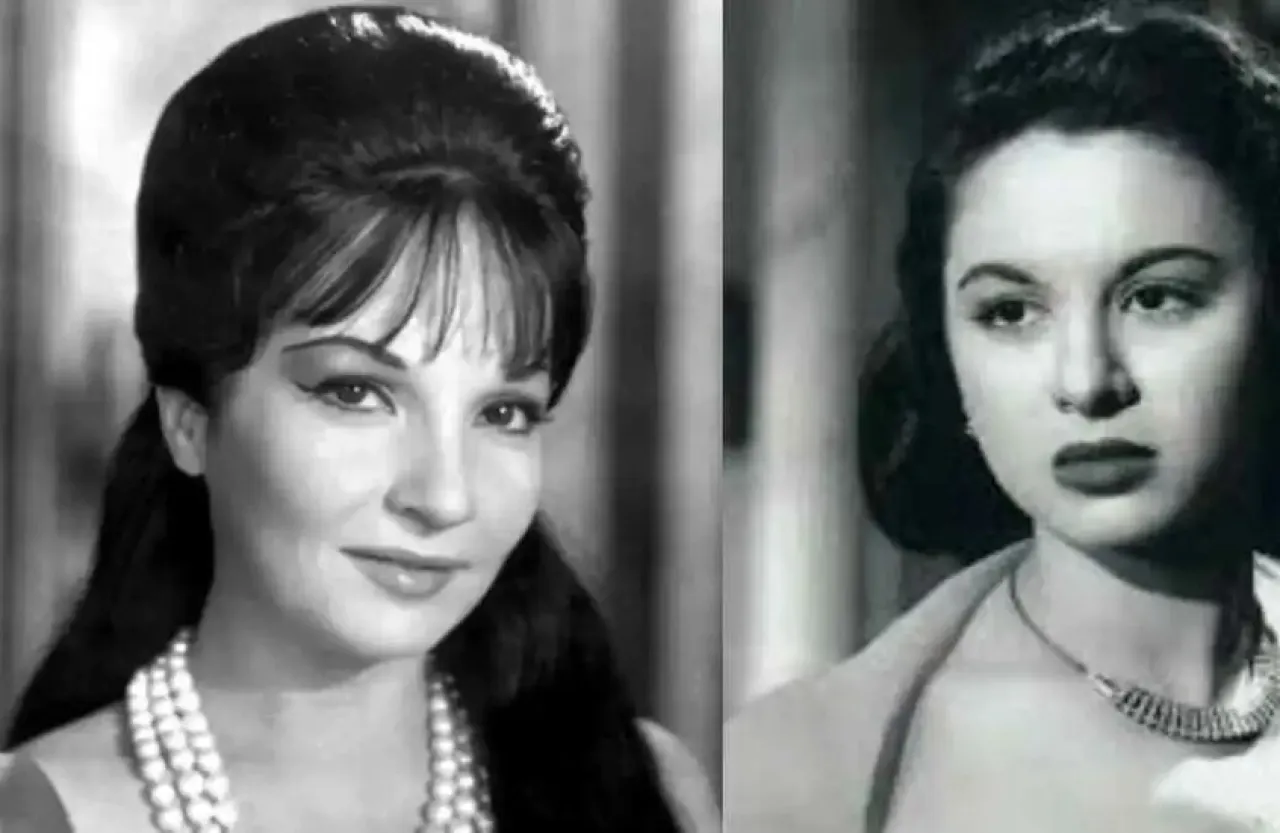
Khaberni - The Federation of Artistic Syndicates, which includes the acting, musical, and cinematic unions in Egypt, has decided to refer the composer Hany Mehanna to the disciplinary council.
This decision comes in the backdrop of derogatory statements he recently made against prominent figures in Egyptian art, including the great artist Shadia and the actress Faten Hamama.
Sayed Mahmoud, the advisor to the Federation of Artistic Syndicates, explained that a meeting was held involving director Omar Abdul Aziz, Dr. Ashraf Zaki, the head of the actors' union, Masad Fouda, the head of the cinematographers' union, and artist Mostafa Kamel, the head of the musicians' union, to discuss the crisis of Mehanna's statements, and concluded with the decision to refer him to the disciplinary council of the musicians' union to decide the appropriate penalty according to union regulations, whether by deletion or imposing a financial fine.
This decision aligns with a previous resolution issued by the Supreme Council for Media Regulation, chaired by Engineer Khaled Abdel Aziz, to refer the composer to the Federation of Artistic Syndicates for disciplinary action, after the General Administration for Monitoring at the Council recorded his statements which included insults and attacks on Egyptian art icons during his appearance on a television program. The council also obligated all media outlets subject to the provisions of Law No. 180 of 2018 to prevent his media appearances until the union completes its disciplinary procedures.
The decision is based on what was monitored by the General Administration for Monitoring at the Council, and the recommendations concluded by the Complaints Committee chaired by the media figure Essam El-Amir, and the Council’s Vice-Chairman, which found violations that conflict with the professional and ethical values recognized in the artistic and media community.
Egyptian writer Khaled Montaser attacked his compatriot, the composer Hany Mehanna, against the backdrop of controversial televised statements made by the latter regarding the late artists Shadia and Faten Hamama.
Montaser expressed his dismay at what was stated in Mehanna's discussion, who claimed that Faten Hamama had refused to perform a duet with Shadia many years ago, despite the latter's request.
Montaser, in a post on his official Facebook page, stated that the remarks attributed to the composer Hany Mehanna exceeded the bounds of propriety, particularly the inappropriate language he said was attributed to the late artist Faten Hamama in her response to the request of the late Shadia.
Montaser emphasized that what Hany Mehanna recounted during a televised interview was completely untrue, clarifying that Mehanna narrated a story claiming that Shadia had asked to sing with Faten Hamama after a previous dispute, only to receive a refusal accompanied by an inappropriate phrase, which Montaser deliberately did not explicitly mention in his post.
The composer Hany Mehanna broke his silence to respond to the widespread controversy recently raised about statements attributed to him concerning a number of stars and icons of art in his golden era, topped by the artists Shadia and Faten Hamama, which sparked a wave of criticisms within the artistic community and among the public.
Mehanna, in subsequent statements to local sites, confirmed that he did not intend any insult or offense in any way, stressing his full respect and great appreciation for the value and history of Egyptian art icons, explaining that the statements circulated were taken out of context and misunderstood, according to him.
This was not the first time that the composer Hany Mehanna stirred controversy with media statements, as he had previously topped search engines on several occasions due to his talk about his time in prison, where he revealed in television interviews his detention period in Tora prison on a case dating back to past years. During those interviews, he discussed being in the same cell with Alaa and Gamal Mubarak, and spoke about daily details inside the prison, which at the time elicited mixed reactions between those who saw them as mere personal testimonies, and others who viewed them as straying from the artistic context and entering sensitive political territories.
His statements about his relationship with his former wife, artist Samira Said, also sparked widespread controversy earlier, after he elaborated about the details of their marriage and separation, delving into personal details, in addition to discussing their attempts at conceiving and treatment, which were then described as highly private and not fitting with the nature of their former relationship.