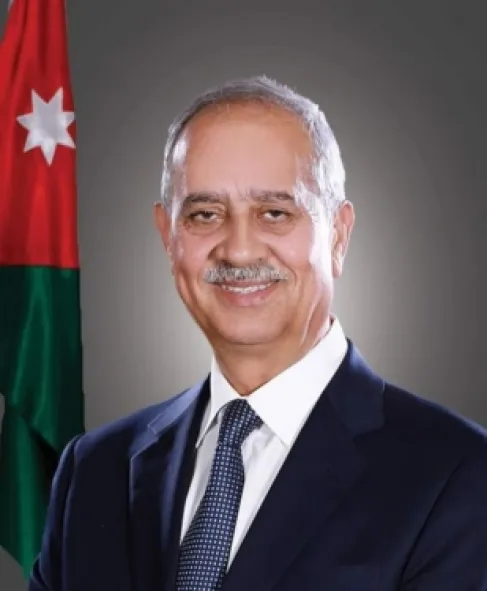
Al-Sharkas: The first executive program for the economic modernization vision contributed to enhancing the growth momentum, encouraging investment, and deepening the partnership with the private sector.
Expectations of national economic growth rising to 3% in 2026 with the commencement of major infrastructure projects, and exceeding 4% in 2028.
Foreign reserves at the Central Bank increased to $28.5 billion at the end of January 2026, sufficient to cover more than ten months of the Kingdom's imports of goods and services.
The monetary policy of the Central Bank of Jordan has proven successful in maintaining monetary and financial stability, thus supporting the economy's capacity to grow within a balanced and sustainable framework.
Inflation stability at a level below 2% in 2025, with expectations of it remaining around this rate in 2026.
The Jordanian banking sector demonstrated high resilience and robustness in facing the surrounding circumstances, and played a central role in supporting growth and the stability of the national economy.
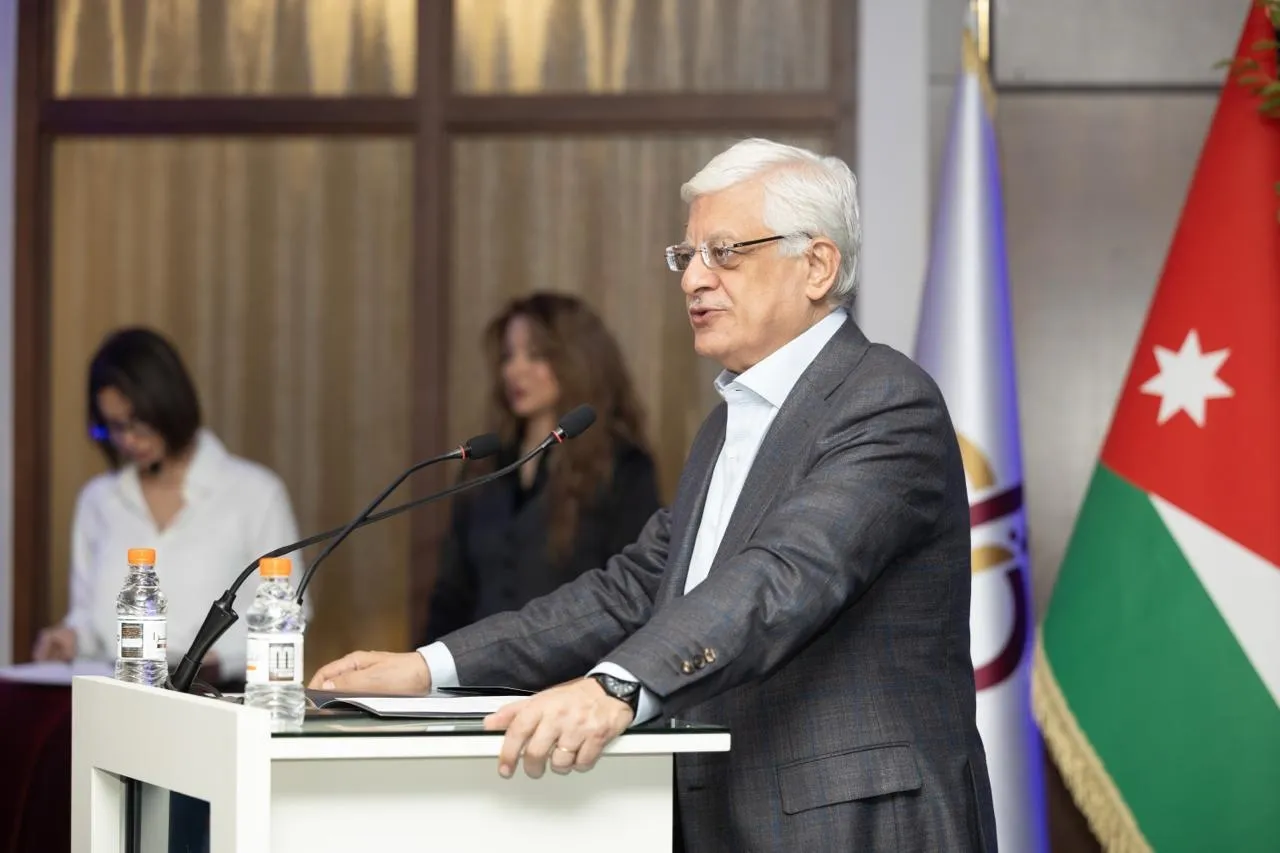
Al-Salem: The banking summit is a major annual milestone for strategic dialogue on the future of the banking sector and a platform for exchanging visions.
Al-Salem: International reports and credit rating agencies’ assessments confirmed the solidity of the Jordanian banking system, its stability, and its ability to withstand shocks.
Khaberni - The Association of Banks in Jordan held the banking summit for 2026 titled "Crafting the Future of Financial Innovation," under the patronage of Dr. Adel Al-Sharkas, Governor of the Central Bank of Jordan, with wide participation from leaders of the banking and financial sector and experts from local and international institutions. The summit convenes at a time when the world is experiencing rapid economic changes, necessitating the need to enhance flexibility and adaptability to these changes. A series of economic and financial issues were discussed at the global and regional levels during the summit, which were attended by participants discussing the prospects of the global and regional economy and its reflections on the national economy, in addition to discussing several banking issues, chiefly the future of banking in an era of rapid digital transformation.
In his opening speech at the banking summit, Al-Sharkas said that the global economy faced intertwined conditions in 2025, including shifts in trade policies, particularly those related to tariffs, alongside regional and international geopolitical disturbances, noting that these conditions continue to reshape the global economic landscape under scenarios open to multiple possibilities, calling on everyone to maintain vigilance and flexibility, and close coordination between various policies, to enhance the resilience of the global economy and continue supporting sustainable development.
Al-Sharkas pointed out that 2025 was a test for the resilience of the Jordanian economy and its capability to adapt to these external conditions, explaining that the Jordanian economy continued to improve in economic growth, registering 2.7% in the first quarter of 2025, and 2.8% in both the second and third quarters of the year, after it registered a growth rate of 2.6% throughout 2024, emphasizing that this performance reflects the government's and national institutions' steadfast commitment to implementing a comprehensive reform agenda in the Kingdom, supported by the positive performance of many economic indicators, particularly those of the external sector.
Al-Sharkas confirmed the success of the monetary policy in achieving its goals of maintaining monetary and financial stability and supporting the economy's capacity to grow within a balanced framework, citing the strong performance of monetary indicators, where the foreign reserves of the Central Bank increased to $28.5 billion at the end of January 2026, covering more than 10 months of the Kingdom's imports of goods and services, and the dollarization rate decreased to 17.6% at the end of 2025. He added that the inflation rate in 2025 matched the Central Bank’s estimates, at a level below 2%, with expectations for it to stabilize around this rate in 2026, thus maintaining purchasing power and enhancing planning and investment environments.
Al-Sharkas praised the efforts of the Jordanian banking sector in implementing prudent governance and institutional discipline and managing risks wisely, noting that banks maintained their solidity, profitability, and stability despite the escalation of geopolitical uncertainties, market volatility, and the acceleration of financial innovation, which was clearly reflected in their financial results for 2025 and their continued role as a primary financing channel for economic sectors, indicating the growth in bank assets at the end of 2025 by 6.0% to reach 74.1 billion dinars, and the increase in deposits by about 7.1% to 50 billion dinars, along with a 3.7% growth in credit facilities reaching 36.1 billion dinars at the end of 2025. He also praised the efforts of the banking system in adopting modern digital solutions and financial technologies, benefiting from the advanced digital infrastructure provided by the Central Bank, making about 84% of banking services executed electronically without the need to visit bank branches. He pointed out that the value of transactions executed through national payment systems (eFawateerkom, Click, JoMoPay) exceeded 42 billion dinars during 2025, more than 100% of the total GDP, explaining that the Central Bank, recognizing the importance of keeping pace with technological advancements, launched in July 2025 the "Regulatory Framework for the Use of Artificial Intelligence in the Jordanian Banking Sector," aimed at providing regulatory guidance to help financial institutions adopt artificial intelligence technologies responsibly and judiciously.
Al-Sharkas highlighted that the Central Bank succeeded in completing all its projects within the first executive program (2023- 2025) of the economic modernization vision, confirming its continued role in enhancing digital transformation, cybersecurity, green financing, artificial intelligence, financial innovation, and developing future skills within the targets of the second executive program of the vision (2026-2029).
For his part, Basem Al-Salem, Chairman of the Jordan Banks Association, affirmed that the banking summit has become a major annual milestone for strategic dialogue on the future of the banking sector, and a platform for exchanging views on the economic and financial challenges at the regional and international levels, and reviewing pathways of development in the finance industry. He expressed gratitude towards the Governor of the Central Bank for his patronage and continued support for the banking sector.
Al-Salem explained that this year's summit convenes in a global environment characterized by increased risks and slowed growth in some major economies, against emerging newSize()='19 Athlete of the the tell his musterued that the key areas of discussion focus on the global economic outlook, macro and sectoral risks, and the future of banking in the context of rapid technological advancements, in addition to the role of sustainable financing in supporting economic growth in Jordan and the region.
He confirmed that the Jordanian economy has proven, over the past years, its ability to withstand and adapt to challenges, based on prudent monetary and fiscal policies, gradual structural reforms, and active partnerships between the public and private sectors, while the banking sector continues its pivotal role as a key lever for growth through financing productive sectors, supporting small and medium enterprises, enhancing financial inclusion, and adopting modern digital solutions.
Al-Salem added that international reports and credit rating agencies' assessments confirmed the robustness of the Jordanian banking system, its stability, and its ability to withstand shocks, emphasizing that the upcoming period requires doubling efforts to keep pace with global transformations in financial technology, data processing, and green financing, to ensure competitiveness and achieve a balance between stability and growth.
He concluded by affirming that the summit serves as a platform for responsible dialogue and exchange of expertise, expressing hope that its outcomes will contribute to providing practical ideas and constructive recommendations that support decision-makers and promote cooperation among various parties, aiming for a shared vision that shapes a prosperous future for the banking sector and the Jordanian economy.
The summit included a number of dialogue sessions, where the first session titled "Global Economic Outlook" featured a sovereig...