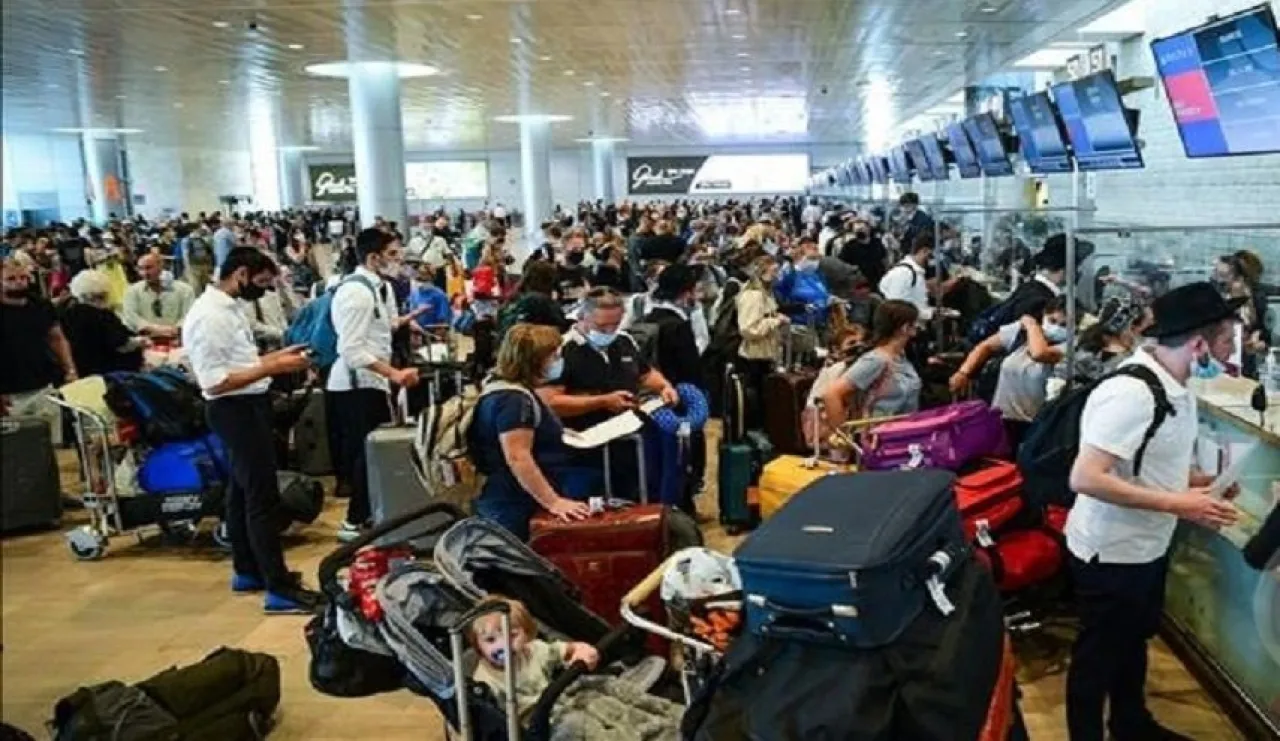
Khaberni - Amid the escalating regional tensions in the Middle East, and concerns about military developments between America and Iran, the global "Booking" site specialized in booking accommodation issued a notable warning to travelers wanting to book hotels in Israel, including major cities such as Tel Aviv, calling for pause and reconsideration before making a travel decision.
The warning from the Booking site comes amid escalating fears of a potential US attack on Iran, which could trigger a response from Tehran against Israel, thereby placing the country among areas "affected by conflicts".
The site urged tourists around the world to check travel advisories issued by their governments, to ensure a well-informed decision about staying in Israel, which contrasts with the efforts made by the Israeli government to revive the tourism sector suffering from a prolonged slump since the outbreak of war on Gaza in October 2023, amidst a severe crisis in Israel's hotel sector, especially in cities that were considered religious tourism hubs.
Cancellation despite Facilitation Measures
Alongside travel sites' warnings, the "Lufthansa" group announced an extension of cancelling night flights to and from Israel until the third of February, while the Spanish company "Iberia Express" decided not to operate night flights to Ben Gurion Airport until the sixth of the same month.
Similarly, the Dutch Royal Airlines retreated from a previous decision to resume its flights to Tel Aviv, and announced that it will not return to operating flights "until further notice," citing security situations and operational considerations, as reported by the Israeli newspaper Yisrael Hayom.
On the other hand, Israeli airlines - led by "El Al", "Arkia", and "Yisra Air" - announced a package of facilitations that include more flexibility in canceling and changing tickets, where travelers can now cancel their flights two or three days before the scheduled date in exchange for vouchers worth the ticket price, in an attempt to reassure customers and reduce the magnitude of cancellations.
In this context, the head of the Civil Aviation Authority in Israel, Shmuel Zakai, sent a message to foreign airlines, warning that the upcoming weekend could mark the beginning of a "sensitive period". He confirmed that air defense systems are on full alert, and coordination mechanisms between the relevant authorities are operating stably.
Zakai mentioned that in the event of airspace closure, priority will be given to flights of foreign airlines departing from Israel, as reported by Channel 12 Israeli.
Hotel Crisis
These warnings and decisions collectively reflect the growing concern among global travel and aviation companies, exacerbating an already faltering tourism crisis in Israel, and increasing pressures on the hotel sector facing one of its toughest stages, amidst the ongoing war and the declining international confidence in the country's security stability.
The hotel sector in Israel faced an unprecedented crisis during 2025, especially in cities that were considered major tourist hubs such as Tel Aviv, Jerusalem, and Nazareth, amid the ongoing effects of the war and the decline in the number of foreign tourists, especially in religious tourism.
According to data published by the Hotels Association and the Central Bureau of Statistics, the average hotel room occupancy rate nationwide fell to 53%, compared to 60% last year, 64% in 2023, and 70% in 2019, recording about 21 million hotel nights this year, a 7% drop from 2024, and 20% from 2023.
Gap between Sites and Tourists
The data, reviewed by The Marker economic newspaper, showed clear gaps between regions and major cities, revealing deep crises in some of the main tourist destinations for foreign visitors and Christian pilgrims.
According to the data, the city of Nazareth in Lower Galilee, which was considered one of the prominent Christian tourism stations, saw its hotel occupancy rate drop from 53% in 2023 to just 24% currently, an indicator of a sharp collapse and the extent of recession that has hit the city.
The situation is not much different in Jerusalem, where the occupancy rate dropped from 60% in 2023 to about 39% this year, while Tiberias in Upper Galilee is experiencing a similar situation, with occupancy falling to 40% after being 64% two years ago, reflecting the extent of the crisis and the disparity in its severity between different tourist cities.
In contrast, the city of Eilat continued to record relatively high occupancy rates, benefiting from its heavy reliance on domestic tourism, which mitigated the impact of the absence of foreign visitors who refrained from visiting the country due to security conditions.
Essentially, the crisis was mainly due to the near-complete absence of foreign tourists, who were driven by the war to leave Israel and avoid visiting it. In 2025, only about 1.34 million visitors entered the country, a sharp drop of 58.5% compared to 2023, according to official data issued by the Hotels Association in Israel.
This decline directly affected the hotel sector, as the nights spent by foreign tourists decreased by 59% compared to 2023, and by 74% compared to 2019, which was the peak of tourist activity, making 2025 one of the toughest years for the tourism and hotel sector in over a decade.
On the other hand, Israelis themselves recorded a decrease in interest in local hotels, with a total of about 17.8 million nights spent in hotels, a decrease of 14% compared to 2024, and 3% compared to 2023.
Security Tensions
The aviation and tourism journalist at The Marker newspaper, Hadar Kana, attributed this decline to two main factors:
A decrease in the number of nights spent by displaced persons from war zones after a reduced need for long stays in hotels.
An increase in the number of Israelis who prefer to spend their vacations abroad, contributing to deepening the recession within the local hotel market.
Regarding the escalation of travel warnings to Tel Aviv, Kana adds that "while Israel is striving to market itself as a stable and normal tourist destination, the warning from the Booking site reflects the complex security reality of the country and its international image as an active conflict zone."
She noted that "the exact timing of the current warning's appearance on the Booking site in Israel is unclear, as the company refuses to disclose the precise date of adding this note."
Kana speculated that the timing of its appearance is linked to the escalation of security tensions in the Middle East, and the uncertainty surrounding the potential of the United States and Israel directing an airstrike against Iran.