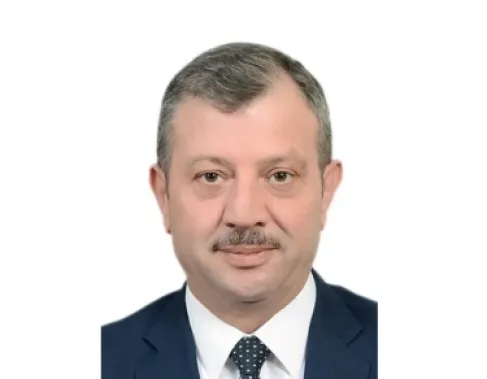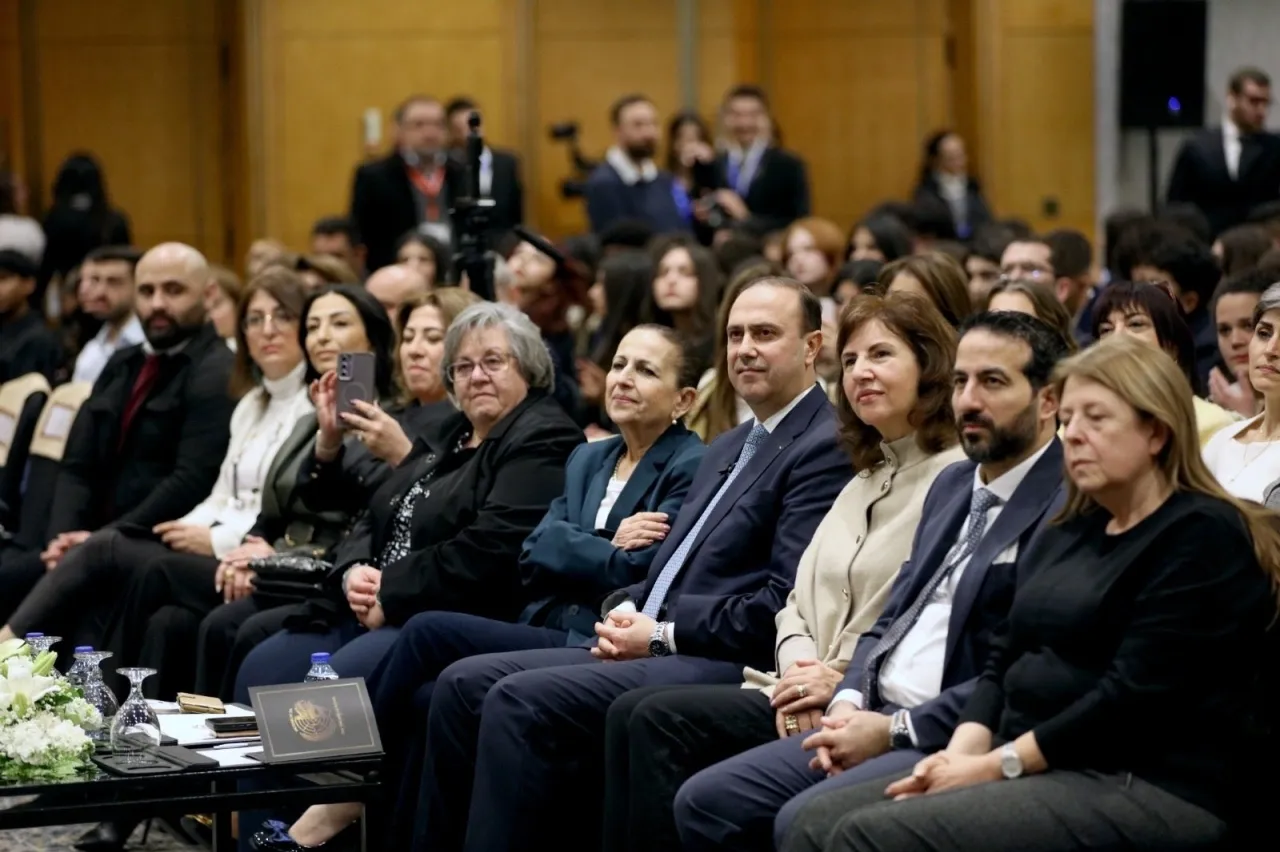
Khaberni - Representing Her Highness Princess Reem Ali, the Government Communication Minister and government spokesperson Dr. Mohammad Al-Momani sponsored the annual conference of the National School's Orthodox Model United Nations club, emphasizing that involving youth in public affairs and policy-making is a fundamental pillar in enhancing political and social stability, improving the quality of public decisions, and building more sustainable policies.
Al-Momani added that Jordan is demographically a young country, characterized by youth today by a high level of awareness and connectivity to the world, and their ability to understand the frameworks of public decision-making and the nature of politics as a management of interests and priorities—not as slogans or temporary stances, which necessitates the shift from treating youth as a target group in policies to active partners in shaping and developing them.
He affirmed that involving qualified youth in public work not only expands the participation circle but also enhances the level of public discourse based on understanding and accountability, proposing alternatives that bolster trust in institutions and support constructive criticism aimed at reform, and consolidating the concept of a national dialogue based on knowledge and responsibility.
Al-Momani pointed out that students' participation in Model United Nations conferences is not just a symbolic school activity but represents early training in public work in terms of understanding the balance of interests, managing disagreement, and dealing with the complexities of the political reality, noting that this experience provides youth with a deeper understanding of the nature of politics and its tools.
He explained that in managing their interests and protecting their stability, countries rely on a set of integrated tools including diplomatic, political, and media tools, while military tools remain the last resort that states resort to under specific frameworks and according to precise considerations.
He stated that these experiences contribute to building a politically aware mindset that recognizes that the strength of a state is not measured by slogans but by its ability to employ its various tools with awareness, responsibility, and within an institutional system governed by laws and national interest.
Furthermore, he added that the youth participating in these models acquire fundamental skills in the language of formal, political, diplomatic discourse, legal language, and the language of action and achievement, not slogans, which positively reflects on the nature of the public debate and the level of its awareness and contributes to producing a rational discourse based on truth.
Regarding digital media, Al-Momani confirmed that the sovereignty of states in the digital space has become a national necessity and a collective responsibility that requires awareness of the role of media as one of the tools for influence and public opinion building, emphasizing the importance of framing the presence of youth on digital platforms within a responsible understanding of public policies and the limits of discourse, which enhances the national narrative and transforms these platforms into spaces for constructive dialogue.
He also emphasized the important role of the Jordanian family in building awareness and responsibility among the youth as the first incubator for instilling values of belonging, dialogue, and discipline, noting that the political empowerment of youth is only complete with a supportive family and educational environment integrated with the role of institutions and the public sphere.
Al-Momani concluded by affirming that Jordan's stability and strength were never the result of coincidence but rather the product of wise leadership, established institutions, and long-term investment in the Jordanian human, explaining that involving youth in thinking about policies and manufacturing them represents a strategic choice for the state and one of the most important tools to maintain the gains of political and social stability.
On her part, the director of the National Orthodox School, May Al-Qasous, presented the goals of the Model United Nations club aimed at raising and building the capabilities of youth and empowering them with many cognitive, perceptual skills, and methods of resolving conflicts and dealing with challenges in the best ways.
The closing ceremony included a presentation of the experiences of the participants and the extent to which they benefited from the issues raised, and allowed them the opportunity to find solutions to the challenges according to the Model United Nations framework for dealing with global and regional issues.