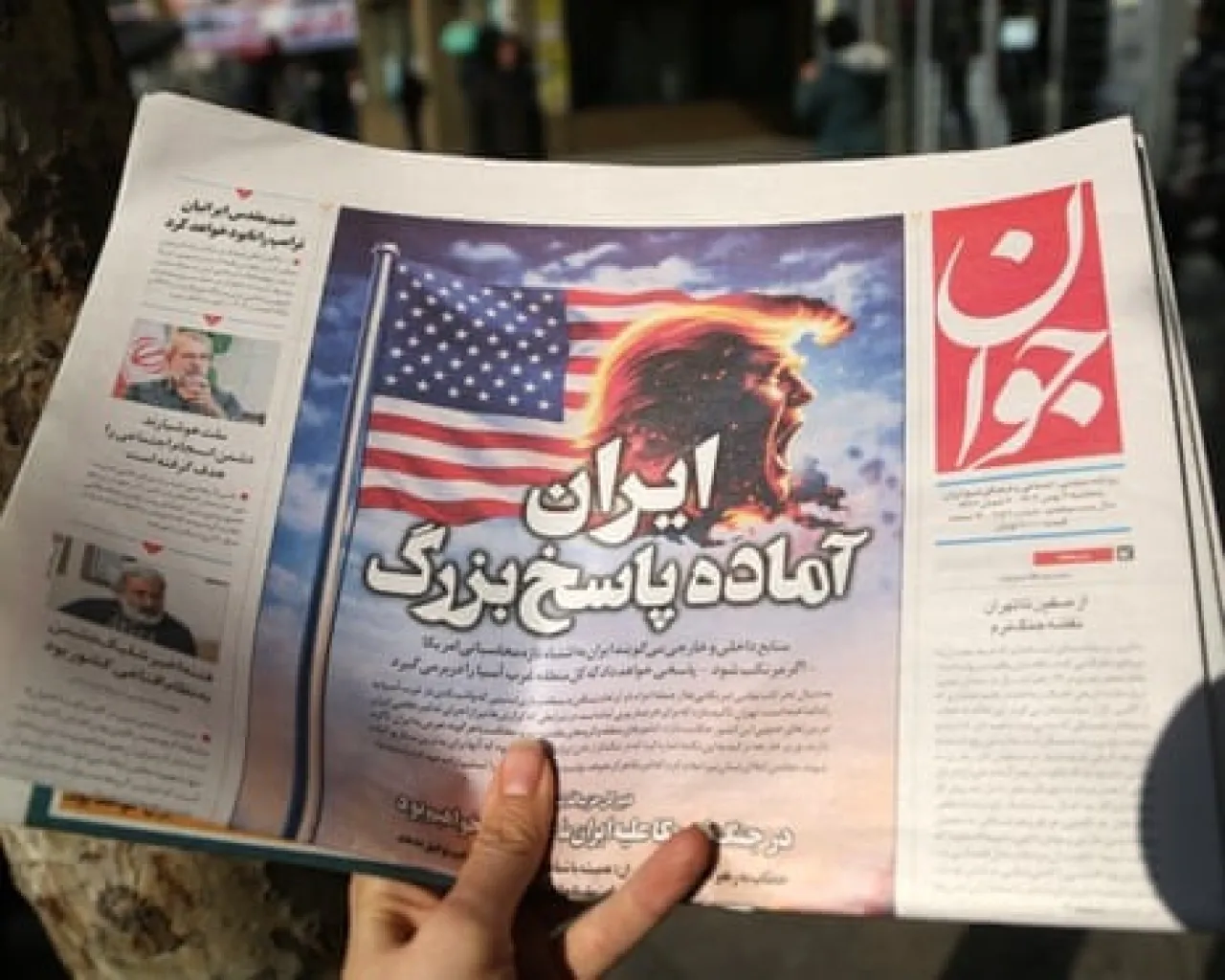
Iran is preparing for the possibility of being attacked by the United States at any time, while American President Donald Trump is considering a range of options, including limited strikes targeting government facilities to stimulate protesters to storm them, despite the skepticism of Washington’s allies about the effectiveness of such actions in overthrowing the regime, while Tehran threatens a comprehensive and strong response to any aggression, regardless of its size or scope.
Reuters reported on Thursday, citing multiple sources, that Trump is considering options against Iran that include targeted strikes on government institutions and security forces and leaders to support the protesters.
Two American sources familiar with the discussions said that Trump wants to create conditions for a "regime change" after accusing the government of "suppressing" the protests.
To achieve this, the sources said Trump is looking at options to target leaders and institutions held responsible by Washington for the violence, to give protesters the confidence that they can storm government and security buildings.
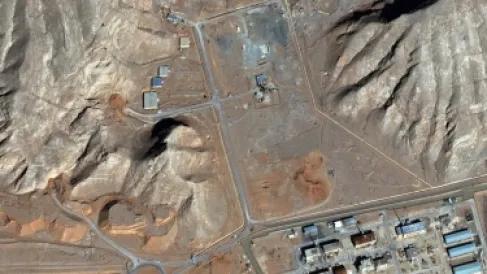
One of the American sources said that the options being discussed by Trump's aides also include a much larger strike intended to have a lasting impact, possibly against ballistic missiles capable of targeting U.S. allies in the Middle East, or uranium enrichment programs.
The other American source told Reuters that Trump has not yet made a final decision on how to deal with Iran, including whether to pursue a military path.
The arrival of an American aircraft carrier and warships to the Middle East this week has increased Trump's capabilities to take potential military action, after he repeatedly threatened to intervene.
A CNN official said that in case of action, Trump prefers to carry out a "strong and decisive strike" that would force Tehran to accept American terms to de-escalate, and he would ensure to declare a “quick victory” if orders for an attack are issued.
Iranian Alert for Military Confrontation
A senior Iranian official told Reuters that the country is “preparing for a military confrontation, while also using diplomatic channels at the same time,” but he considered that Washington “shows no openness to diplomacy.”
In a message to the UN Secretary-General, Antonio Guterres, the permanent Iranian representative to the United Nations, Amir Erooni, considered that Trump's “warlike statements” “lead to an escalation of regional tensions, an increased risk of miscalculation, and pose a direct threat to international peace and security,” according to the official Iranian news agency, IRNA.
The Iranian government “firmly rejects and condemns such warlike statements, which are characterized by irresponsibility and provocation, and are clearly in conflict with the fundamental principles of international law and the UN Charter,” he added.
Ali Shamkhani, advisor to the Iranian Supreme Leader, Ali Khamenei, threatened with an “unprecedented response” to any American attack, considering the idea of a “limited strike” as nothing but a “delusion.”
Shamkhani said on X: “Any military action by the United States, from any rationale and at any level, will be considered the beginning of a war, and the response to it will be immediate and encompassing, targeting the heart of Tel Aviv and all supporters of the aggressor.”
Iranian Foreign Minister Abbas Araghchi also warned on X, saying that the Iranian armed forces “are ready, and their fingers are on the trigger, ready for an immediate and strong response to any aggression.”
Araghchi added: “At the same time, Iran always welcomes a fair, mutually beneficial nuclear deal, established equally and without coercion and threats, ensuring Iran’s rights to peaceful nuclear technology, and ensuring it does not possess nuclear weapons.”
Negotiations on Iran's Nuclear Program
Sources told CNN that the United States and Iran exchanged messages earlier this month, involving the mediation of Omani diplomats, and communication between Araghchi and the American envoy Steve Witkoff, regarding the possibility of holding a meeting to avoid the American attack.
A brief discussion took place about holding a direct meeting, but it did not materialize, according to one of the sources. Another source added that there were no direct and serious negotiations between the United States and Iran, with Trump escalating his military threats.
According to The New York Times, the communications between American and Iranian officials showed the “fragility of the regime in Tehran”, indicating that Araghchi requested permission before contacting Witkoff, and eventually made his commitment through a third party, as direct official contact with the United States was not allowed.
An official familiar with those contacts told the newspaper that “Araghchi's powers seemed very restricted, amid an ongoing struggle for influence within the regime between the office of the Supreme Leader and the Revolutionary Guard, and the office of the President Masoud Pezeshkian."
In statements to reporters in Tehran, Araghchi said that “Iran did not request a meeting with the United States,” and that there had been “no contact between him and Witkoff in recent days.” He added that his country “has not made a decision on negotiating,” despite several countries' attempts to mediate between Tehran and Washington.
“Our position is that diplomacy cannot be effective under military threats,” he explained, adding: “If they want negotiations, they must drop the threats and excessive and unrealistic demands.”
Araghchi considered any war between Iran and the United States would be destabilizing for the entire region, noting the Middle East countries' opposition to it.
American officials told The New York Times that “there are no indications that Iran is ready to yield to Trump’s demands.”
Sources told CNN that the United States also demanded preconditions for any meeting with Iranian officials, including a permanent halt to uranium enrichment, new restrictions on Iran's ballistic missile program, and Iran’s cessation of full support for its regional proxies.
Retreat of the Wave of Protests
While Trump's plan in case of carrying out the strike aims to push Iranians to take over government headquarters, Reuters reported, citing four Arab officials, three Western diplomats, and a senior Western source knowledgeable of the discussions, that such strikes might weaken the protest movement instead of driving people to the streets, especially since the wave of demonstrations has subsided after thousands of casualties.
Alex Vatanka, director of the Iran Program at the Middle East Institute, said that "without extensive military defections, the Iranian protests remain heroic but less armed."
Trump urged Iran on Wednesday to come to the negotiating table and reach an agreement regarding “nuclear weapons,” warning that any future American attack would be “much harsher” than the bombing campaign that the United States conducted last June on three nuclear sites.
The USS Abraham Linco