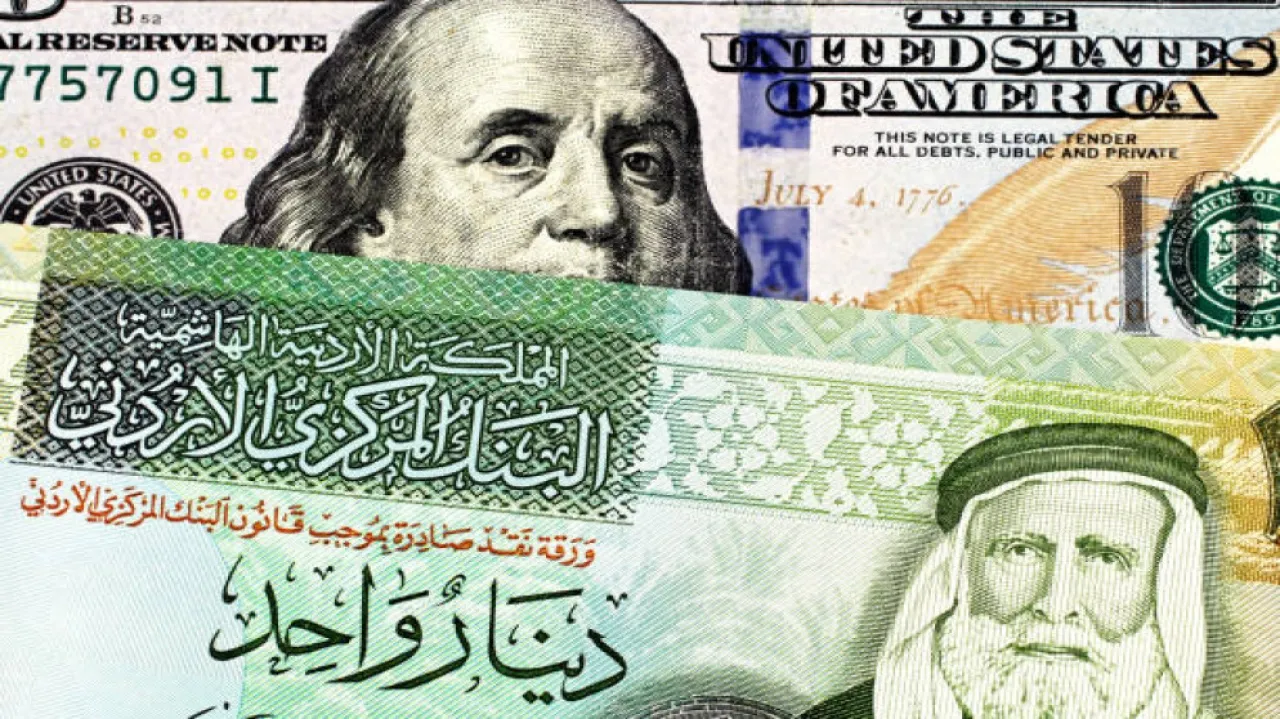
Khaberni - The Central Bank revealed a decrease in the dollarization rate in deposits to 18% by the end of November 2025, confirming that this reflects the strength of monetary and banking stability in the Kingdom and the confidence in the national currency and its attractiveness.
Dollarization of deposits is the process by which individuals or companies convert their bank deposits from the local currency to the US dollar.
According to a statement by the bank on Thursday, the inflation rate during 2025 was about 1.77%, which is an appropriate level that helps maintain the competitiveness of the national economy and the purchasing power of the national currency.
The foreign reserves of the Central Bank rose to more than 26 billion dollars at the end of January 2026, which covers the Kingdom's imports of goods and services for a period of 9 months.
The banking indicators continued their strong performance, with the total deposits at banks rising by 7.2% on an annual basis to reach 49.8 billion dinars at the end of November 2025, and the outstanding balance of credit facilities granted by banks increased by 3.3% to 36.2 billion dinars. In addition, banks enjoyed high levels of liquidity, solvency, and return on capital, reflecting the robustness of the Jordanian banking sector and its prudent risk management and its ability to continue providing financing for economic activity at moderate interest rates.
According to the latest economic data available, the external sector indicators showed a positive performance aligned with the Central Bank's expectations, as tourism income for the Kingdom increased by 7.6% during 2025 to reach 7.8 billion dollars.
Remittances from Jordanian workers abroad also rose by 4.6% during the first eleven months of 2025 to reach 4.1 billion dollars. Similarly, total exports grew by 7.7% during the first ten months of 2025 to reach 12.1 billion dollars.
Net inflows of Foreign Direct Investment into the Kingdom during the first three quarters of 2025 increased by 27.7% compared to the same period in 2024, reaching 1.5 billion dollars.
In light of this, the national economy continued to achieve gradual improvements in the performance of most economic sectors during 2025, leading to an increase in the economic growth rate to 2.75% during the first three quarters of 2025 compared to 2.56% in the same period in 2024. The economic growth rate for the whole year of 2025 is expected to be no less than 2.7%.
The Central Bank of Jordan reaffirms its commitment to monitor economic, financial, and monetary developments locally, regionally, and internationally, and will take appropriate actions based on data and economic indicators and developments in interest rates in international markets, to ensure the attractiveness of assets denominated in the Jordanian dinar and to enhance monetary and financial stability.