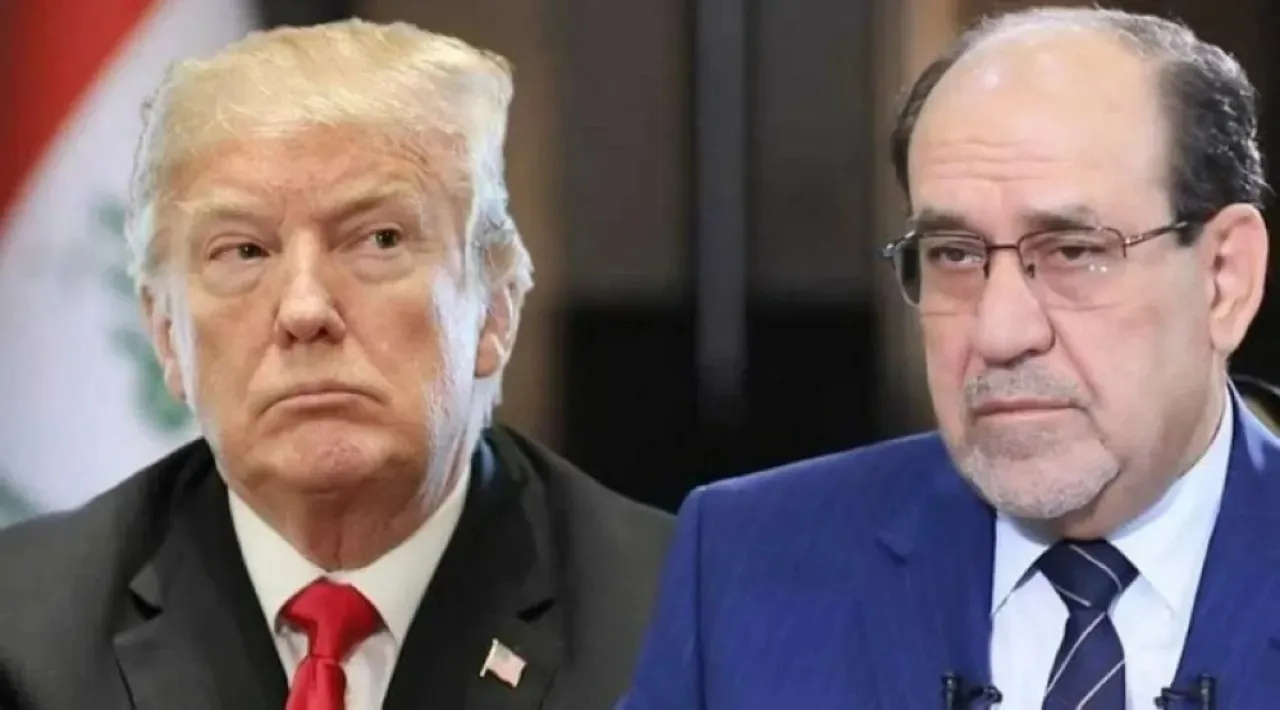
Khaberni - Former Iraqi Prime Minister Nouri Al-Maliki expressed on Wednesday his rejection of what he described as "blatant American interference" in Iraq's internal affairs, considering it a violation of the country's sovereignty, in response to U.S. President Donald Trump's warning about his (Al-Maliki) return to the premiership.
Al-Maliki said, in a post on the "X" platform, that the American intervention in the process of forming the Iraqi government "contravenes the democratic system post-2003," and considered it an infringement on the decision of the "Coordination Framework" coalition to choose its candidate for the position of prime minister.
Al-Maliki confirmed his determination to run, pointing out that he will continue to work "based on respect for national will and the decision of the Coordination Framework that the constitution guarantees," and in a way that "serves the supreme interests of the Iraqi people".
Al-Maliki's stance comes following Trump's threat to cut off U.S. support to Iraq if the former prime minister returns to the head of the government.
Trump wrote on the "Truth Social" platform: "I hear that Iraq might make a major mistake by re-electing Nouri Al-Maliki as prime minister," adding that "Al-Maliki's previous term led to poverty and chaos, and this should not be repeated".
The "Coordination Framework", which is the largest Shiite political coalition in Iraq, announced on Saturday the nomination of Al-Maliki for the position.
Iraqi news agency "Shafaq News" quoted a source in the Framework saying that the leadership of the coalition invited its members for an emergency meeting at the office of the State of Law Coalition leader Nouri Al-Maliki this evening, and the source added that the meeting aims to discuss Washington's recent stance on the political process in Iraq.
Al-Maliki previously held the position of prime minister for two consecutive terms from 2006 to 2014, before being succeeded by Haider al-Abadi, and his tenure saw significant security challenges, especially with the rise of the Islamic State organization and its control of about a third of the country's territory, before Baghdad declared victory over it in 2017.