Khaberni - The United Nations Children's Fund (UNICEF) announced - on Tuesday - its large-scale campaign to return hundreds of thousands of children to schools in the war-torn Gaza Strip.
UNICEF spokesman James Elder told journalists in Geneva that about two and a half years of attacks on Gaza's schools had endangered a whole generation, adding that since the outbreak of the war, about 90% of the sector's schools were damaged or destroyed, and more than 700,000 school-age children were deprived of formal education.
Elder added that UNICEF is currently greatly expanding its educational initiative in the sector, describing it as "one of the largest emergency education initiatives in the world."
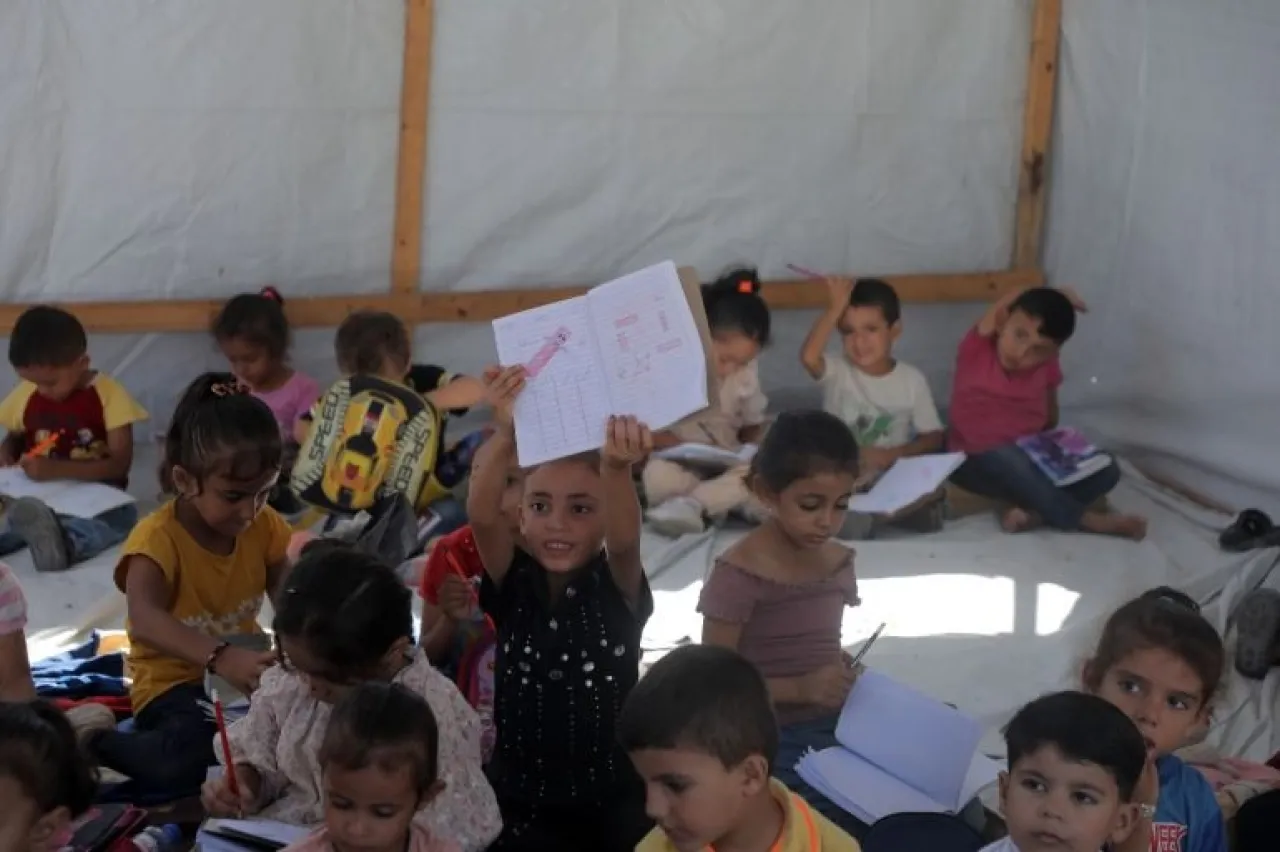
UNICEF currently supports more than 135,000 children receiving their education in over 110 educational centers in Gaza, many of which are in tents.
However, the organization seeks to double this number to include more than 336,000 children by the end of this year, which is half of the school-age children, and plans to return all school-age children to face-to-face education by 2027.
UNICEF is working on this project in collaboration with the Palestinian Ministry of Education and the United Nations Relief and Works Agency for Palestine Refugees (UNRWA), which provided education to about half of Gaza's children before the war.
Elder pointed out that UNICEF will need $86 million for its educational program in Gaza this year, which is "almost what the world spends on coffee in an hour or two," emphasizing that returning children to schools is "not a secondary matter but a pressing necessity."
He highlighted that "the Palestinians in Gaza had some of the highest literacy rates in the world before this war."
He said, "Today, this legacy is threatened as schools, universities, and libraries have been destroyed, and years of progress have been erased." Elder also emphasized that education in Gaza "saves lives," noting that "these centers provide safe spaces in lands that are often closed and dangerous."
He added that they also connect children with health, nutrition, and protection services, as well as clean water facilities and places for handwashing, "which many children in shelters lack."
Education in Tents
Elder stated that education would primarily continue in tents due to the extensive damage to school buildings in the sector during the war.
The latest assessment conducted by the United Nations - based on satellite images from July - indicates that at least 97% of the schools were damaged.
The effort to expand access to education comes at a time when relief organizations have been able to deliver more supplies to the besieged sector since the fragile U.S.-backed ceasefire went into effect last October.
UNICEF said it had managed to deliver more than 4,400 recreational bags and 240 school bags, containing items including pens, chalk, exercise books, and geometry tools.
It added that it expects the total number of bags delivered to exceed 11,000 by the end of the week, with about 7,000 more bags expected to arrive over the coming weeks.