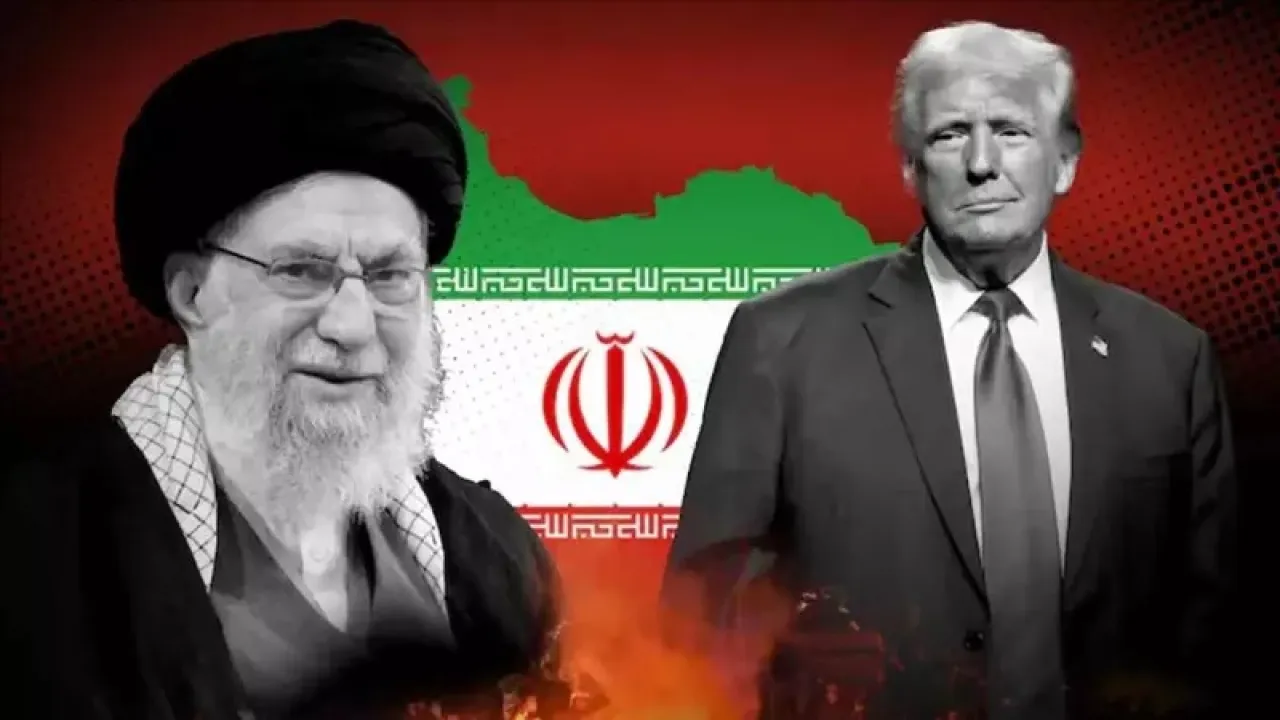
Khaberni - President Donald Trump received several American intelligence reports indicating that the Iranian government's stance is weakening, according to several people familiar with this information.
The reports indicate that the Iranian government's grip on power has reached its weakest point since the overthrow of the Shah in the 1979 revolution. According to the reports, the protests that erupted late last year shook elements of the Iranian government, especially after reaching areas in the country that officials believed were strongholds of support for the Iranian leader Ali Khamenei.
Although the protests have subsided, the government still finds itself in a difficult position. Intelligence reports have repeatedly highlighted that in addition to the protests, the Iranian economy is experiencing levels of weakness that are historic.
Economic difficulties ignited scattered protests in late December. With the spread of demonstrations in January, the Iranian government found it had few options to alleviate the financial hardships faced by families. Officials resorted to severe repression, which led to further alienation of large sectors of the citizens.
The US military is working to strengthen its forces in the region, but it is unclear what steps the Trump administration might consider?
White House spokesperson Caroline Levitt stated in a statement: “President Trump is continuously briefed on intelligence matters around the world. It would be a dereliction of his duty as the Commander-in-Chief of the Armed Forces if he was not regularly briefed on these matters. Regarding Iran, President Trump continues to monitor the situation closely.”
Trump has warned that he may strike Iran as the security campaign launched by the government on the protests intensifies. However, his advisors are divided over the benefits of strikes, especially if they are merely symbolic strikes against elements of the government involved in the campaign.
It then appeared that Trump backed down from any kind of immediate strikes to support the protests after the Iranian government canceled the execution of one of the protesters. Israeli Prime Minister Benjamin Netanyahu also asked Trump to delay an attack on Iran, according to a senior US official.
However, a broader campaign may be more appealing to some of Trump's more hardline aides and allies who see an opportunity to remove the Iranian leadership. Trump continues to brandish the threat of using force, describing the reinforcement of his naval forces in the region as "the fleet."
Trump has also spoken publicly about Iran's nuclear program, issuing warnings, reminding the Iranian government of the strikes he ordered last year against its most fortified nuclear sites.
Senator Lindsey Graham, a Republican from South Carolina, said he spoke with Trump in recent days about Iran, expecting the President to fulfill his promise to help the Iranians who protested against their government. Graham said in a brief interview: “The goal is to end the regime. They may stop killing them today, but if they remain in power next month, they will kill them then.”
A US official who spoke on condition of anonymity to discuss these details stated that the American aircraft carrier "USS Abraham Lincoln," accompanied by three warships equipped with "Tomahawk" missiles, entered the area of responsibility of the Central Command in the western Indian Ocean on Monday.
Military officials said the aircraft carrier could, in theory, take action within a day or two if the White House ordered a strike on Iran.
The United States has already sent about 12 additional "F-15E" attack aircraft to the region to bolster the number of strike aircraft, according to US officials.
The Pentagon has also sent more "Patriot" and "THAAD" air defense systems to the region to help protect American forces there from any retaliatory strikes by short and medium-range Iranian missiles.
Long-range bombers stationed in the United States, which can strike targets in Iran, are on higher alert than usual. The Pentagon raised its alert level two weeks ago when Trump requested options for responding to the crackdown on protests in Iran.
Pentagon officials have also intensified consultations with regional allies in recent days. Over the weekend, Admiral Brad Cooper, head of Central Command, visited Syria, Iraq, and Israel to consult with American army officers and their counterparts there.
A high-level American military official stated that the main purpose of Cooper's trip was to visit American forces and detention sites in northeastern Syria.