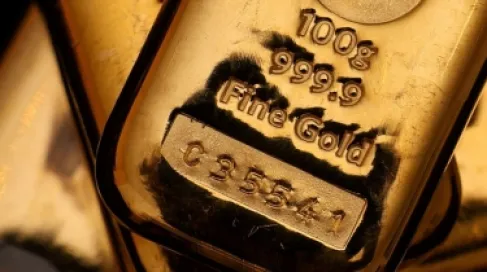
Khaberni - Gold is registering a historic wave of increase that has pushed it to exceed the five thousand dollar threshold per ounce for the first time, among escalating economic and geopolitical disturbances around the world. As investors witness a shake in confidence in currencies and sovereign bonds, the yellow metal returns to the forefront as a defensive option, regaining its traditional status as a "safe haven" in times of crisis.
Amid the confusion enveloping the global economy and the increasing popularity of safe havens, gold stands out as a major headline for a turbulent phase intersecting central bank policies with inflation fears and market fluctuations. In an attempt to understand this unprecedented rush towards the yellow metal, a report by Bloomberg today, Tuesday, offers clear answers to five pivotal questions that unveil the economic and geopolitical backgrounds fueling gold’s record rise, which has surpassed the 5100-dollar threshold per ounce, and explain why it has become the safest choice in the calculations of both investors and nations alike.
1 - Why is gold considered a safe haven?
Gold has long retained its reputation as an asset capable of preserving value over time, especially when markets shake or confidence in governments declines, for several reasons:
• Firstly, the tremendous liquidity it offers, with gold being traded daily in hundreds of billions, allowing large investors to enter and exit the market without significantly affecting prices.
• Secondly, it is not linked to any issuing entity; unlike stocks and bonds, gold does not depend on the solvency of a company or country.
• Thirdly, there is an inverse relationship with the dollar; when the dollar weakens, gold becomes cheaper for holders of other currencies, which enhances demand for it.
• Fourthly, it is a fundamental hedging tool; large investment portfolios tend to include it to absorb fluctuations in dollar-denominated assets.
• Besides, inflated global government debts have shaken confidence in sovereign bonds and national currencies, fueling what is known as a "currency degradation hedge trade" as investors flock to gold, silver, and other precious metals.
• Furthermore, interest in gold increases with the mounting political pressure on the U.S. Federal Reserve to cut interest rates, making holding a non-interest yielding asset like gold more attractive.
2 - Are investors the only ones buying gold?
Gold is not just a financial instrument; it is a staple in cultures, especially in India and China, the two largest global markets for the metal. Indian households own about 25,000 tons of gold, which is five times more than the American "Fort Knox" reserve. Despite the sensitivity of demand for jewelry to rising prices, buyers usually intervene to seize the opportunity when financial investors' appetite declines, providing a supportive floor for prices. However, in recent years, the sharp and continuous rise in prices has led to a decline in demand for gold jewelry despite its traditional status.
3 - Why are central banks increasing their gold purchases?
The interest of central banks plays a key role in the current wave of rising gold prices, especially in emerging economies looking to reduce their dependence on the dollar. Following the freezing of Russian assets after the invasion of Ukraine, many countries reassessed the risks of holding foreign reserves. China has continued buying gold for 14 consecutive months until December 2025, reflecting its desire to diversify its reserves. Similarly, Poland has approved a plan to buy an additional 150 tons in preparation for a phase of geopolitical disturbances. Although this trend is not new, it has accelerated significantly in recent years, providing strong and continuous support to prices.
4 - What could potentially halt gold's rise in the future?
Despite the strong momentum, there are factors capable of curbing the rise of gold, starting from an increase in the value of the dollar or a decline in geopolitical tensions, a breakthrough in the trade war between the United States and China, or easing tensions in zones like Ukraine, and up to a reduction in central bank purchases, a fundamental factor in the current market.
Likewise, some banks reaching their targeted limits for gold holdings may lead them to sell, as proposed by the Central Bank of the Philippines. However, advanced central banks seem less inclined to sell compared to the 1990s, when a wave of collective sales led to a plummet in prices for more than a decade.
5 - Does gold face challenges due to being a physical asset?
Despite its appeal, gold poses some practical complexities in terms of high storage and insurance costs, the disparity between the spot price and the actual selling price can widen with increasing demand, and weight standards differ between markets; London adopts 400 ounce bars, whereas "COMEX" in New York asks for 100 ounce or one kilogram bars. Therefore, bars are often shipped to Switzerland to be remelted and resized, creating logistical bottlenecks when trading trends change suddenly, as happened in early 2025 when markets feared tariffs on gold imports to the United States.