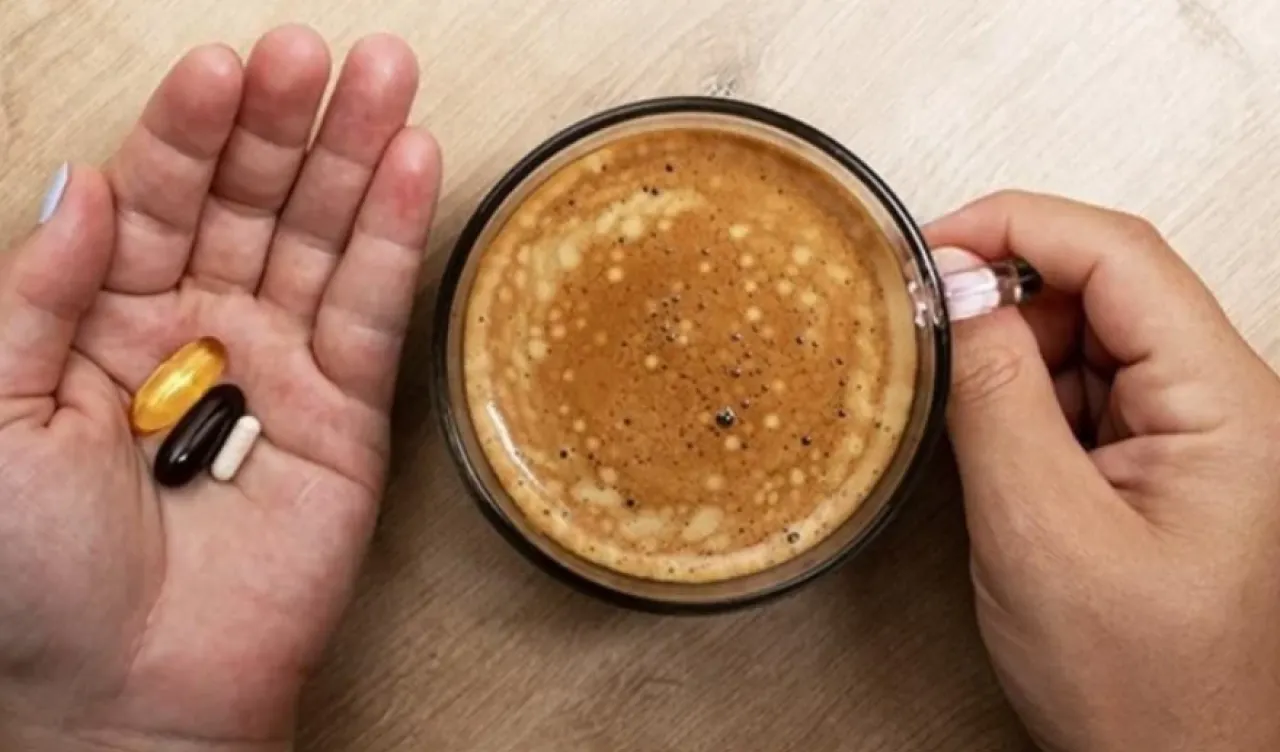
Khaberni - For millions around the world, the day doesn't really start until the first sip of coffee. This magical beverage is not just a "stimulant" for memory and a metabolic booster, but it is also an ally for heart and brain health. However, have you ever thought that your favorite cup might be a "hidden enemy" for the vitamins you consume?
Statistics indicate that about 66% of adults in the United States drink coffee daily, while 74% of them consume dietary supplements. This intersection raises a fundamental question: Does every sip of caffeine swallow the health benefits of the vitamins?
Iron: The biggest victim
According to Dr. Karan Rajan, head of science at Throne Science, iron is the first victim of coffee. Coffee contains "polyphenols" like chlorogenic acids that act as a "magnet" binding iron in the digestive system and preventing its absorption.
The most at-risk groups are pregnant women, vegetarians, and those suffering from anemia, so the solution lies in separating coffee from iron supplements for at least two hours, with the assistance of vitamin "C" to enhance absorption.
Zinc and Calcium
Coffee doesn't stop at iron, but its effects extend to include other minerals:
Zinc: Its absorption is slightly reduced due to the binding by polyphenols. However, the impact remains limited for those who have a diet rich in meat and nuts.
Calcium: Here lies the surprise; coffee does not directly prevent the absorption of calcium, but makes the body expel it through urine. According to studies, each cup of coffee "steals" about 5 mg of calcium from your body.
Magnesium and Vitamin B
While coffee does not directly prevent the absorption of magnesium, its "diuretic effect" may accelerate its exit from the body. The same applies to vitamin B1, which the body may lose with excessive caffeine consumption. Therefore, it is advisable to take magnesium later in the day or before bedtime, to ensure maximum benefit.
How to enjoy your coffee without losses?
The good news is that you don't need to give up coffee, but you just need to adjust your "health clock". The golden rule that specialists recommend is the "two-hour rule", leaving enough time between your morning cup and your dietary supplements, to ensure that your brain gets "alertness" and your body gets "nourishment" without internal conflicts.