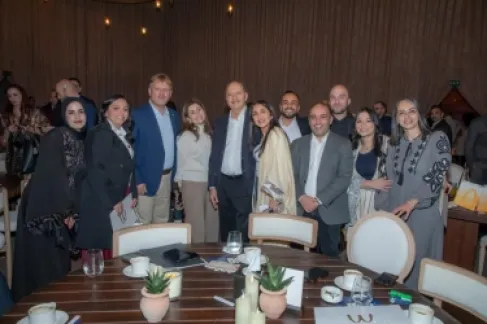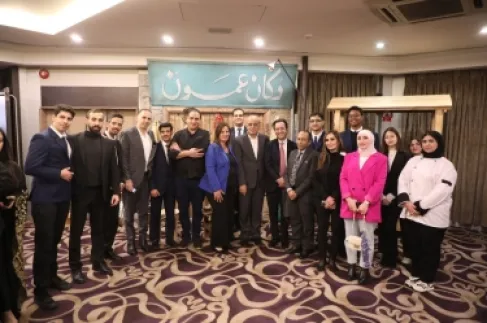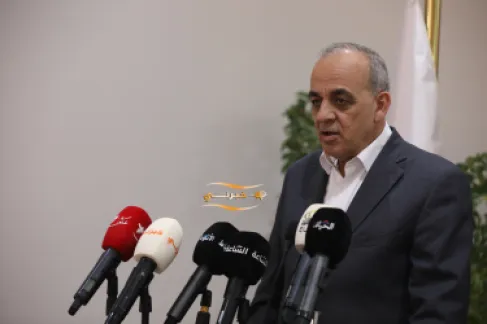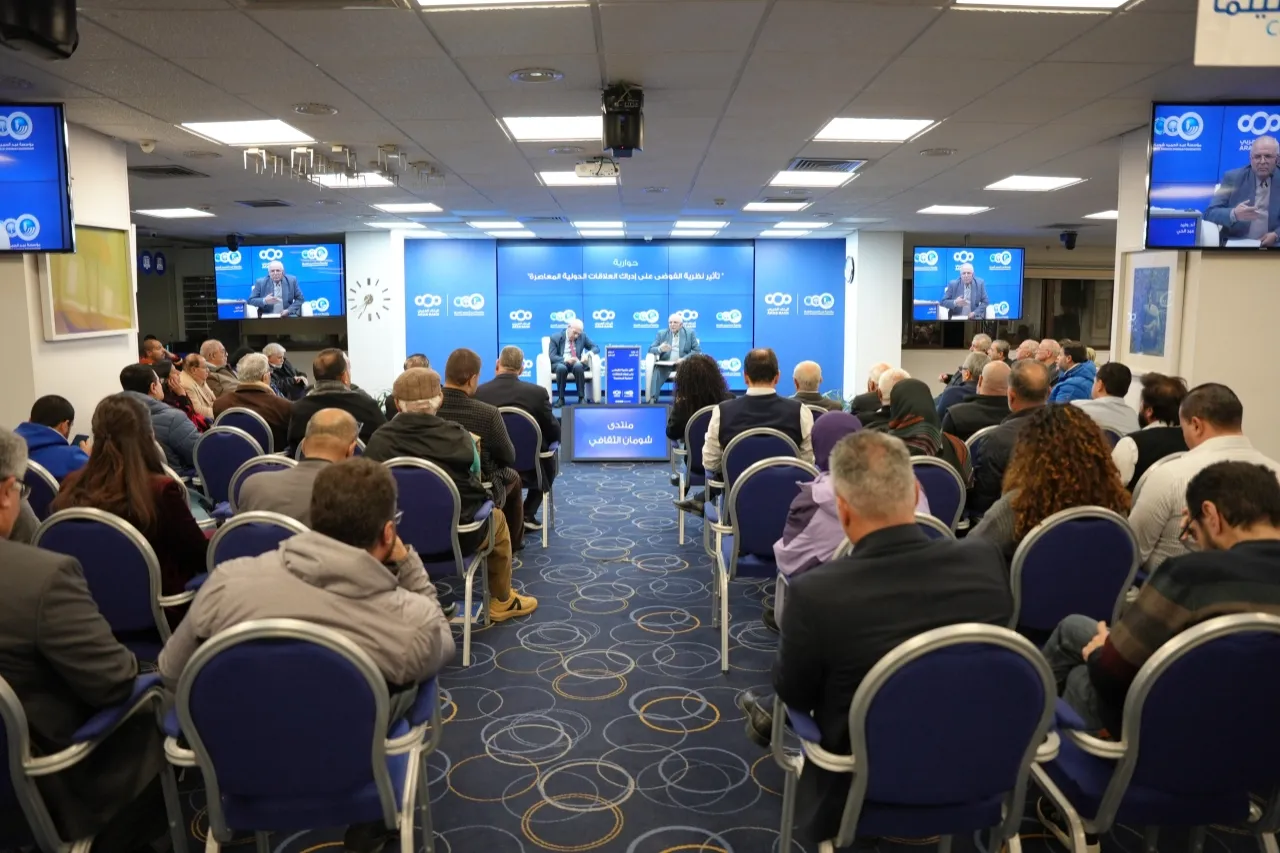
Khaberni - The Abdul Hameed Shoman Cultural Forum hosted Dr. Walid Abdel Hai yesterday evening, in a lecture that explores the impact of chaos theory on contemporary international relations, with the presence of a group of thinkers and stakeholders.
During the lecture titled "The Impact of Chaos Theory on the Perception of Contemporary International Relations," managed by media person Maher Abu Tair, Dr. Abdel Hai pointed out that the concept of chaos means unpredictable interactions such as wars and political collapses, while anarchism means the absence of a world government with commanding authority, yet there are global institutions (Security Council – Gulf Cooperation Council – Arab Maghreb Union – BRICS). He explained that turmoil signifies disintegration, such as the Soviet Union, or restructuring, indicating that here there are no clear rules for formation.
Dr. Abdel Hai explained that chaos signifies the complete absence of order, making it difficult to predict the implications of the current reality, but it does not mean the absence of rules, rather the inability to predict despite existing laws – it is nonlinear and tends to be random, and can be affected by initial conditions (butterfly effect), pointing out that anarchism is the absence of a central governing authority – which does not necessarily mean chaos, and relationships progress through balance and conventions or social consensus, and order emerges from interactions not from authority, as he explained that disturbance implies the existence of an order but with defects, living in a transitional state which is a mix of order and chaos.
He said that the complexity in international life is much greater than some imagine, and without the help of experts in each field and the interaction of their views, the Arab decision-making process will remain stuck between randomness and instinctiveness, and between adaptive compliance to the outside, adding that we should not underestimate the difference between the acceleration of change and the slowness of adaptation, and here comes the danger and necessity of future studies.
He mentioned that organic interconnectivity (globalization) will continue to compete with mechanistic bonds, which explains some of the irregular rhythm of international life.
Dr. Abdel Hai noted that technological and knowledge development will shake value systems in all societies, thus keeping disturbance, chaos, and anarchism with us for many generations, as he mentioned that the Hegelian composite application on (order and chaos) is suitable for interpreting transitional periods in the international system from pre-state to empire, to nation-state, to regional organizations towards globalization.
It should be noted that in a world characterized by the acceleration of events and the intertwining of crises, traditional models in explaining international relations are incapable of grasping the nature of ongoing transformations, prompting the emergence of "chaos theory", as a cognitive framework that helps understand what seems unfathomable in reading the current international system.
The theory starts from a fundamental assumption that complex systems, including the global system, do not always follow linear causality or precise prediction, but move within entangled pathways, wherein small changes, or marginal events, can lead to major and unexpected shifts, known as the "butterfly effect".
Chaos theory contributes a new perspective to understanding contemporary international relations, rejecting the assumption of permanent stability and stable balance of power, and instead emphasizes the dynamic and fluctuating nature of the international system.