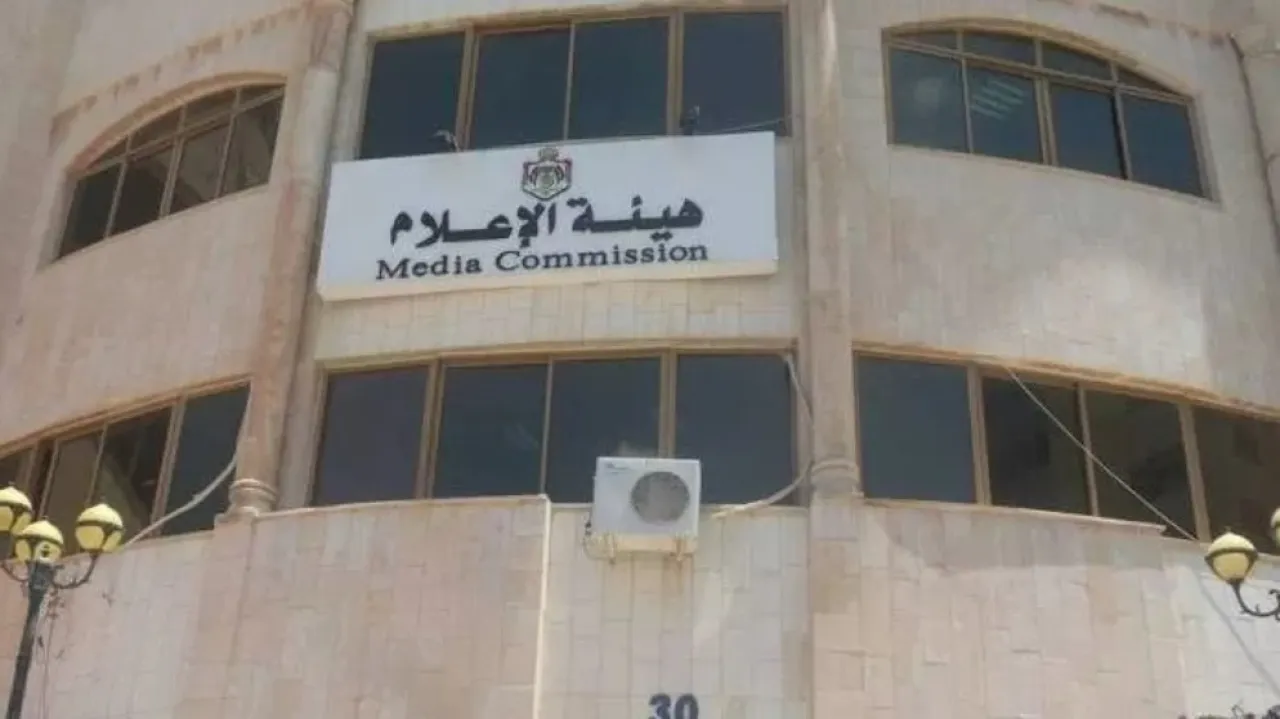
Khaberni - Recently, the Legislation and Opinion Bureau broadcast the draft text of the Digital Media Regulation System for the year 2026, which will be effective after (30) thirty days from the date of its publication in the Official Gazette.
According to the system, every individual engaged in digital media activities must inform the media authority about the nature of their operations and activities that they manage within Jordan.
The notification includes any digital media activity for any entity that is produced partially or entirely within the kingdom regardless of whether the servers are located inside or outside of the kingdom, whether these entities are Jordanian or non-Jordanian, and whether the content is directed at the Jordanian public or non-Jordanian public, as long as one of the components of this content or any part of the physical actions involved in its reception by the public has taken place in Jordan.
Zaid Al-Nawaiseh, the Secretary-General of the Ministry of Government Communication, and Bashir Al-Momani, the Director-General of the Media Authority, will meet with media representatives at a meeting titled (Digital Media System) at one o'clock in the afternoon on Tuesday at the headquarters of the Ministry of Government Communication. According to the statement, the meeting "will focus on the draft Digital Media Regulation System for the year 2026, which enhances Jordan's position in the digital media landscape regionally and internationally and the related amended regulations projects that serve to organize the local media environment. The meeting will also include a general presentation of the most important legislation that the Authority is working on."
The Freedoms Committee at the Jordanian Journalists Syndicate announced in a previous statement that it has been following the discussions raised about the draft Digital Media Regulation System for the year 2026 and the accompanying diverse readings and concerns expressed by various media and professional sectors.
According to a previous statement, the committee expressed its position to the public, stemming from its professional and national responsibility and its concern for the clarity of the texts and the preservation of freedoms, confirming a set of facts accompanied by observations and demands it sees as necessary to enhance trust and ensure proper implementation.
The committee indicated through its preliminary reading of the system that its provisions do not affect journalistic freedoms or freedom of opinion and expression, nor do they intersect with them, but rather it comes as purely regulatory legislation concerned with organizing specific activities in the digital space in terms of licensing and its mechanisms and conditions within a disciplined legal framework.
Here is the draft of the system:
System number ( ) for the year 2026
Digital Media Regulation System
Issued pursuant to Article (50) of the Printing and Publishing Law No. (8)
of 1998 and Article (32) of the Visual and Auditory Media Law
No. (26) for the year 2015
............................................
Article 1- This system is called (Digital Media Regulation System for the year 2026), and it will be effective after (30) thirty days from the date of its publication in the Official Gazette.
Article (2): A- The following words and phrases wherever mentioned in this system shall have the meanings assigned to them below unless the context indicates otherwise: -
The law: The Visual and Auditory Media Law.
The Minister: Minister of Government Communication or the minister designated by the Prime Minister.
The Authority: Media Authority.
The Director:: General Director of the Authority.
The person: Natural or legal.
The license: The permission granted for practicing digital publishing, advertising, and visual and auditory digital broadcasting.
The licensee: The natural or legal person who has obtained a license in accordance with the provisions of this system.
The accreditation: The approval granted by the Authority to the licensee or content creator to accredit the technical and artistic means used in digital media activities in accordance with the provisions of this system.
Digital media: Activities that are licensed under the effective legislation at the Authority with digital content and offer services to the public interactively and participatorily in a professional manner and can be accessed through the international information network (the Internet) or any other similar technologies including the production or publishing or broadcasting of media materials or services in all forms.
Digital content: Readable, audible, visual, or mixed content, static or moving or multimedia that includes any of the mentioned and is produced or circulated digitally, or any cotent that has been converted to digital and can be accessed through the international information network (the Internet) or any other similar technologies.
Digital publishing and advertising: Engaging in the activities and operations mentioned in the Printing and Publishing Law and practiced through digital means or any other similar technologies.
Visual and auditory digital broadcasting: Availability of programs and visual or auditory materials mentioned in the law by means of the international information network (the Internet) or any other similar technologies directed to the public.
Digital media service provider: The entity that provides the public with digital content services through the international information network (the Internet) or any other means using live broadcasting technologies, on-demand broadcasting, or rebroadcasting to the internet enabling the public to access this content through any digital means or technology.
Mixed broadcasting or publishing: A main digital media activity from which arises a secondary digital media activity different in description and nature.
Artificial intelligence in media: Using intelligent systems and algorithms capable of learning, generating, analyzing, forecasting, making recommendations, and automating processes using artificial intelligence technologies and robots, in the production, distribution, and analysis of media content, with the goal of improving content quality, enhancing media performance efficiency, and boosting interaction with the public.
Digital content creator: A person who engages in production or advertising activities through digital media content directed to the public in all its forms—media, advertising, or marketing, readable or visual or audible, using various digital means.
The electronic domain (Domain): A unique numeric identifier used to name and locate a website on the international information network (the Internet), which acts as a visible electronic address that facilitates access for users to the digital content and services associated with it and is considered one of the essential components of digital identity.
The platform: An integrated digital environment concerned with presenting media content in various forms (readable, audible, visual, or interactive) issued under a specified name and having a specific electronic address or domain, and enabling the public to access news, information, reports, programs, and interact with them through multiple user interfaces.
The application: A digital program developed to provide media content and services through smart devices such as mobile phones, tablets, or computers, allowing the public to access the news, reports, video clips, or audio files, live broadcasts, and interact with the media materials, at any time and from anywhere.
B- For the purposes of this system, the definitions provided in the law and the Printing and Publishing Law apply to what is not otherwise specified.
Article 3- For the purposes of this system, the Authority undertakes the following tasks:
Regulating the digital media sector and granting licenses and accreditation certificates for digital media.
Monitoring media content across the international information network (the Internet), platforms, applications, and any other technical means.
Conducting digital studies and assisting in creating an environment supportive of innovation and digital development in the media sector and the licensed sectors at the Authority.
Any other tasks assigned by the minister within the provisions of the effective legislations.
Article 4- A- For the purposes of obtaining the license under the provisions of this system, a person must be a professional in digital media.
B- Digital media activity is considered professional if any of the following criteria are met:
The activity is a profession or a source of income, or the person derives income from applications, search engines, social media companies, or the like.
The activity is continuous and regular.
C- For the purposes of the provisions of the above paragraphs of this article, and upon the recommendation of the relevant directorate, the director may approve any other criteria deemed appropriate.
Article 5- A- The Authority grants licenses in accordance with the provisions of this system to every person engaged in digital media activity as follows:
Mandated to be licensed under the provisions of the law.
Mandated to be licensed under the provisions of the Printing and Publishing Law.
Digital content creator in accordance with the provisions of this system.
Using mobile or stationary broadcasting devices through the international information network (the internet), optical fibers, or any other similar technology for the purpose of transmitting television programs.
Mixed broadcasting or publishing activities in accordance with the provisions of this system.
Anything mandated to be licensed by the Authority under any other legislation.
Anything considered by the Council of Ministers as subject to licensing by the Authority.
B- Licensees under the law and the Printing and Publishing Law prior to the effectiveness of the provisions of this system may obtain accreditation from the Authority for their media activity conducted through digital platforms and means.
Article 6- A- Every person not holding a license from the Authority and engaging in digital publishing and advertising activities must submit a licensing application on the approved form accompanied by the following documents:
A copy of personal identification.
A certificate of non-conviction indicating that they have not been convicted of a felony or misdemeanor compromising honor and public morals.
A registration certificate of the establishment from the competent authorities as per the effective legislations.
The commercial name and trademark of the establishment to be licensed.
A statement of the technologies used by the applicant.
Any other documents deemed necessary by the director.
B- A licensee who engages in publishing and advertising activities, holding a valid license, and wishing to practice these activities through any digital means may submit an accreditation request to the Authority on the approved form.
Article 7- A- The Authority will open a special register for the registration of digital libraries with it.
The provisions of the System for Licensing Publishing and Advertising Institutions No. (65) for the year 2017 and its amendments and the instructions issued under it shall apply to digital libraries.
Article 8- A- Every person not holding a license from the Authority and engaging in visual and auditory digital broadcasting activities must submit an application to obtain the license on the approved form accompanied by the following:
A statement of the company's registered capital.
Documents proving the financial capability of the license applicant to cover establishment expenses and specifically the expenses of at least the first year, along with a statement of their funding sources.
A statement detailing the type of programs they will broadcast and the programming plan.
A detailed statement of the technologies and technical devices that the license applicant will use.
Identifying all the digital means, applications, and platforms through which they will practice their activities.
The necessary technical, financial, and managerial studies.
Any other documents deemed necessary by the director.
B- A licensee under the law prior to the effectiveness of the provisions of this system and wishing to practice these activities through any digital means may submit an accreditation request to the Authority on the approved form accompanied by the following:
The name of the licensee applying for accreditation who holds a license from the Authority.
A valid and properly renewed license consistent with the primary broadcasting purpose.
Identifying the electronic domain (Domain) or the specific link for digital broadcasting.
A detailed statement of the technologies and technical devices that the license applicant will use.
Identifying all the digital means, applications, and platforms through which they will practice their activities.
Any other documents deemed necessary by the director.
Article 9- The general content of the broadcasting or publishing through digital means by the licensee must be consistent with the content published or broadcast by the licensed print media, stations, and radio stations.
Article 10- The provisions of this system apply to those engaging in rebroadcasting activities through digital means as specified in the law and the system for licensing broadcasting and rebroadcasting licenses and fees collected for them.
Article 11- A- The provisions granting licenses mentioned in the law and the Printing and Publishing Law apply to licensees under the provisions of this system.
B- Accreditations are granted and renewed by a decision from the director general.
C- For the purposes of this system, the director issues the necessary decision regarding any approvals or amendments to the licenses not otherwise specified.
Article 12- A- Licensing is required for anyone who professionally conducts digital production and distribution operations through preparing, publishing, distributing, or broadcasting content produced for personal use through any digital media means.
B- For the purposes of the provisions in paragraph (A) of this article, the following data and documents must be provided:
Data of the applicant for digital production and distribution.
A certificate of non-conviction indicating that they have not been convicted of a felony or misdemeanor compromising honor and public morals.
A registration certificate of the company from the competent authorities as per the effective legislations.
The registered commercial name and trademark as per the usual procedures.
A statement of the digital means used to display the digital product.
Any other documents deemed necessary by the director.
Article 13- A- A content creator must obtain a license if they professionally engage in digital media activities.
B- Content creators not covered by paragraph (A) of this article who wish to obtain accreditation must register in the special register for this purpose at the Authority.
C- For the purposes of the provisions of this article, a content creator must fill out the form prepared for this purpose, including the following documents:
A certificate of non-conviction indicating that they have not been convicted of a felony or misdemeanor compromising morals and honor.
Identifying the specific account name and its electronic domain and providing the Authority with the names or trademarks used in their activity.
A detailed statement of the technologies and technical devices they will use.<...