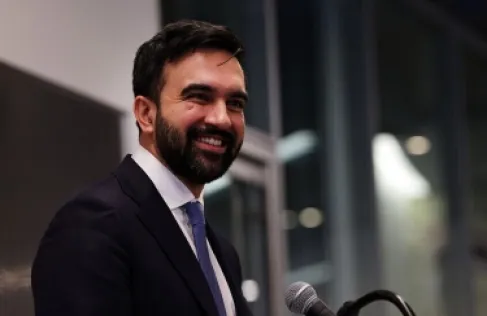
Khaberni - NATO Secretary General Mark Rutte said anyone who thinks the European Union, or Europe as a whole, can defend itself without the United States is dreaming, confirming that Europe cannot do it, and that the European continent needs the United States as much as Washington needs NATO, stressing that the role of the United States within the alliance is fundamental and indispensable.
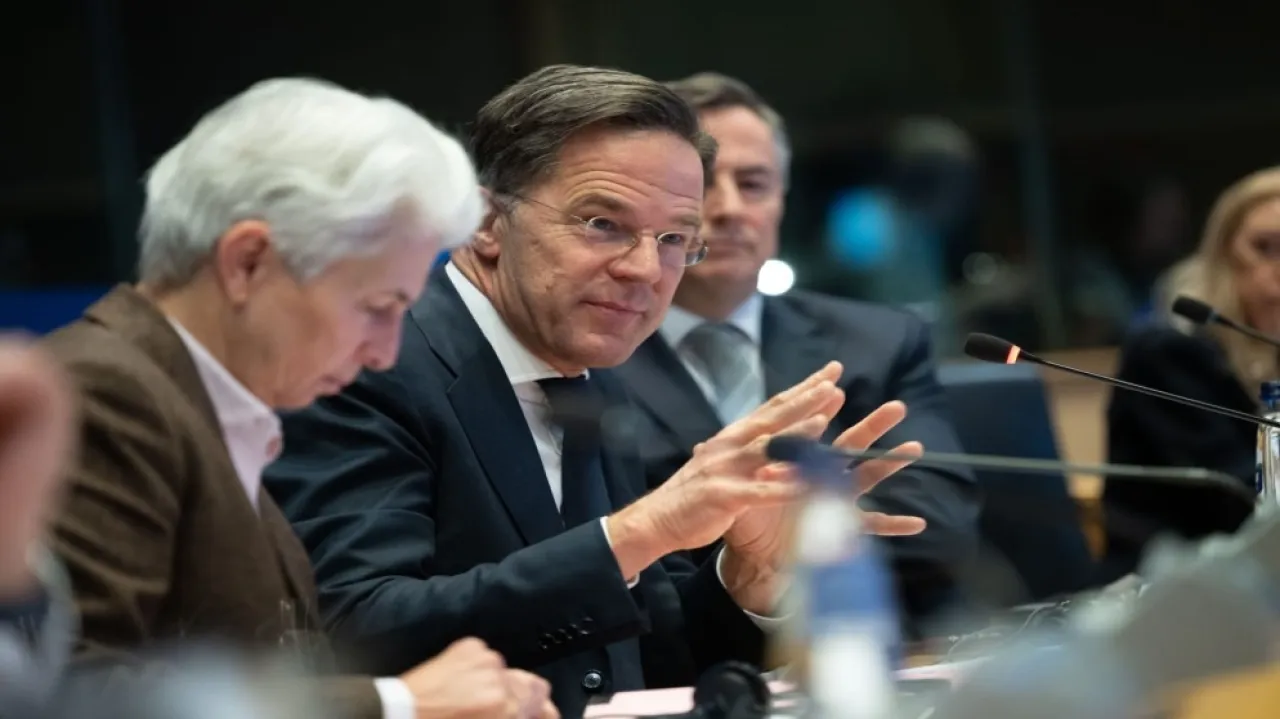
Rutte's statements came during a meeting of the Committee on Foreign Affairs (AFET) and the Committee on Security and Defense (SEDE) at the European Parliament in Brussels, where he considered that the United States needs NATO as much as Europe and Canada do, explaining that in order to remain safe, Washington needs a secure Arctic, a secure Euro-Atlantic space, and a secure Europe as well.
In speaking about claims that Europe has the capability to go it alone in defense, Rutte said those who promote this idea are ignoring reality, explaining that 5% of Gross Domestic Product (GDP) would not be sufficient, and that it would require spending up to 10%, warning that in this scenario Europe would lose the ultimate guarantor of its freedom, represented by the American nuclear umbrella.
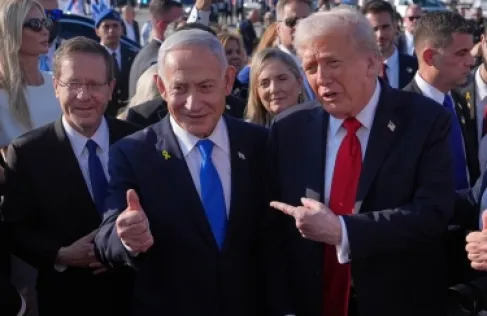
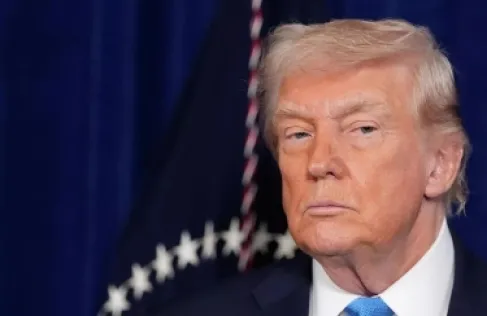
Regarding the relationship between Europe and the United States within the alliance, Rutte said he believes that US President Donald Trump is fully committed to NATO, noting that Trump has had one principal observation for decades, which is that Europeans have not been paying their fair share of defense burdens.
He added that this situation changed with the outcomes of The Hague summit related to defense spending, confirming that The Hague commitment led to greater equality between Europe and the United States, and that this historical imbalance has been addressed.
Regarding defense commitments, Rutte clarified that The Hague summit held in June resulted in the allies agreeing to invest 5% of GDP annually in defense by the year 2035, asserting that enhancing the industrial defense base is not easy, but he emphasized the need for quick action because the security situation requires it, and because the phase of the United States bearing the bulk of the burden of shared security has ended.
The NATO Secretary General affirmed that aligning the European Union's defense efforts with NATO is crucial, pointing out that NATO has extensive experience with standards, structures, and procedures, and that contributions and capabilities from non-EU members within NATO are indispensable for collective defense.
He called for a clear division of work between the two sides, where NATO focuses on setting standards, capability goals, and command and control, while the European Union benefits from its strength in the internal market, building the industrial defense base, gathering financing, and enhancing resilience, along with its regulatory role with the need to remove some restrictions.
In the Ukrainian file, Rutte said that the Russian war in Ukraine is nearing its tragic fourth anniversary, describing the current winter as the harshest on Ukrainians in over a decade, with temperatures in Kiev reaching minus 20 degrees Celsius, at a time when Russian attacks target civilian infrastructure and major cities, leaving residents without heating, electricity, or water.
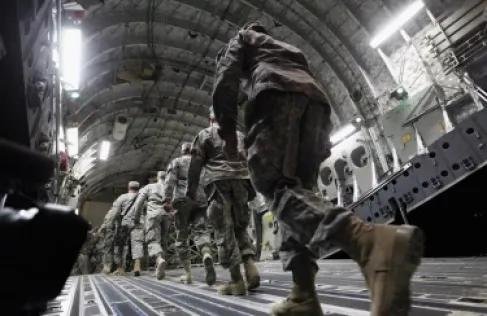
He mentioned that peace talks led by the United States are still ongoing, and that Trump and his team are working to end the war with European support, speaking about an alliance of the willing led by the United Kingdom and France, which is leading efforts to provide strong security guarantees, including the deployment of forces in Ukraine after any peace agreement with Russia.
He confirmed that Europe, Canada, and the United States have declared their readiness to provide these guarantees to prevent Russia from attempting to attack Ukraine again.
Meanwhile, Rutte reaffirmed NATO's continued military support for Ukraine, including through the PURL initiative, pointing to the flow of essential American military equipment worth billions of dollars to Ukraine, financed by allies and partners.
He considered this flow vital to keeping Ukraine capable of fighting and protecting its citizens, reaffirming that there is no alternative to this.
He noted that Ukraine has estimated its military needs for 2026 at just over $60 billion.
He touched on the role of the European Union, pointing to a loan package of 90 billion euros, which he said would make a significant difference in Ukraine's security and prosperity, calling for flexibility in how these funds are spent and not to bind them with strict conditions, and confirming that Europe is currently unable to provide everything Ukraine needs to defend itself today and deter future threats.
In response to questions from MPs about Greenland, Rutte explained that the discussions resulted in two paths of action, the first being NATO taking on greater responsibility in defending the Arctic region to prevent Russia and China from expanding their military or economic influence there, and the second being the continuation of trilateral talks between Denmark, Greenland, and the United States.
He emphasized that he does not have any mandate to negotiate on behalf of Denmark, affirming that his role focuses on the aspect related to NATO's collective defense.
Rutte denied any link between the Greenland file and Ukrainian talks, considering the discussion about this as mere rumors, and that the two files are completely separate.
He also referred to the so-called Russian 'shadow fleet,' describing it as a significant source of income for Russia, and noting that NATO and its allies in the Baltic Sea impose increasing challenges on Moscow and increase the cost of operating this fleet.
Regarding the European security situation, Rutte warned of the risks of duplicity and complexity in the defense scene if Europe moves to establish an independent defense force, considering that the concept of a European pillar lacks clarity unless it is based on integration and division of work with NATO.
He added that creating a new force would increase burdens and require additional human and military resources, and might complicate existing efforts.
He also confirmed NATO's continued monitoring of the security situation in the Western Balkans, emphasizing that no security vacuum in Bosnia is acceptable, highlighting the importance of NATO's Kosovo Force's role in maintaining stability, alongside ongoing dialogue with Serbia.
In concluding his remarks, Rutte stressed that protecting Ukrainian cities and infrastructure, especially energy facilities, requires enhancing air defense capabilities and providing necessary interceptor missiles, noting that interception rates have declined due to a lack of supplies.
He urged parliamentarians to help pressure their governments to utilize national stocks or through support packages, affirming that this is a matter of life and death day after day.