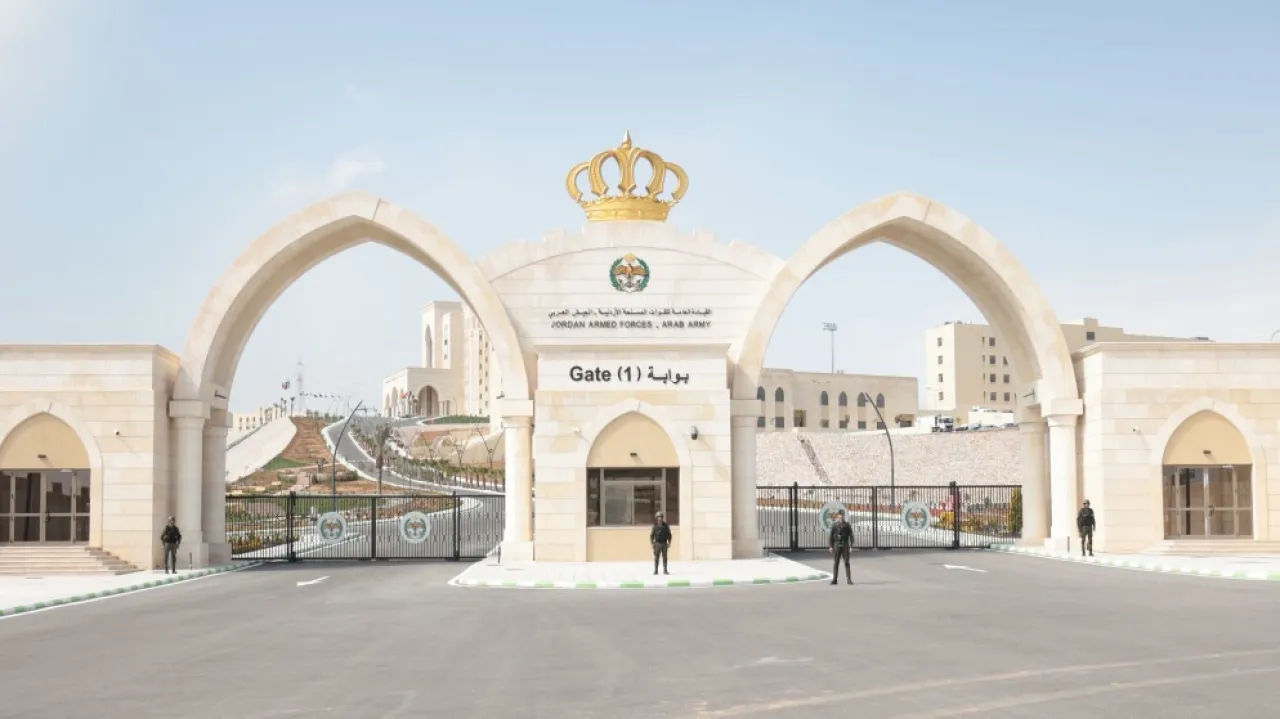
Khaberni - Two military experts agreed that conducting a comprehensive strategic review of the armed forces constitutes an integrated strategic directive aimed at rebuilding the army, enabling it to adapt to the accelerated changes in the nature of warfare and threats, and to prepare for future challenges.
The experts confirmed, during their talk on the "Voice of the Kingdom" program, that the strategic review comes at a critical time imposed by unprecedented regional and international transformations, and the emerging non-traditional threats, which necessitate developing the combat doctrine, investing in technology and human resources, and enhancing the readiness of the armed forces across all its branches.
His Majesty King Abdullah II, the Supreme Commander of the Armed Forces, directed the preparation of a strategy and a roadmap to achieve a structural transformation in the Jordanian Armed Forces – the Arab Army over the next three years, in a message to the Chief of the General Staff.
Military expert Mohammed Suleiman Farghal said that the order of His Majesty King Abdullah II represents a complete strategic directive for rebuilding the armed forces, explaining that the concept of rebuilding includes structure, organization, armament, training, and developing the human element.
Farghal noted that the armed forces conduct annual strategic reviews, pointing out that the first strategic review under King Abdullah II was carried out in 2000, followed by another review in 2024, and thereafter a document was issued that formed a strategic transformation and roadmap for ten years, with the necessity of flexibility in implementation to address changes.
Farghal explained that the strategic review process spans about two years of discussions, studies, and research, emphasizing that the current phase is imposed by changes in the nature of wars and threats, and the acceleration of transformations in the international environment and its reflections on the regional and local environments.
Farghal highlighted that the current situation in the region requires serious preparation for the future, in the face of challenges and threats confronting Jordan, which necessitates rising to the level of these challenges, adding that the role of the armed forces is not limited to defending the sovereignty of the state but extends to national roles in various fields such as health and education.
He stressed that priorities may sometimes change between weapons systems and combat doctrine, pointing out that the current review is oriented towards combat doctrine rather than general military doctrine, with specificity for each branch of the armed forces, especially the special forces, given the importance of special operations in future wars.
Meanwhile, military expert Reda Batoush said that His Majesty King Abdullah II realizes that facing the future requires investing in technology and human resources capable of utilizing it, noting that the current environment is highly complex and rapidly changing, necessitating continuous adaptation to its outcomes.
Batoush pointed out that what is happening on the international and regional levels is unprecedented, and that threats are no longer traditional, considering that the royal message represents a clear roadmap for building a Jordanian army capable of facing current and future challenges.
He added that this orientation has an indirect diplomatic defensive dimension, potential to enhance Jordan's image as a reliable security actor regionally and internationally, and as a force of stability in the region, noting that this transformation could pave the way for expanding companies and moving from traditional companies to qualitative ones that align with current environmental variables.
Batoush remarked that the nature of threats has changed, as they are no longer limited to regular armies, but now include threats from individuals or technological tools, such as cyber-attacks and drones, affirming that the royal directive came at the right time, even though the armed forces are continuously evolving and keeping pace with ongoing transformations.
His Majesty King Abdullah II, on Saturday, received a response message from Major General Yusef Ahmed Al-Hunaity, Chief of the General Staff, in response to the message he had received from His Majesty.
The Jordanian Armed Forces – the Arab Army, on Sunday 25 January 2026, began implementing the royal directives issued by His Majesty King Abdullah II, the Supreme Commander of the Armed Forces, concerning restructuring and modernizing the Arab Army, which brings about a comprehensive structural transformation enhancing its efficiency and readiness; to deal with various current and future security challenges.