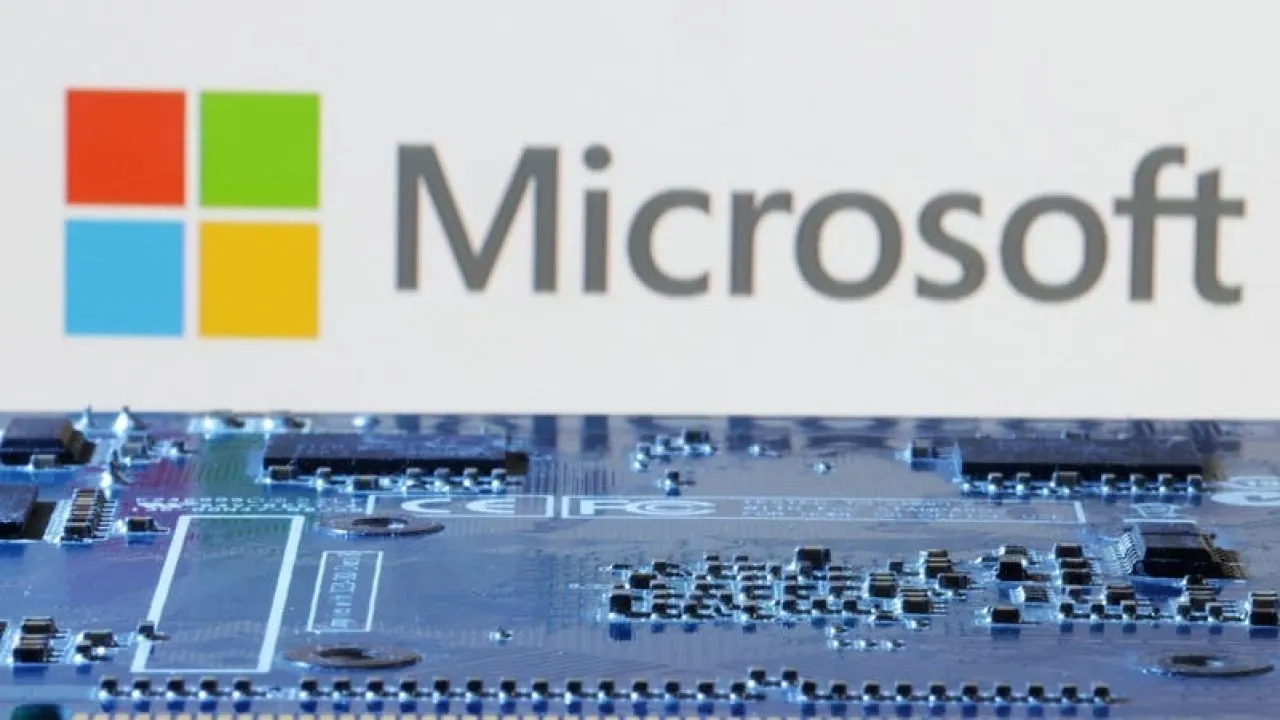
Khaberni - Microsoft disclosed on Monday its second generation of AI chips, alongside software tools targeting one of Nvidia’s biggest competitive advantages for developers.
Microsoft said that the new chip named "Maia 200" will be deployed this week in a data center in Iowa, with plans to establish a second site in Arizona.
This chip is the second generation of the AI chip called "Maia", which was introduced by Microsoft in 2023, according to Reuters.
The Amazon Web Services, a subsidiary of Amazon - one of Nvidia's biggest customers - are producing their own chips which are increasingly competing with Nvidia.
Google, in particular, has gained attention from some of Nvidia’s largest customers, such as Meta, which is closely working with Google to bridge one of the most significant software gaps between Google’s and Nvidia's AI chip offerings.
Microsoft stated that alongside the new "Maia" chip, it will provide a suite of software tools for programming it. This includes "Triton", an open-source software tool heavily contributed to by OpenAI - the developers of ChatGPT - performing the same roles as Nvidia's "Cuda", which many Wall Street analysts say is Nvidia’s biggest competitive edge.
As is the case with Nvidia's upcoming flagship chips "Vera Rubin", introduced earlier this month, Microsoft’s "Maia 200" chip is manufactured by Taiwan Semiconductor Manufacturing Company using 3-nanometer chip manufacturing technology, and will utilize high bandwidth memory chips, although from an older and slower generation than Nvidia’s upcoming chips.
However, Microsoft has also drawn inspiration from the strategies of some of Nvidia’s rising competitors, equipping the "Maia 200" chip with a large amount of what is known as "SRAM", a type of memory that offers speed advantages for chatbots and other AI systems when receiving requests from a large number of users.
Cerebras Systems, which recently entered into a $10 billion deal with OpenAI for providing the computational power, relies heavily on this technology, as does Groq, a start-up that secured a technology licensing deal reported to be worth $20 billion with Nvidia.