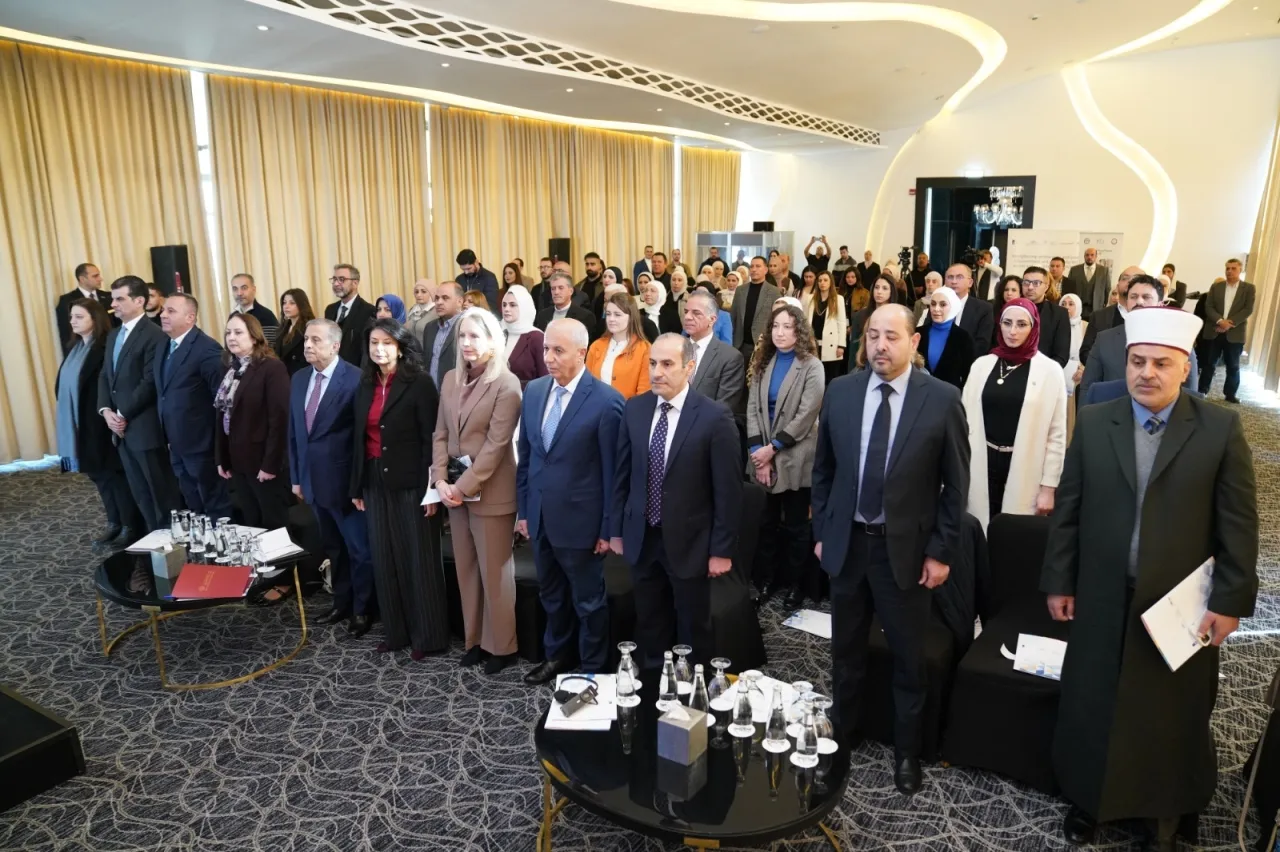
Khaberni - The National Council for Family Affairs, today, Monday, in cooperation with the Family Health Care Institute and the Private Hospitals Association, with support from the Dutch Embassy, launched a guide for the procedures of private hospitals in dealing with cases of gender-based violence, domestic violence, and child protection.
This guide clarifies and organizes the workflow procedures related to the provision of detection, treatment, and referral services for violence cases by private hospitals, alongside time-saving, effort reduction, and delivering quality services through reaching a shared understanding that supports the mechanisms for dealing with abused cases and unifying procedures within the framework of providing integrated and comprehensive services.
Mohammed Al-Zoubi, the Assistant Secretary-General for Technical Affairs at the National Council for Family Affairs, stated that the council, in partnership with the relevant national entities, has paid significant attention to institutionalizing the protection system from violence, believing that effective protection is not only about responding to cases but also building a comprehensive, clear, sustainable procedures system based on coordination and integration between different sectors, highlighting the role of the health sector as a fundamental pillar in the national protection system, being one of the first contact points with violence victims, where healthcare providers play a pivotal role not limited to providing medical treatment to these cases but also includes early recognition of physical, sexual, and neglect violence indicators, and dealing with them in a safe and confidential manner that respects the dignity of the cases and their choices within a comprehensive and integrated response.
He also noted the role of private hospitals, as they are a fundamental partner in providing health services, explaining that the development of the private hospitals' guide, launched today, was aligned with the national protection system as a qualitative step reflecting the commitment of the institutions to unify procedures for dealing with violence cases.
In turn, Dr. Fawzi Al-Hammouri, the president of the Private Hospitals Association, expressed his pride in launching the "Guide for Procedures of Private Hospitals in Handling Violence Cases Based on Gender, Domestic Violence, and Child Protection," considering it a national achievement that reflects the commitment of the private health sector to its humanitarian and social role in protecting the Jordanian family.
He emphasized the importance of this guide as it is directed to the private hospitals sector, which constitutes more than 60% of the health sector in the Kingdom, and receives more than 40% of emergency cases, giving it a broad and direct impact on the level of healthcare provided to citizens and residents.
Al-Hammouri clarified that the guide was the result of an effective national partnership between the Private Hospitals Association, the National Council for Family Affairs, and the Family Health Care Institute, supported by the Dutch Embassy, where it was developed through a series of collaborative meetings and discussions, ensuring practical, implementable outcomes within the daily work environment in private hospitals, considering the psychological and social aspects of survivors of domestic violence. He stressed the importance of sustaining this project through the actual application of the guide and building the capacities of healthcare professionals
Dr. Ibrahim Aql expressed his appreciation for the efforts of the National Council for Family Affairs and the Private Hospitals Association in developing this guide, affirming its role in enhancing the ability of private hospitals to early recognition and safe handling of violence cases as a crucial step in protecting the family and the community. He pointed out that the guide provides a comprehensive framework enabling healthcare professionals to offer specialized, comprehensive services that respect the rights of the survivors and support their safe and sustainable reintegration.
Aql confirmed that the institute played a central role in training the healthcare staff at private hospitals on the contents of the guide and the procedures for dealing with cases of gender-based violence, domestic violence, and child protection, noting that these trainings aim to enhance the practical skills of the workers, enabling them to provide safe and comprehensive services, and ensuring adherence to a unified methodology that enhances the protection of the survivors and their psychological and social support within an integrated response framework.
The Dutch ambassador to Jordan, Stella Klooth, from her side, reiterated the firm commitment of the Netherlands to eliminating all forms of violence against women and girls.
She mentioned that "this guide represents a crucial step in enhancing the protection of women and girls throughout Jordan, as by engaging the private sector, and providing private hospitals with clear procedures, survivors of gender-based violence have better access to high-quality medical and psychological care in these institutions" and the launching event included a presentation on the contents of the guide, its goals, the methodology of its preparation, the roles assigned to the targeted parties, and how they deal with the abused cases, alongside discussing the trainings provided to the staff of private hospitals involved including those working in the emergency department from department heads, obstetrician resident, pediatric resident, emergency physician, gynecologist, pediatrician, surgeon, emergency nurse, administrative manager, administrative officer, and social worker.
A discussion session was held discussing the outcomes of the trainings and the impact of applying the guide in private hospitals when dealing with arriving violence cases as part of a series of procedures according to case management methodology.
It should be noted that the guide was prepared relying on the Ministry of Health's Procedures Guide in dealing with violence cases as a primary reference, alongside forming a technical committee from private hospitals to provide technical support and review the outputs to ensure the guide covers all the procedures; the methodology of preparing it comprised several stages starting from planning and organizing which included conceptualizing the preparation mechanism, followed by the information gathering stage through office review related to the guide including the national framework for protecting the family from violence, the national unified response procedures guide to violence cases, and the Ministry of Health's Procedures Guide for workers dealing with abused cases, in addition to gathering information through field interviews; thereafter, preparing the analytical report as the third stage within the stages of guide preparation leading to the final stage represented by producing the guide in its final form.
The guide targets all workers involved in dealing with cases of gender-based violence, domestic violence, and child protection reviewed by private hospitals.