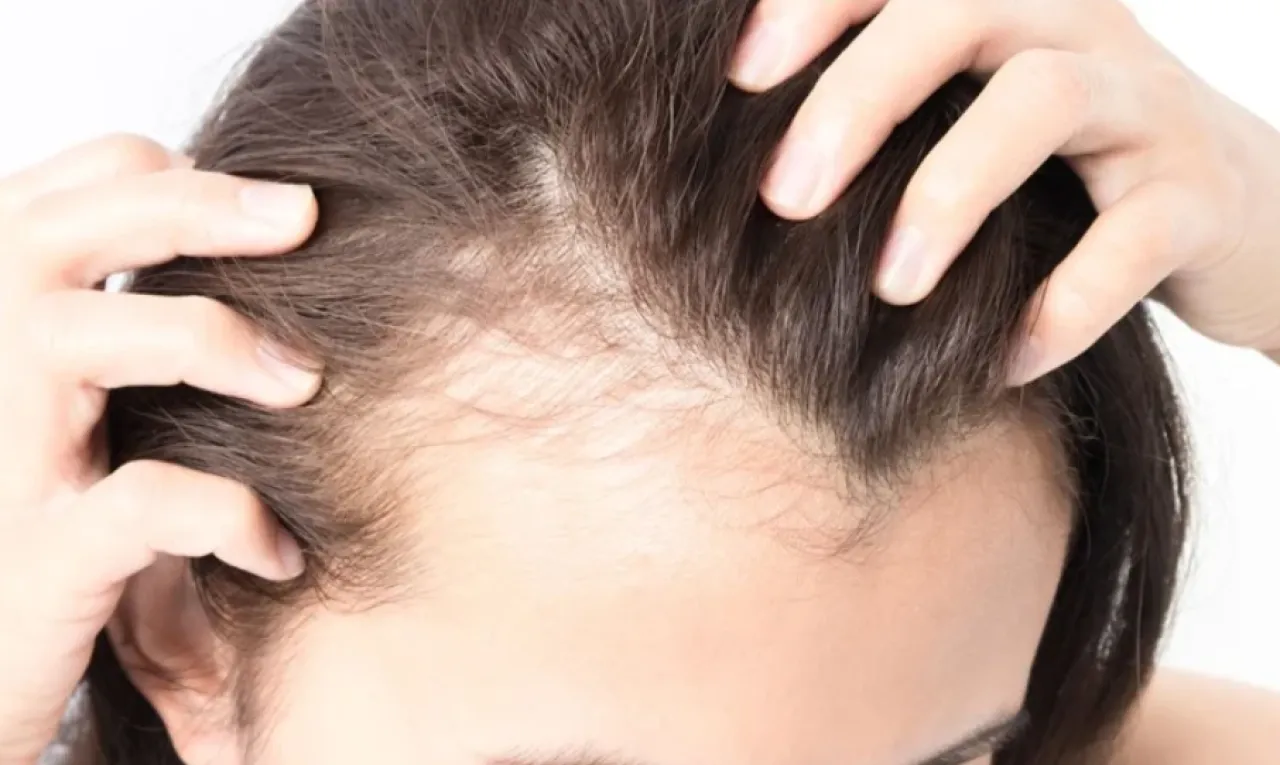
Khaberni - The increasing number of women reporting hair loss is a concerning phenomenon that has prompted both doctors and patients to seek solutions.
Whether it manifests as receding patches on the temples, a receding hairline, or losing large amounts of hair during showers, experts say there is a steady increase in the number of visits to their clinics due to this issue.
All of them are desperately searching for a solution to a problem that causes them significant psychological stress.
According to the "Daily Mail," it is estimated that about 8 million women in the United Kingdom suffer from some form of hair loss, especially as they age.
By the time they reach menopause, half of them will suffer from some degree of female pattern hair loss, according to the Hair Specialist Institute.
But this phenomenon is not limited to older women, as women in their twenties and thirties are also affected.
The "Daily Mail" report notes that online searches for the terms "hair loss" and "hair thinning" among women have more than doubled since 2021.
Why do women lose their hair?
Dr. Amna Adel, a dermatology and hair specialist, says, "There are many reasons behind the increase in hair loss among women, ranging from weight loss injections, stress, COVID-19 and the flu, to hormones, vitamin deficiencies, and even tight hair ties."
But the way we talk about this problem has also changed. In the past, women felt embarrassed to talk about it, considering it a cosmetic issue, and avoided visiting the doctor.
Health issues that may cause hair loss
Dr. Adel says that doctors need to be "investigators" and take a detailed medical history in an attempt to identify possible causes.
Excessive stress on the body may push more hair into the resting and shedding phase, more than the natural hair shedding and growth cycles, which do not exceed 10% of the hair.
And since hair takes 3 months from dying to falling out, this means that sudden hair loss after 3 months is linked to a stressful event.
This is known as telogen effluvium, which may occur after losing a loved one, experiencing a traumatic event, or even due to work stress, as Dr. Adel explains.
Infection
But this may also occur due to infections such as COVID-19, colds, or the flu.
That's because the body recognizes viruses as a threat, shifting its resources to vital organs, ultimately neglecting hair to prioritize survival.
Role of illness and weight loss injections
Dr. Amy Fuller, a hair transplant specialist who runs the "Hair GP" clinic in London, says, "There is ample evidence that diseases can affect hair and cause telogen effluvium."
She continues, "We've seen a widespread occurrence of this condition during the COVID-19 pandemic, given the number of patients, and it may also affect those with the flu this season, a strain against which many of us have no immunity."
The good news is that once the infection subsides, the condition is expected to improve within two months and should not persist for more than six months.
There is also increasing evidence of a link between weight loss injections and hair loss in a similar way.
It is believed that these injections affect the hair in two ways. First, when the body feels a type of stress and thinks it is in a state of famine, it prioritizes internal organs over hair, leading to rapid hair loss.
This also occurs with any rapid weight loss, regardless of how it is achieved.
Since slimming drugs and injections reduce appetite, people who take these medications often do not follow a healthy, balanced diet, leading to deficiencies in the vitamins and minerals necessary for hair.
Nutrition
Experts say that consuming ample amounts of protein, fruits, and vegetables, and using vitamin supplements when necessary, can mitigate hair loss.
Hair experts note that many of the women they see suffer from a deficiency in essential minerals needed for healthy hair, specifically iron, vitamin D, as well as zinc, folic acid, and vitamin B12.
Dr. Fuller explains that ferritin levels - the protein responsible for storing iron - should exceed 70 micrograms per liter, while vitamin D levels should exceed 50 nanomoles per liter.
She adds that many people suffer from a deficiency in vitamin D, which the body produces when exposed to sunlight, because they use sunscreen year-round to protect against UV damage.
She explains, "Vitamin D helps form new hair follicles and supports hair growth," adding that supplementing any vitamin deficiency with dietary supplements will help treat hair loss, but it will take time, and the supplements must be taken regularly.
Hormones
Women typically experience hair thinning as they age. This is due to decreased levels of estrogen, which leads to a shortened hair growth cycle and increased shedding.
Some types of hormone replacement therapy - topical estrogen and micronized progesterone - may help in cases of typical menopause symptoms.
A healthy diet rich in protein, vitamins, and minerals also helps delay hair shedding.