Khaberni - Human-like robots can perform Kung Fu and parkour movements. But can they prepare morning coffee?
Three robotics experts, during a panel discussion at the Davos forum on Thursday, said that humanoid robots need to move beyond dazzling promotional shows and start performing useful tasks in the real world on a large scale.
Jake Loosararian, CEO of the emerging Gecko Robotics in infrastructure, said that deploying robots in real-world environments is the biggest challenge facing this industry, which attracts significant media attention.
Loosararian added: "Deployment is currently the biggest issue for robots, in terms of their ability to really start making significant impacts, and in terms of having a clear roadmap," according to a report viewed by "Arabiya Business."
The co-founder of the company, based in Pittsburgh, said that building reliable data sources about the environments in which humanoid robots operate will be crucial for emerging companies looking to move beyond dazzling promotions and achieve tangible returns in the real world.
Loosararian added: "You have to deploy and build your robots as close as possible to the environment (they will operate in). This gives you information and a set of data that does not exist anywhere on the Internet or on YouTube, about the nature of these environments."
Daniela Rus, director of the Laboratory for Computer Science and Artificial Intelligence at the Massachusetts Institute of Technology, said that there is a gap between the ability of robots to perform tasks in the laboratory and their ability to do the work traditionally done by humans in the real world.
She added: "I can provide you with a robot that folds your clothes and puts the dishes in the dishwasher, but it might cost you half a billion dollars."
Rus explained that bridging this gap will require making progress in the ability of humanoid robots to perceive and interact with the world, through improving sensors and developing new artificial intelligence models that can deal with situations that the robot may not have encountered before.
Shao Tianlan, CEO of the Chinese company Mec-Mind specialized in artificial intelligence and robotics, said that one of the biggest obstacles to using humanoid robots in factory environments is developing their ability to learn directly from their human colleagues.
He added: "If we want to deploy a robot, I would say that practical demonstration is the most intuitive way to tell the robot what it should do. This is exactly the method by which we humans teach others."
Tianlan, who mentioned that "Mec-Mind" has delivered more than 10,000 "smart robots" over the past twelve months, indicated that he does not believe humanoid robots need "Einstein level" intelligence to perform useful tasks.
He predicted that robots would take over some of the functions performed by humans in controlled environments, such as in logistics and some service sectors, within "a few hundred days" to come.
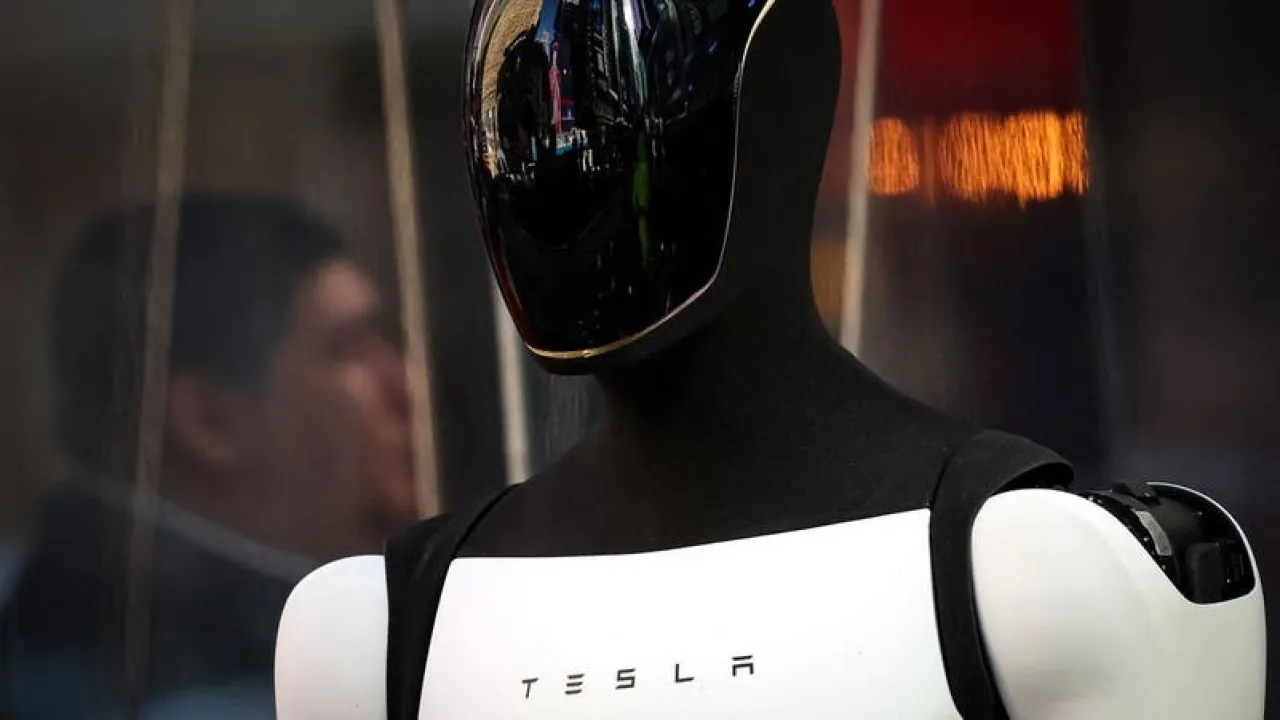
Human-like robots are becoming increasingly popular as companies like Tesla and Väger prepare to start their mass production. Elon Musk, CEO of Tesla, made bold predictions about the Optimus robot, saying it is capable of eradicating poverty and being the biggest product ever.
However, most humanoid robots have not yet been deployed in real environments, but many of their demonstrations are in controlled environments, and some use remote operation technology, where they are operated by human operators remotely.