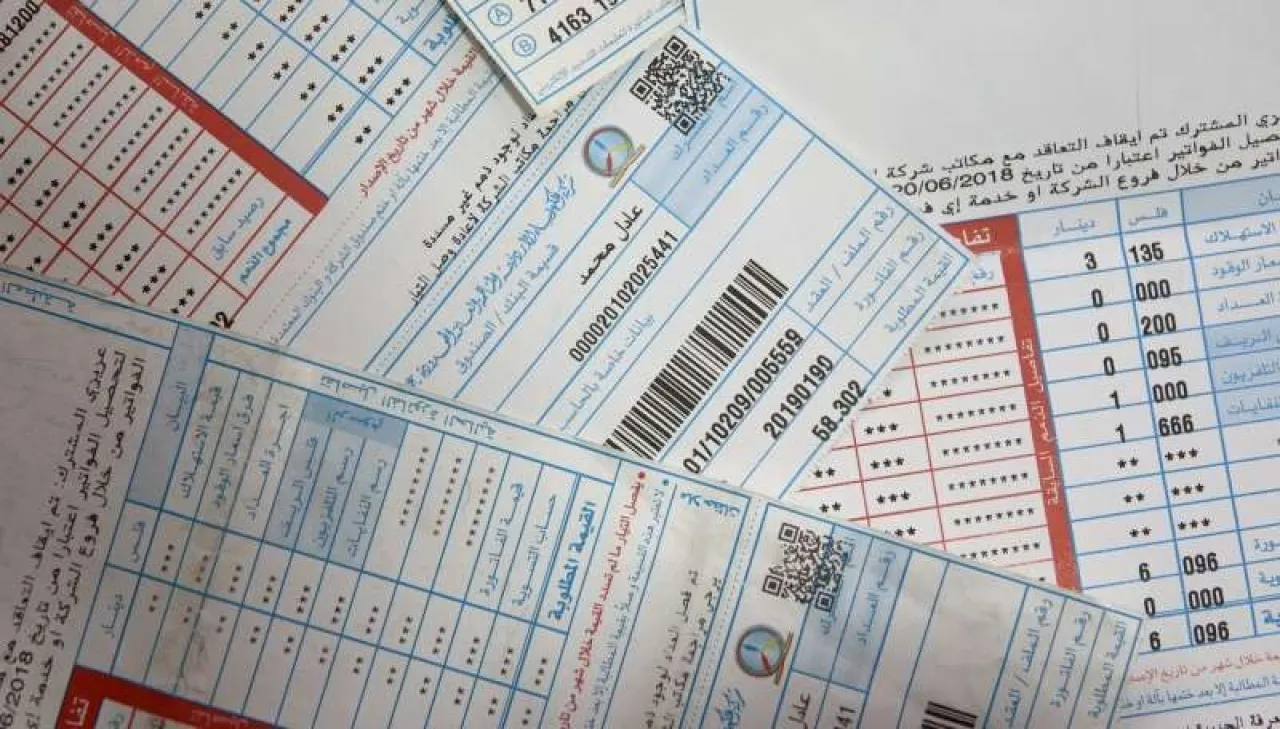
Khaberni - Economic expert Jawad Jalal Abbasi has called for an adjustment of the electricity tariff tiers (subsidized) where subscribers pay higher prices than the non-subsidized ones, upon reaching a certain consumption level.
Abbasi confirmed in an article published on Sunday that the three electricity distribution companies: Irbid Electricity Company for the northern governorates, Jordan Electricity Company for the central governorates, and the Electricity Distribution Company for the southern governorates, are profit guaranteed. They achieve profits as a fixed percentage of their assets along with some incentives to reduce losses, explaining that profit is achieved through adjusting the energy purchase costs from the National Electricity Company, and these companies do not bear the cost of technical losses or theft losses.
He clarified that the pricing of electricity in its different tiers is designed to load all subscribers with all costs, including technical and theft losses, debt service of the National Electricity Company, fuel costs, and operational costs, in addition to the profits of distribution and generation companies, noting that the overall cost ranges between 8 and 10 piasters per kilowatt-hour.
He explained that any residential subscriber with a meter of a (subsidized) tariff and whose monthly consumption remains below 600 kilowatt-hours is considered relatively subsidized, where the price for the first 300 kilowatt-hours is 15 dinars, and the price for the second 300 kilowatt-hours is 30 dinars, to a total cost of 45 dinars for using 600 kilowatt-hours, at a rate of seven and a half piasters per kilowatt.
He noted that the unsubsidized residential subscriber pays 12 piasters per kilowatt for the first thousand kilowatt-hours, and 15 piasters per kilowatt for consumption exceeding a thousand kilowatt-hours.
Abbasi pointed out that the main issue with the subsidized meter lies in that the average cost per kilowatt-hour on the subsidized residential subscriber reaches 12.5 piasters, which is higher than the cost of the unsubsidized subscriber if their consumption is one thousand kilowatt-hours in any month, explaining that the subsidized tiers start at 5 and 10 piasters, then jump to 20 piasters for any consumption exceeding 600 kilowatts, which typically occurs in the hot summer months or cold winter due to the use of heating, air conditioning, and electric water heaters.
He added that this causes significant leaps in the electricity bill, as an increase in home consumption by 50% from 600 to 900 kilowatt-hours leads to an increase in electricity costs by 133%, that is, from 45 dinars to 105 dinars, in addition to an increase in the waste fee linked to consumption.
He pointed out that when the pricing was announced, many warned of this (trap), questioning how the third tier of the subsidized could be 20 piasters, while the highest tier of the unsubsidized is 15 piasters per kilowatt.
Abbasi continued that the solution to this issue is simple, involving adjusting the subsidized meter price so that the third tier is 12 piasters for consumption from 600 to a thousand kilowatts, and 15 piasters for any consumption exceeding that, ensuring that the subsidized subscriber does not pay a higher price than the unsubsidized in any case.
He concluded by stating that logic dictates not describing the subscriber on their bill as "subsidized" in a month where they have paid an electric cost about 40% higher than the actual cost when consuming a thousand kilowatt-hours, suggesting that clarifying this on the bill might diminish the ongoing debate, and contribute to encouraging citizens to increase the use of solar energy systems, noting that this topic will be discussed in another article.