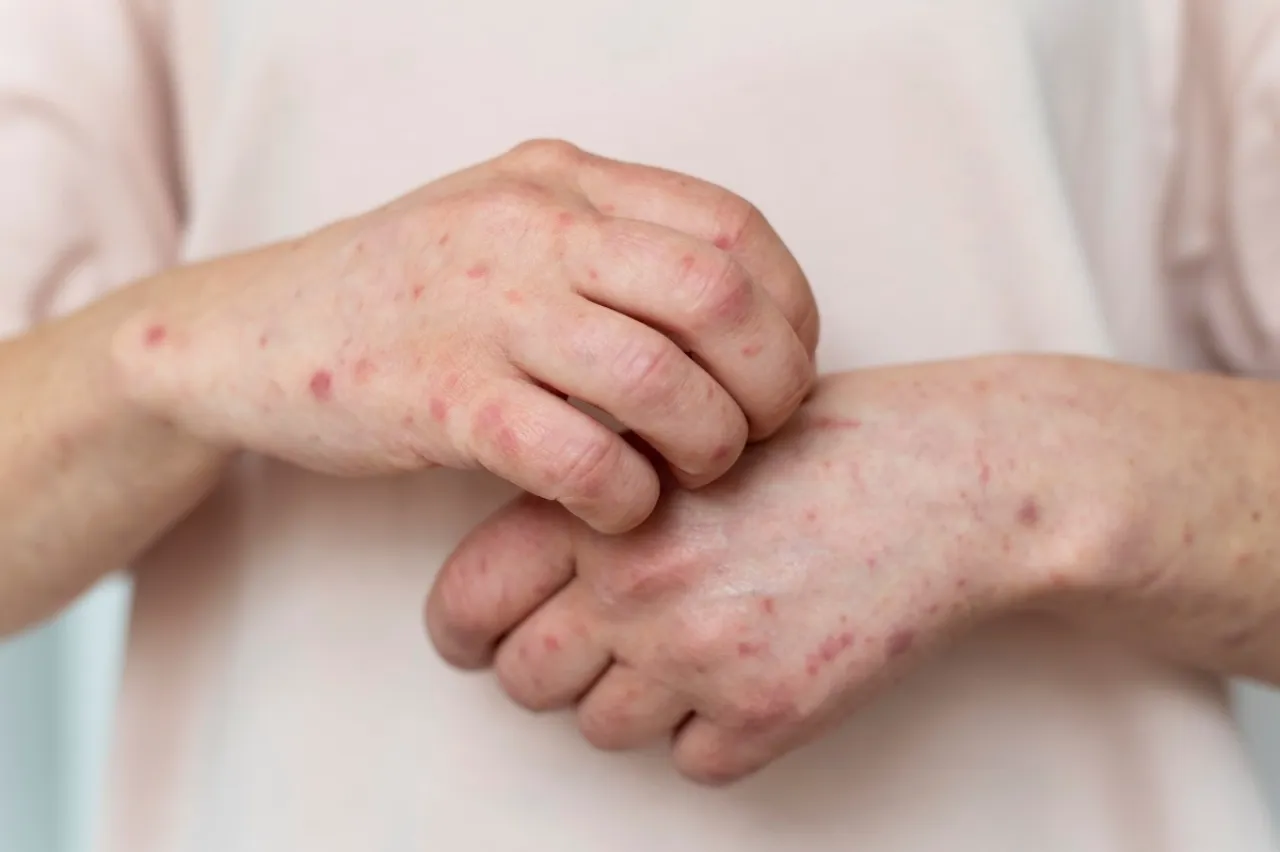
Khaberni - Experts say that the lack of awareness about what scabies is and how to treat it may be behind the recent sudden increase in cases in the United Kingdom.
When we think of scabies, we might remember London in the 19th century with its gloomy, crowded streets filled with people scratching their inflamed, rash-covered skin. However, scabies is not just a nightmare from the past; cases in the United Kingdom are on the rise, with current rates above the five-year moving average according to the Research and Monitoring Center of the Royal College of General Practitioners, and annual increases between 2021 and 2025 noted by the British Health Security Agency, with a noticeable spike since 2023. Across Europe, the number of incidents rose from 99 to 1341 scabies cases per 100,000 people between 2014 and 2023, according to the journal BJGP Open. The disease was named after the Latin word for "scratch" by the Roman author Aulus Cornelius Celsus in 25 AD; caused by a microscopic mite that burrows into the outer layer of the skin, causing elevated blisters or a rash and intense itching that increases at night, according to the National Health Service (NHS). Except for the face and neck, the rash can spread across the body, particularly affecting warm, moist areas such as the groin, under the breasts, and between the fingers and toes, and is primarily transmitted through direct and prolonged skin contact with an infected person. Dr. Alexander Goodrich, a consultant dermatologist at Harley Street Dermatology Clinic in London, told "Euronews Health," "In rare cases, the infection can be transmitted through contaminated towels, clothing, or bedding. Pets do not carry the human scabies mite, so the disease does not transfer from animals to humans."
Why are scabies cases rising?
Since ancient times, scabies has been a common disease with fluctuating rates, but the reported numbers have always been inaccurate due to confusion and social stigma. Tess McPherson, a professor from the British Association of Dermatologists, told "Euronews Health," "Many people do not visit a doctor or merely treat themselves from the pharmacy, or might not even realize they are infected." She explained that dermatologists have noted a significant rise in cases over the last four to five years, especially among younger demographics; this might be linked to returning to communal places after the COVID-19 pandemic and coincides with a lack of knowledge about scabies. She added, "I see a lot of misinformation, a lack of understanding of what it is, and a significant stigma; thus, even those who know they are infected do not tell others, and this is likely to continue." She also pointed to supply issues for some treatments in 2021-2022, and said that many people do not treat themselves or their close contacts properly or at the same time, leading to further infections and reinfestation.
How do you know if the rash is scabies?
There are many skin conditions that might cause itching with a rash like eczema, psoriasis, and hives, and because scabies tends to affect the groin area, it can sometimes be confused with a sexually transmitted infection like pubic lice. Early 19th-century difficulties in diagnosis and prolonged persistence of scabies inspired the term "seven-year itch." The most distinctive feature to watch for, according to Goodrich, is the presence of small, meandering tunnels on the skin.
How is scabies treated?
Scabies is typically treated with medicated creams or lotions containing permethrin or malathion to kill the mites, while severe cases such as crusted scabies (also known as Norwegian scabies) may require a prescription for the antiparasitic medication ivermectin orally, as per Goodrich. Since itching results from an allergic reaction, symptoms may continue even after the mites are eliminated, and to alleviate this, doctors may prescribe topical steroid creams for inflammation and itching. The rash may persist up to two months after treatment, and it is recommended to wash bedding and clothes at 60 degrees Celsius or higher, or leave them in a sealed bag for at least three days, according to NHS. As with all infectious diseases, all close contacts should be treated even if they show no symptoms; scabies can take up to eight weeks to appear initially, which can easily lead to missing it early on. McPherson stated, "It's important to get treatment if you are experiencing itching or have been in contact with a scabies case or suspect you might be infected. The treatments are effective if used correctly, and there's no need for any embarrassment."