Khaberni - A team of engineers and medical researchers developed a small device to measure the quality of red blood cells weeks after storage.
The device, which is no larger than the palm of the hand, uses vibrational technology to determine when red blood cells begin to deteriorate. Research teams at the University of Colorado Boulder and Colorado Anschutz plan to develop a coin-sized version in the future that can be connected to a smartphone and read results in just two minutes, via an app and the phone's camera.
A small device for measuring the quality of red blood cells after weeks of storage.
How does the device work?
The device relies on vibrational waves called surface acoustic waves that shake the red blood cells until they burst, revealing their health status.
Dr. Angelo D'Alessandro, a red blood cell expert, said: "This technology could help in better customizing blood units for the most vulnerable patients, such as children and patients with sickle cell anemia who receive regular blood transfusions."
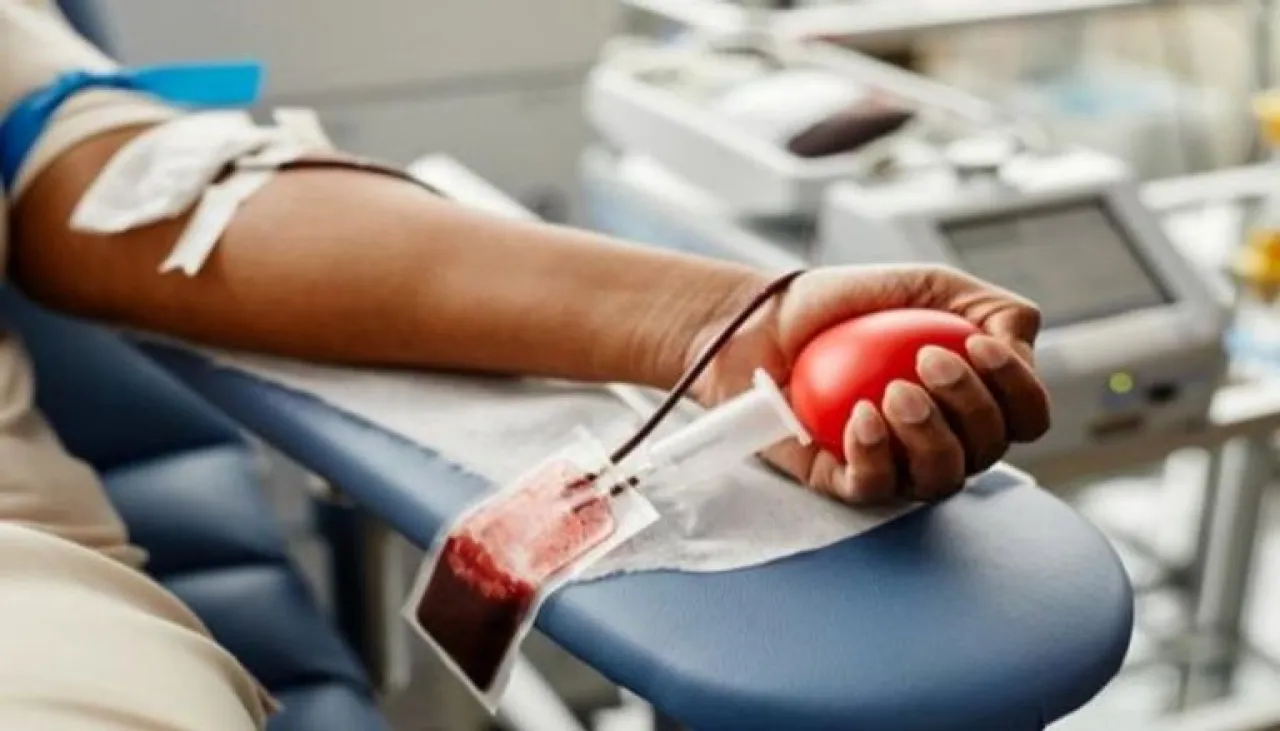
During storage, some red blood cells lose their normal shape and become spiky, before they die and burst through a process known as hemolysis. So far, blood can be stored in the United States for only up to 42 days, but some blood samples deteriorate faster than others, which may reduce the effectiveness of the transfusion.
A small device for measuring the quality of red blood cells after weeks of storage.
A real test for the samples
In the study, researchers tested the device on real blood samples from donors, and found that some cells undergo hemolysis at lower temperatures, and these samples are associated with certain levels of molecules linked to cellular aging.
Dr. Xiaoyun Ding, an associate professor in the Department of Mechanical Engineering, added: “As cells age, their membranes become weaker, making them more susceptible to decomposition under vibrations."
A small device for measuring the quality of red blood cells after weeks of storage.
Future prospects
Although the device has not yet been approved for use in medical centers, the team hopes it will one day become a standard tool for monitoring blood quality before transfusion, and possibly for detecting various blood diseases, including sickle cell anemia. Ding said: "We can measure anything that affects red blood cells or protein levels in the blood."
This innovation is an important step towards ensuring the safety and effectiveness of blood transfusions, and protecting the millions of patients who rely on this vital process each year.