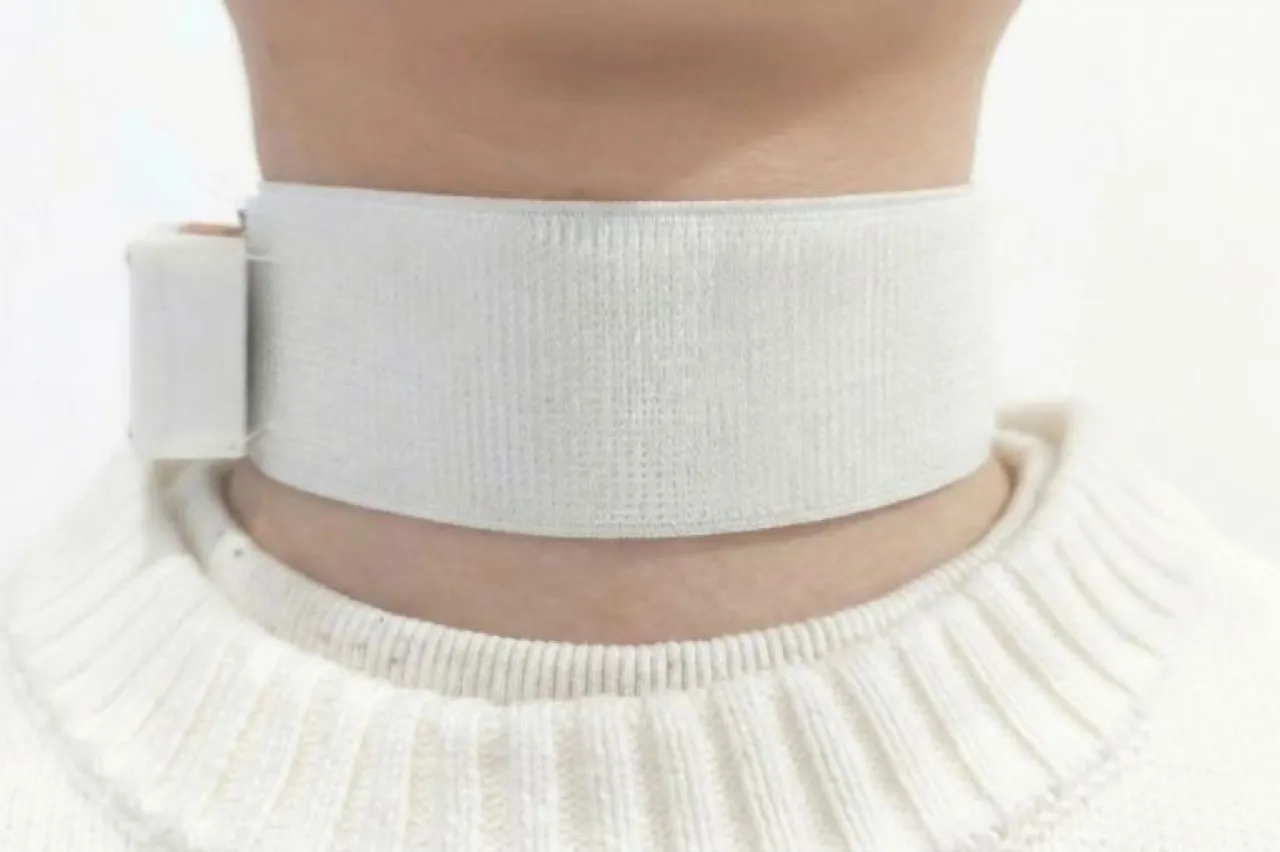
Khaberni - A research team from the University of Cambridge has succeeded in restoring the voices of stroke victims who lost their ability to speak using a smart bracelet enhanced with artificial intelligence, worn around the patient's neck.
The team named the new device "Revoice," indicating the technology's benefits that eliminate the need for brain surgeries to implant chips.
The new device operates by combining artificial intelligence technologies and sensors to capture speech and emotional signals directly from the patient, and then translate them into audible sentences and words that can be understood.
The team hopes to use the device with other neurological diseases patients besides strokes, including those suffering from Parkinson's disease and motor neuron disease according to a report by "The Independent."
The bracelet is distinguished by its sleek design as well as its extremely soft and flexible touch, which facilitates the direct capture of vibrations from the neck muscles and larynx.
The device functions by capturing muscle movements and lip movements, allowing the patient to attempt to speak silently for the device to speak on their behalf, while artificial intelligence analyzes data related to emotions and voice tone to add a human touch to the resulting sound.
The device has also succeeded in a small trial conducted by the university on five patients suffering from stroke-related dysarthria, achieving more than 95% success for words and 97% for sentences.
Luigi Uchibenti, a member of the research team from the engineering department at Cambridge University, explained the device's role in treating patients, considering that it helps both the patient and the therapist develop a more effective treatment plan to restore speaking ability or fluency, according to a report by the German news agency.
He added, "We have created a device that helps the patient communicate more effectively."
The CEO of the Stroke Association, Juliet Bouverie, welcomed the new innovation, affirming its benefits to more than 1.3 million stroke sufferers in the UK alone.
She added that this device might have a significant impact on self-confidence, relationships, and independence after a stroke. Bouverie welcomed the initial research, stating that it explores new ways to support stroke survivors who struggle with communication difficulties.
The German agency's report confirms that the research team intends to expand their study on the device before finally adopting the technology and making it available to users, to enrich the actual experience of the model.