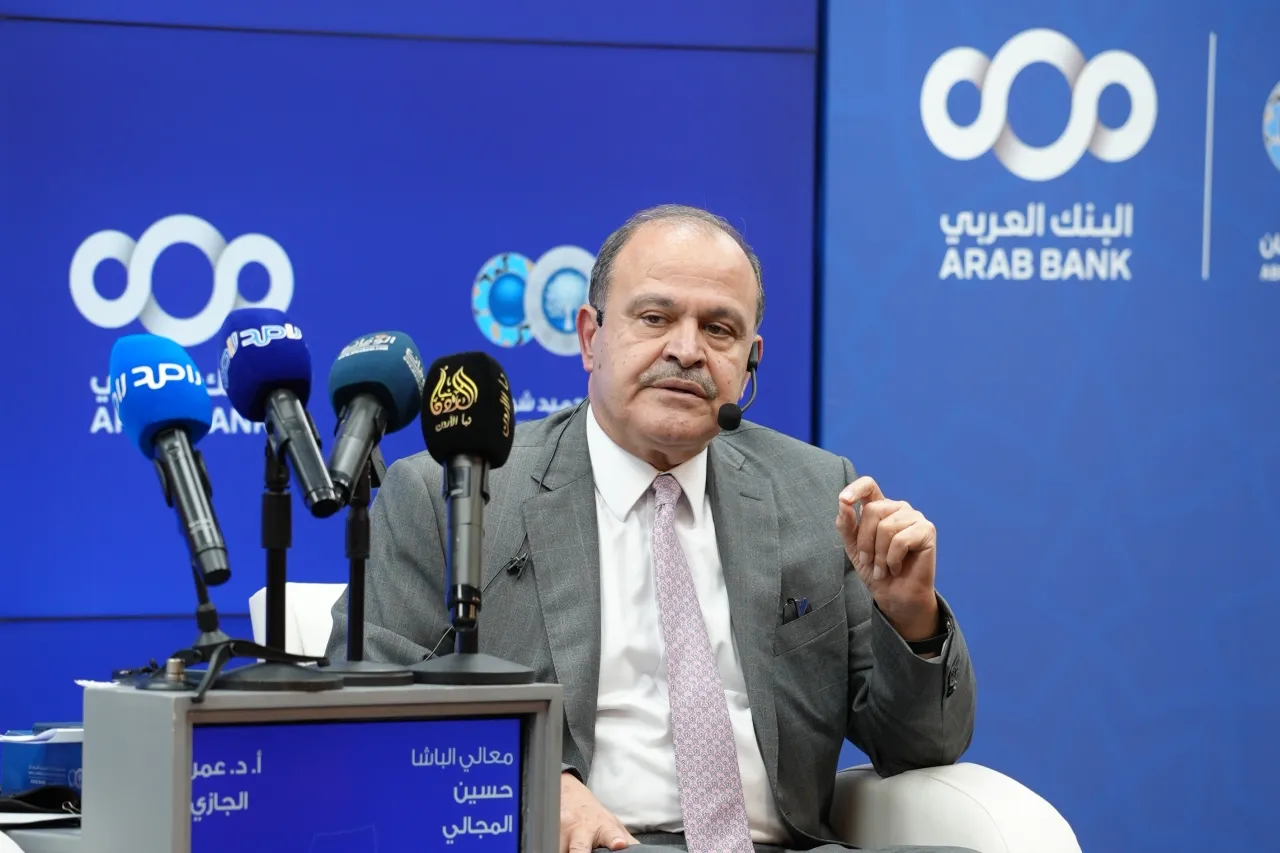
Khaberni - Former Interior Minister Hussein Hazza' Majali stated that Jordan, historically and geographically, is situated in a turbulent region, scarcely emerging from one crisis before plunging into another, with most crises influenced by regional events.
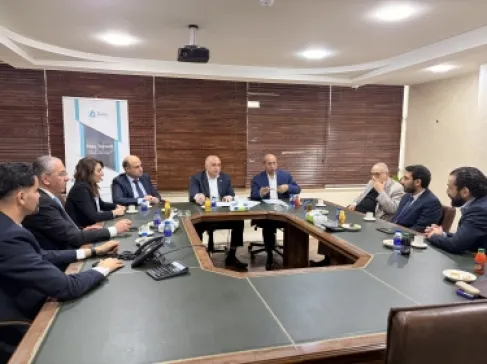
He added in a dialogue organized by the Abdul Hameed Shoman Foundation Forum last evening, titled "Fortifying the Internal Front to Face Regional Challenges", moderated by Dr. Omar Al-Jazi, attended by a group of interested individuals and invitees, that what distinguishes Jordan from other regional countries is the stability of its governance system over the past 100 years, the presence of a nation loving its country, and when crises occur, they stand united in facing all the dangers surrounding them, with the history of Jordan bearing witness to this.
Majali reviewed the main internal and external challenges and their causes and the extent of their impact on Jordan, emphasizing the importance of overcoming them in the future. He pointed out that one of the most significant challenges facing Jordan is the Palestinian issue, explaining that following the ceasefire in Gaza, Israel began dangerous procedures in the West Bank, firstly aiming to annex 92% of the West Bank territories and expand settlement building, as well as aiming to displace the population abroad. He also emphasized that the Judaization of sacred places and repeated incursions into the Al-Aqsa Mosque, and the alleged temple building are all actions that provoke the Muslim and Arab world, with Jordan being on the front lines.
Majali also highlighted that Jordan faces terrorist threats from extremist groups, affirming the capability and professionalism of the security forces in dealing with these groups.
He also pointed to the refugee crises, which he considers one of the most significant challenges facing Jordan, explaining that Jordan hosts more than one million Syrian refugees, putting a considerable strain on the economic and social resources, with the current challenge being facilitating the return of the refugees to their homeland.
Majali discussed many challenges due to the conditions, conflicts, and instability in the region, in addition to the rapid international changes and developments.
Majali discussed many solutions for overcoming the challenges facing Jordan and how to fortify its internal front, asserting that fortifying the internal front does not start from the outside, but rather from awareness, trust, and justice within the society, as well as emphasizing the necessity of protecting identity and national unity, as they are pillars of the state's stability, and this entails fostering belonging, enhancing citizenship, and discarding disputes to maintain a cohesive internal front to face all challenges.
He also emphasized the importance of the government implementing radical economic reforms and encouraging national and foreign investments, mentioning the potential of benefiting from developing promising sectors like renewable energy, technology, and tourism to improve economic conditions. Additionally, focusing on improving the quality of education and providing education and vocational training opportunities for youth, and making education and health care free for all Jordanians.
Majali stressed the importance of positive communication with each other, discarding disputes, standing behind the Hashemite leadership, our Arab army, and our security apparatus, and also unifying the national discourse with an official and media narrative that is clear and consistent, explaining positions and policies, preventing contradictions or misleading information. He also pointed out the importance of economic and social protection for citizens through alleviating the impacts of regional crises on prices and living standards, supporting the most affected groups, enhancing institutional readiness through continuous coordination between security, economic, and media institutions to manage any regional emergency, as well as enhancing trust between the state and the community, transparency in decisions, and preemptive explanation of any actions affecting the lives of citizens or the economy, and expanding and diversifying the regional and international relations network is of utmost necessity, not relying on just one entity.
Dr. Al-Jazi affirmed that the Middle East region has witnessed significant fundamental transformations in the past few years, changing the balance of powers, reshaping alliances, and opening doors to new security, political, and economic challenges, pointing out that Jordan, like other regional countries, has been directly affected by these changes, due to its geographical location and the sensitivity of its political and security environment.
He noted that fortifying the Jordanian internal front means enhancing the national capacity to withstand internal and external challenges, building a cohesive society that feels secure and trusts its institutions, explaining that this objective can be approached through main axes, notably enhancing the rule of law and justice, through the application of law on everyone without discrimination, which increases trust in institutions, combating corruption with effective and transparent mechanisms, publishing investigation results to the public, developing political life and popular participation, through supporting the political modernization of active parties with real programs, not nominal ones, encouraging the participation of youth and women in politics, and enhancing the culture of dialogue and respect for differences.
He stressed the importance of improving the economic situation and living capacity, investing in creating quality employment opportunities, especially for youth, supporting productive sectors such as agriculture, industry, and technology, and developing social protection networks to ensure a dignified life for the most vulnerable groups.