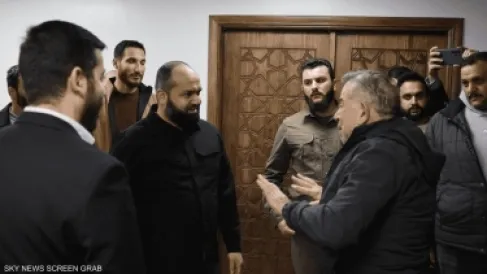
The Canadian authorities announced the detention of Israeli actor Guy Hochman for several hours, based on a legal claim filed by the Hind Rajab Foundation due to his statements related to the Israeli aggression on Gaza, in a move that sparked wide political and legal controversy within the rights and media circles.
According to informed sources, the detention took place within the framework of preliminary legal measures, after the competent authorities received an official complaint accusing Hochman of making statements that incite violence or justify violations committed against Palestinian civilians during the ongoing war on Gaza.
Controversial Statements
The issue dates back to public statements made by the Israeli actor via media and digital platforms, in which he expressed support for the Israeli military operations in Gaza. These statements were considered by rights groups, led by the Hind Rajab Foundation, to exceed the bounds of freedom of expression, falling within a discourse that encourages hate or justifies war crimes.
The foundation asserted in its lawsuit that these statements cannot be separated from the general context of the aggression, which resulted in thousands of civilian victims, including children and women, considering that silence about such discourses contributes to normalizing violence and justifying the serious violations of international humanitarian law.
Unprecedented Legal Action
This step is part of a broader legal path adopted by the Hind Rajab Foundation, which aims to prosecute individuals involved in incitement or moral complicity with crimes committed in Gaza, based on Canadian laws that criminalize incitement to violence and hate speech, and allow the prosecution of certain international crimes.
Observers believe that the detention of Hochman, even for limited hours, reflects the seriousness of the Canadian authorities in dealing with rights complaints, even though it has not yet reached the stage of formal accusations or referral to the judiciary.
This development occurs in the context of escalating international legal pressures related to the war on Gaza, where there are increasing calls to hold officials accountable, whether directly or indirectly, for serious human rights violations.
Analysts believe that the recourse of rights institutions to national courts in Western countries indicates a strategic shift in the course of legal prosecutions, focusing on the use of local laws as a tool for pressure and accountability, amidst the stalling of traditional international pathways.