Khaberni - The political and security circles in Israel are experiencing a "state of breakdown" and increasing fear against the background of the rapid developments in Eastern Syria.
Analysts for the "Yedioth Ahronoth" newspaper consider President Bashar al-Assad's government's control over Eastern Syrian areas and ending the influence of the Kurds and "SDF" forces, a step that represents a strategic shift weakening Israeli calculations and complicating its future options.
Israeli estimates acknowledge that what happened puts Tel Aviv in a worse situation, after it had bet on dealing with a weak Syrian party at the beginning of its political and military journey.
"Yedioth Ahronoth" quotes reserve Major Sarit Zehavi, founder and president of the "Alma" center, which deals with Israeli security challenges in the north, saying: "It is better for Israel to sign an agreement with a weak party that needs us more than we need it. What is happening in Eastern Syria significantly strengthens the legitimacy," in a clear admission of the failure of the bet on the disintegration of the Syrian arena.
The newspaper said that Israel has long tried to present itself as a protector of some minorities in Syria, with the Kurds and Druze at the forefront, but recent developments have shown a retreat in this role and a loss of credibility, as the withdrawal of Kurdish forces from wide areas, and the downfall of symbols associated with them, constituted a direct blow to any indirect influence Tel Aviv hoped to employ.
Israeli observers believe that Damascus's regaining control over these areas strengthens the Syrian state's position and opens the door to rebalancing political and military decisions, which Israel considers a direct threat to its security, compared to the stage of chaos and fragmentation.
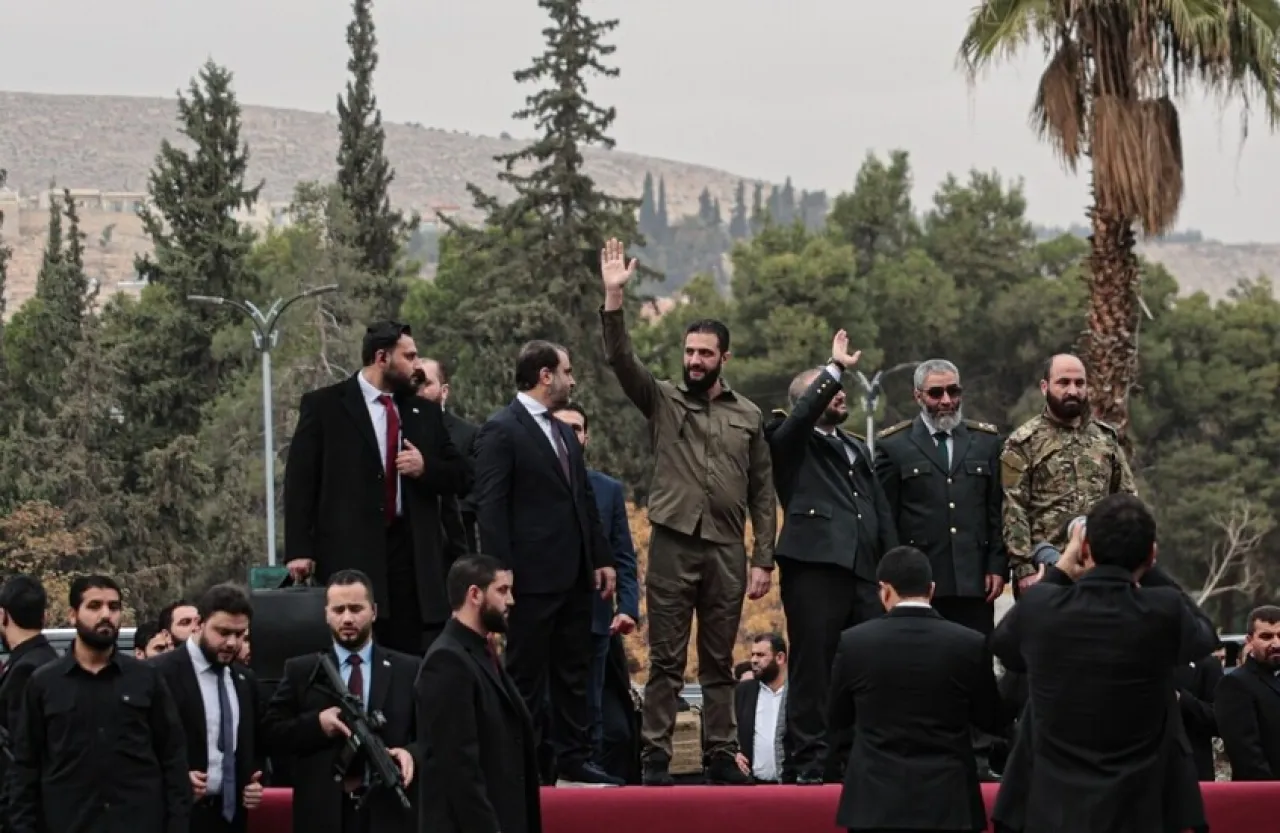
Zehavi points out that several large public celebrations in Syria, during which Palestinian flags and slogans supporting the Palestinian resistance were raised, in a scene that caused "great discomfort" inside Israel. She confirms that those chants consider Israel "an enemy", and that these messages reflect a clearer Syrian political and public aligning with the Palestinian cause.
In the same context of concern, Tel Aviv acknowledges that Turkey was the biggest winner from the decrease in Kurdish influence, which Israel considers another negative development. Ankara, according to Israeli estimates, has become a key player in shaping the new Syria, while Israel sought to exclude any Turkish presence or influence from the Syrian arena.
Israeli analysts emphasize that the United States played a pivotal role in allowing this shift, or at least in not obstructing it, despite being the main previous supporter of the Kurds. Some experts go on to say that the battle is moving towards cementing Damascus's rule and enhancing its regional position.
Regarding whether Israel should help the Kurds, Zehavi answered: "It is too late. There is an agreement that the Americans will take the lead, and therefore the key lies with them. We are not a major party in this field, and it is not certain that we should spoil our relations with the Americans now. But we need to act diplomatically with them and explain what is happening here to them."
Professor Eyal Zisser, an Israeli expert on Syrian affairs for the "Yedioth Ahronoth" newspaper, said: "There is no doubt that Ahmad al-Shar's attack on the Kurds in northeast Syria was carried out with Turkish assistance and with tacit approval from Washington."
Professor Zisser added: "Ahmad al-Shar is taking another step towards cementing his rule in the Syrian state."
The summary of the situation in Israel is that Tel Aviv faces a new Syrian reality characterized by a more cohesive state, increasing Turkish influence, a Syrian street openly supporting Palestine, and a decline in the pressure cards it has long relied on, a reality that imposes on Israel the need to recalculate its position, at a time when its options appear narrower than ever before, according to Israeli observers.