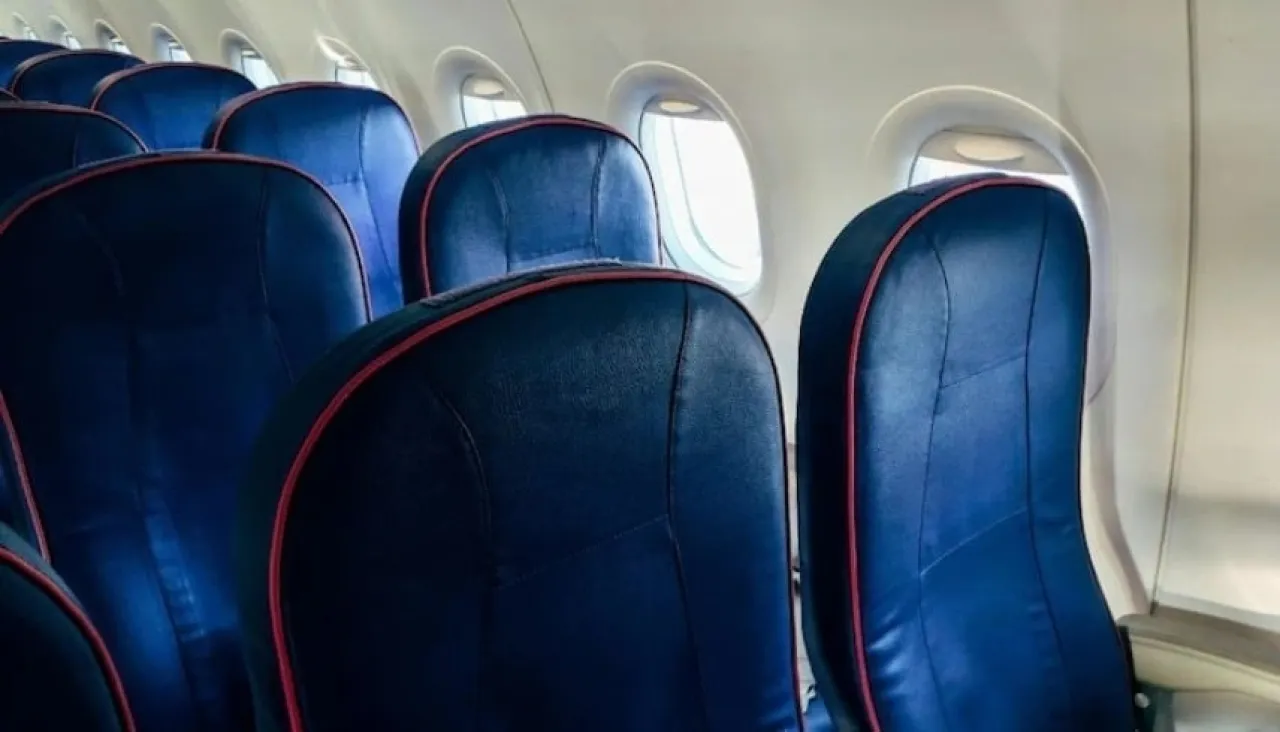
Khaberni - Travelers, especially those who love sitting by the window, are often surprised to find that their seat does not directly face the window, but is either slightly forward or behind the sitting position.
Although it may seem like an annoying design error, aviation experts confirm that this is the result of precise engineering and operational considerations, where safety, efficiency, and cost take precedence over the comfort of viewing.
Specialists point out that aircraft design does not prioritize aligning seats with windows, as these details are governed by a range of technical and economic factors, including:
The structural design of the aircraft
Windows are distributed according to the requirements of the airframe to ensure durability and withstand pressure differences at high altitudes, and not based on the locations of seat rows, making alignment secondary.
The standard distances between seats
Seats are installed at fixed distances between rows (Seat Pitch) to ensure safety and a minimum level of comfort, whereas windows do not follow these same distances, often leading to misalignment.
Maximizing passenger numbers
Airlines strive to utilize space as much as possible without compromising standards, as adjusting seats to align with windows could reduce their number and affect revenues.
Modular seat designs
Seats are manufactured in modular units that can be installed in different aircraft models, to reduce manufacturing and maintenance costs, while window positions vary from one model to another.
Differences in aircraft models
Each aircraft has a unique body design and window placement, whereas airlines prefer to standardize seat arrangements across their fleet to facilitate operations.
Cost reduction and ease of maintenance
Customizing seats to match each individual window would increase costs and complicate maintenance operations, hence standard layouts that are quicker and more cost-effective are adopted.
In a related context, aviation experts reveal other facts related to aircraft design, such as that windows are circular to distribute pressure evenly and prevent cracking, that white is used in cabins to reflect light and show cleanliness and give a sense of spaciousness, and that the white lines in the sky are known as "contrails," resulting from the freezing of water vapor emitted from the engines.