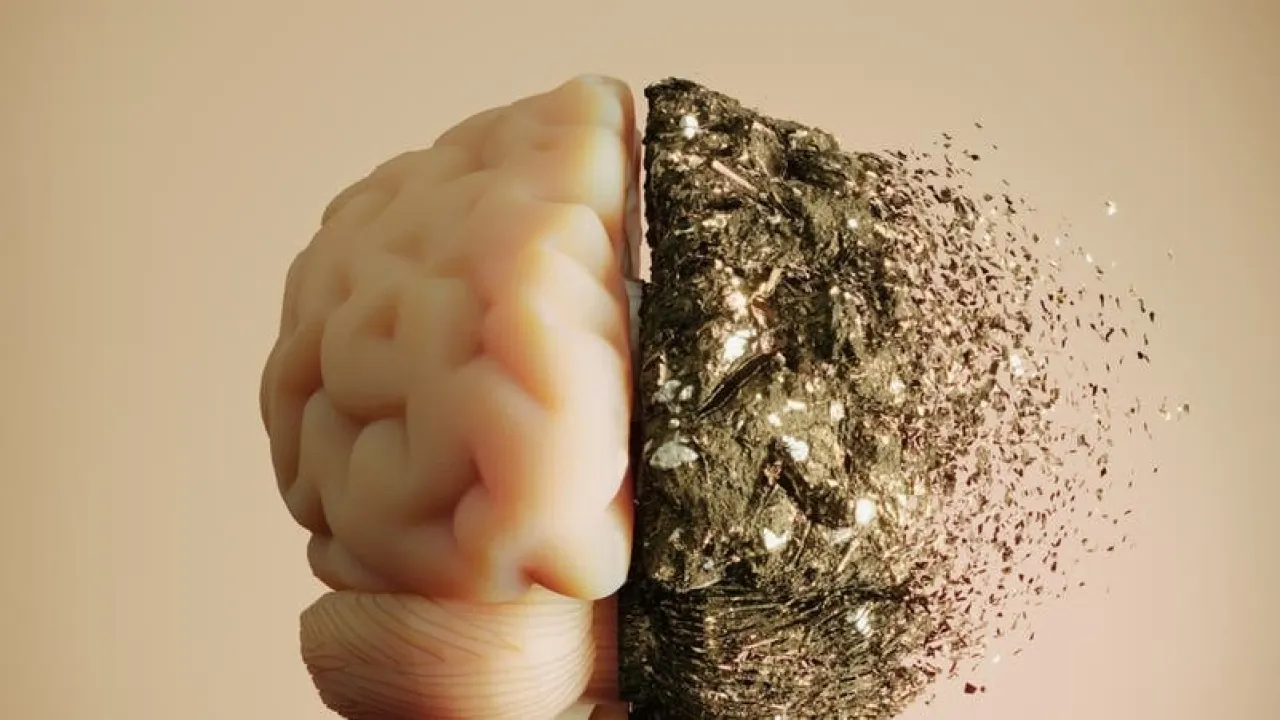
Khaberni - Researchers found that lack of sleep accelerates brain aging and makes it appear older than its actual age. Scientists say that sleep helps renew the body and protect the brain, and when it is disturbed, the brain suffers the consequences, linking brain aging to cognitive decline and an increased dementia risk.
A report published by the British "Independent" newspaper, and reviewed by "Al Arabiya Net," mentioned that lack of sleep has previously been linked in many studies to dementia, but experts say it is unclear whether unhealthy sleep habits contribute to the development of dementia or are just an early symptom of brain degeneration.
In the new study, researchers at the Karolinska Institute in Sweden examined the sleep behaviors and MRI scans of more than 27,000 British adults aged between 40 and 70 years, finding that those with lack of sleep had brains that appeared significantly older than their true ages.
The brain imaging study used machine learning techniques on brain images of healthy individuals who had no serious diseases. Once the model understood the features of normal aging, it was applied to the data.
The participants' sleep quality was evaluated based on five self-reported factors: chronotype (morning/evening activity), sleep duration, insomnia, snoring, and daytime sleepiness. They were then divided into three groups according to their scores: healthy sleep (more than 4 points), average sleep (2-3 points), or poor sleep (less than 1 point).
Dr. Abigail Dove, a researcher in the Department of Neuroscience and Society and Care Sciences at the Karolinska Institute, who led the study, said, "The gap between brain age and chronological age widened by about six months for every one-point decrease in the sleep quality score."
She added, "People who suffer from lack of sleep have brains that appear, on average, one year older than their actual age."
The researchers indicated that an increase in inflammation levels could partly explain the relationship between sleep and brain aging.
Growing evidence suggests that lack of sleep increases inflammation in the body, which may harm the brain by damaging blood vessels, promoting the accumulation of toxic proteins, and accelerating the death of brain cells.
Blood samples taken at the start of the study showed that inflammation levels explain 10% of the relationship between sleep and brain aging.
Dr. Dove affirmed, "Our results provide evidence that lack of sleep may contribute to accelerated brain aging and point to inflammation as one of the underlying mechanisms.. Since sleep is modifiable, it may be possible to prevent accelerated brain aging and possibly even cognitive decline through healthy sleep."
Scientists believe that other possible explanations for brain aging following prolonged lack of sleep include the negative effects it has on the brain's natural waste removal system, which is primarily active during sleep. When sleep is disturbed or insufficient, this system may not function properly, allowing harmful materials to accumulate in the brain.
The researchers also noted that lack of sleep negatively affects cardiovascular health, which in turn can negatively affect the brain, as poor blood flow may deprive brain cells of oxygen and nutrients.