Al-Bakkar: The Ministry of Labor is moving towards expanding and developing flexible work policies
Al-Bakkar: We are working on developing legislation to activate women's economic participation
Al-Bakkar: We work in the ministry with all national institutions to enhance women's economic participation
Howari: Upcoming legislation to empower women and enhance the fairness of the labor market
Al-Khudair: Safe work environments and effective legislation are fundamental to women's economic empowerment
Al-Jarrah: Incentives and legislation to enhance women's stability and ensure a safe work environment
Al-Qawabebah: Economic empowerment requires flexible policies and local solutions
Tahboub confirms the need to evaluate the legislative impact and expand protection to include informal work
Beni Amer: Launching a national index measuring the quality of women's economic participation in Jordan
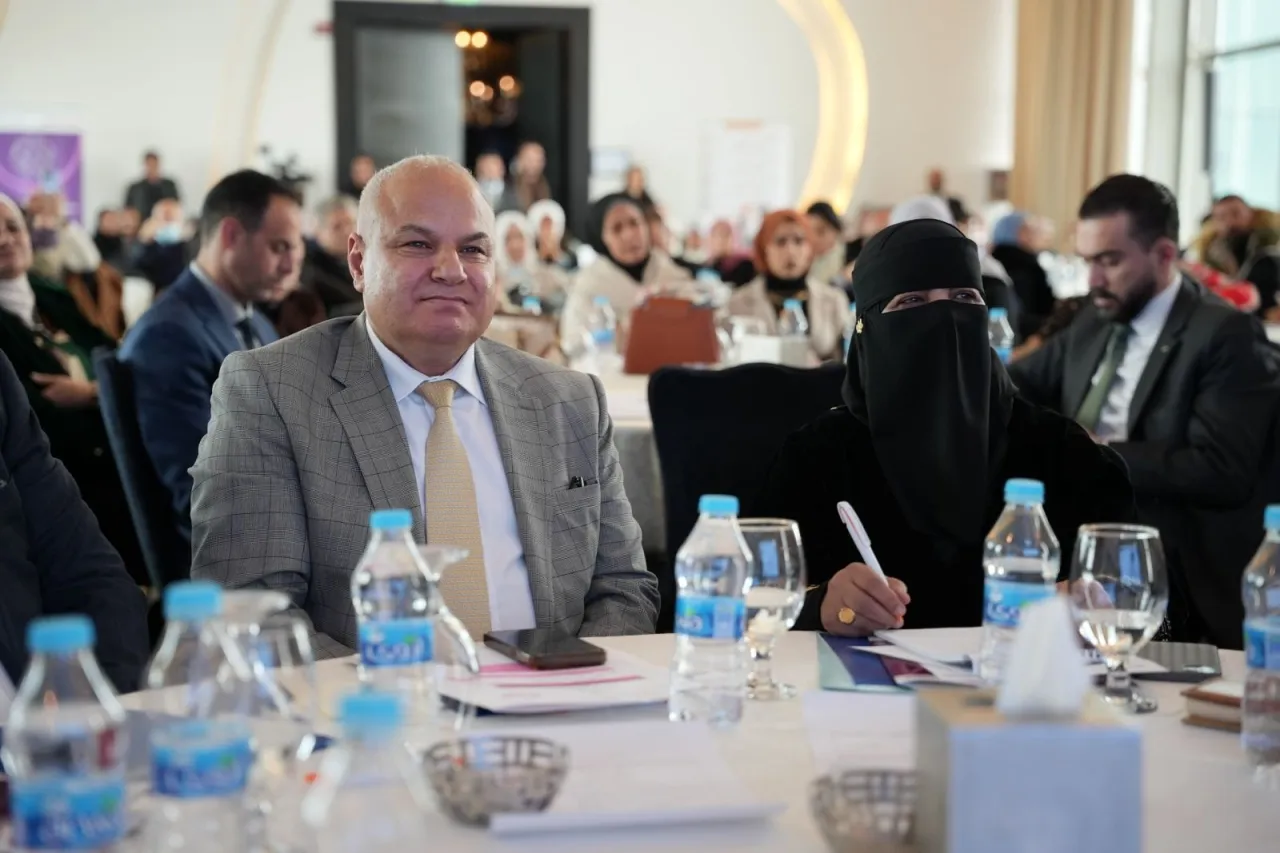
Khaberni - Under the auspices of the Minister of Labor, Dr. Khaled Al-Bakkar, and in cooperation with the Women's Affairs Committee and the Labor, Social Development and Population Committee of the House of Representatives, Al-Hayat Center – Rased, in partnership with ActionAid – Arab Region, held a national forum titled "Women's Economic Participation: Reality, Challenges, and Aspirations" today, attended by the Deputy Speakers of the House of Representatives, Ms. Hala Al-Jarrah and Ms. Maysoun Al-Qawabebah, with the participation of several deputies, as well as a selection of representatives from official institutions, political parties, unions, civil society organizations, and experts in labor and women's issues.
Dr. Khaled Al-Bakkar, the Minister of Labor, stated in his speech that women's economic participation is a fundamental pillar in the path of comprehensive development and enhancing national productivity. He highlighted that empowering women politically, economically, and socially is an integral part of the state's modernization project, and the government aims, through its economic modernization vision, to increase women's participation in the labor market by addressing structural obstacles, developing supportive and safe work environments, and enhancing the integration of social and economic policies for more inclusive growth and fairness.
Dr. Al-Bakkar explained that the Ministry of Labor has been working in recent years to develop legislative and regulatory frameworks to enhance the protection of women in the workplace and expand their economic participation, by issuing special instructions to protect pregnant and nursing women, regulate night work according to Article (69) of the Labor Law, and monitor the compliance of private sector establishments in providing institutional nurseries or approved alternatives in accordance with Article (72), in addition to adopting flexible work systems and developing safety and health regulations, ensuring a decent and safe work environment that considers women's needs and supports their professional stability.
The Minister pointed out that the ministry strengthened its supervisory tools by updating the electronic inspection system and allowing complaints to be filed through the "Protection" platform, where 31,069 inspection visits were carried out in 2025, resulting in 6,062 violations being documented and referred to the judiciary. Regarding economic empowerment, he explained that the national employment program allocated 45% of its beneficiaries to women, providing 31,444 supported work contracts for females, and it is expected to employ about 2,000 women in 2026. Additionally, the number of production branches reached 35 branches, employing 9,326 female workers, achieving a female participation rate of 90%, in addition to supporting 184 women's projects through the Development and Employment Fund, creating 374 job opportunities.
On her part, the Chairwoman of the Women's Affairs and Family Committee in the House of Representatives, MP Faleeha Salameh Al-Khudair, emphasized that women's economic empowerment is a developmental and national necessity directly reflected in family stability and enhancing national production. She stressed the importance of providing safe and equitable work environments that protect women from discrimination, violence, and harassment, and ensure fair opportunities for employment, promotion, and active participation. She referred to the "Women-Friendly Mark" project as a practical framework that pushes institutions to adopt more inclusive policies that support work-life balance, urging the transformation of the conference's outputs into clear implementation plans supported by monitoring and evaluation mechanisms. She also confirmed the committee's commitment to continuing the work with relevant authorities to enhance the legislative and policy framework supporting women’s rights and empowerment in the labor market, in alignment with the national vision for economic and administrative modernization.
The Chairman of the Labor, Social Development and Population Committee in the House of Representatives, MP Andre Howari, stressed the importance of enhancing cooperation between the legislative authority and various government, economic, and community sectors to support labor market policies and economically empower women. He indicated that the committee gives special priority to women's participation within its legislative and supervisory agenda. He explained that the committee will work in the coming stage to review and develop legislation related to the work environment to ensure equal opportunities, prevent discrimination, and enhance protection from any practices that affect women's dignity, in addition to supporting legal frameworks that encourage flexible work and expand employment opportunities for women in productive sectors. Howari confirmed that partnership with state institutions, the private sector, and civil society organizations represents a fundamental approach to ensuring the translation of national recommendations into practical legislative amendments that contribute to raising women's economic participation level and enhancing their stability in the labor market.
On her part, the Programs Director at ActionAid – Arab Region, Sanaa Al-Hayari, stated that the "Women-Friendly Mark" project serves as a practical model for enhancing safe and fair work environments, through joint work with national partners to develop policies and practices that reduce violence and harassment in workplaces. She mentioned that the project aligns with the national economic modernization orientations and reflects ActionAid's commitment to supporting a human rights-based approach and women's economic empowerment. She affirmed that the organization will continue to expand cooperation in the next phase with labor institutions and employers to raise awareness of decent work standards and promote the policies that ensure an equitable and safe work environment for all.
The forum included a dialogue session where participants discussed the results of the index and the priorities for work in the upcoming period. Assistant to the Speaker of the House of Representatives, MP Hala Al-Jarrah, emphasized the importance of adopting legislative and encouraging incentives that drive the private sector to comply with decent work standards, providing a stable and safe environment for women, and focusing on the need to link economic policies with the gender dimension to ensure that women are not excluded in the face of economic challenges. She also called for focusing on the quality and sustainability of employment opportunities rather than just numbers, and working on developing legislation that enhances job security and flexibility in work, in addition to establishing a specialized entity to handle complaints from working women confidentially, especially regarding wages or harassment issues, to protect them from any pressures or extortion in the work environment.
On her part, Deputy Speaker of the House of Representatives, MP Maysoun Al-Qawabebah, emphasized that the different realities of women across provinces require more flexible national policies that consider geographical disparities. She pointed out that weaknesses in transportation, nurseries, and social protection limit their economic participation opportunities. She also stressed the importance