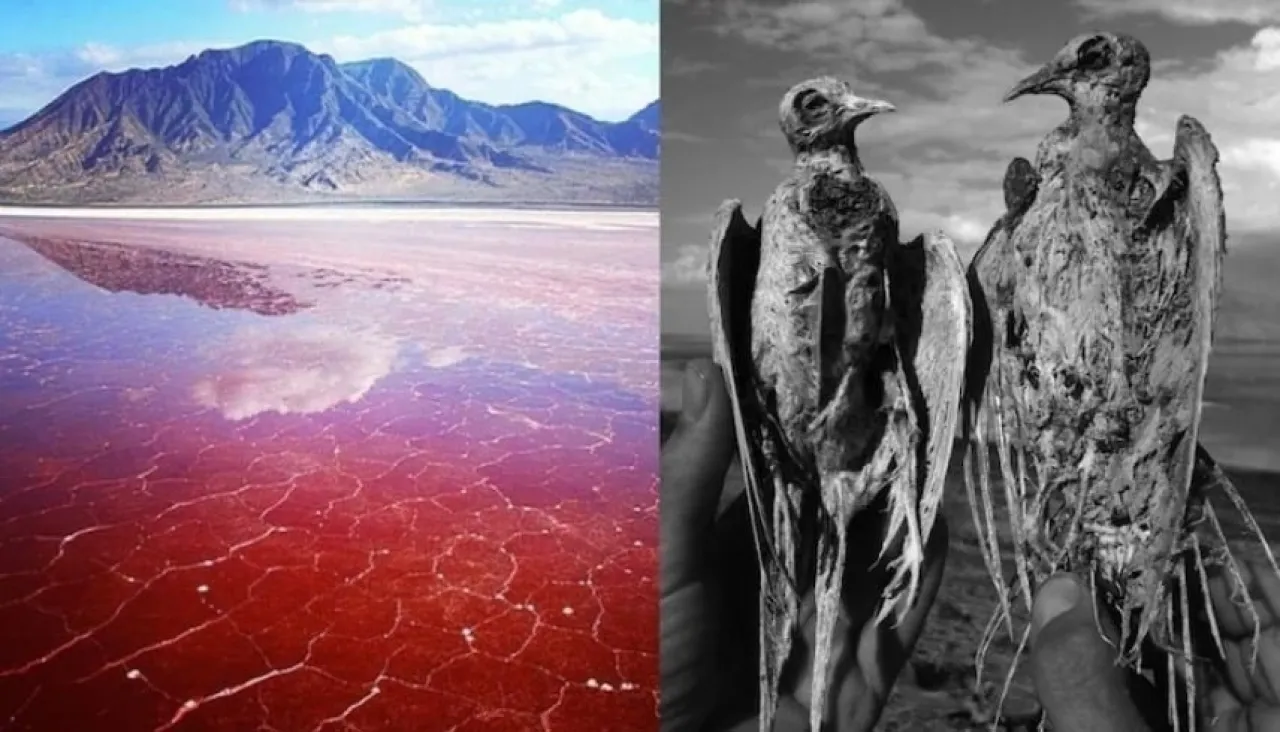
Khaberni - Lake Natron in northern Tanzania carries a vivid red color that can be seen from thousands of feet above the ground, yet its deceptive beauty hides a terrifying secret, making it one of the most bizarre lakes on Earth.
Origin of the Deadly Lake
Lake Natron appeared about 1.5 million years ago due to intense volcanic and tectonic activity which shaped the entire region, and these geological processes also led to the formation of the Ol Doinyo Lengai volcano south of the lake directly, which is locally known as "Mountain of God" in the Maasai language.
The volcanic activities have left a deadly mark in the water of the lake, where huge amounts of calcium bicarbonate and sodium carbonate flow from surrounding hills and underwater hot springs, and Natron is classified as a terminal lake that does not flow into any river or sea, while it is fed by small rivers and warm springs that raise its shallow water temperature to 41 degrees Celsius in the summer.
The Terrifying Petrification Process
Photographer Nick Brandt revealed in his 2013 book "Across the Ravaged Land" shocking images of petrified carcasses of animals and birds on the shores of the lake, appearing as stony statues preserved in natural poses.
Brandt explained that he discovered these creatures of various types of birds and bats strewn on the beach without knowing exactly how they met their fate, according to the "ndtv" website.
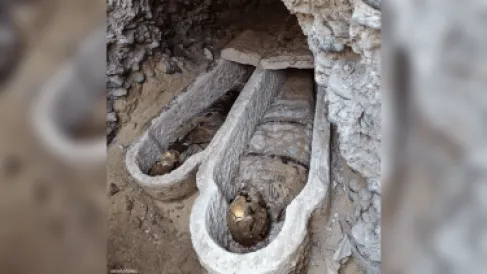
Science explains this phenomenon by the fact that the highly alkaline water has a pH level up to 10.5, a level capable of burning the eyes and flesh of the animals, while the dissolved sodium carbonate in the water acts as a natural embalming agent, absorbing fats and moisture from the bodies of the victims, leaving them dry and petrified without decomposing, just as the ancient Egyptians used this substance in embalming their dead.
Life Amid Death
Despite its deadly nature, the lake is teeming with life thanks to halophiles like haloarchaea and cyanobacteria which give its water its distinctive red color, and lesser flamingos benefit from these algae as a main food source, transforming the lake into a safe breeding ground protected from predators that cannot approach the deadly waters.
During the breeding season, the scene transforms into a rare natural tableau as millions of pink flamingos turn the lake's red surface into a swirling crimson pink mass, while other animals like eagles and pigeons live in the freshwater swamps and saline areas surrounding the lake, where wild animals, ostriches, and herons can also be observed.