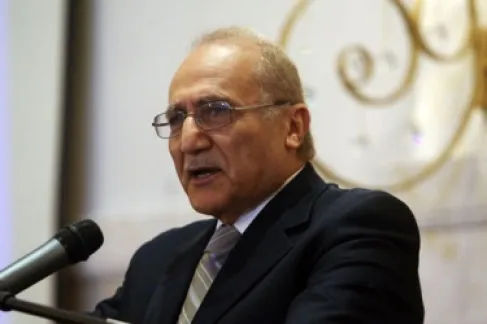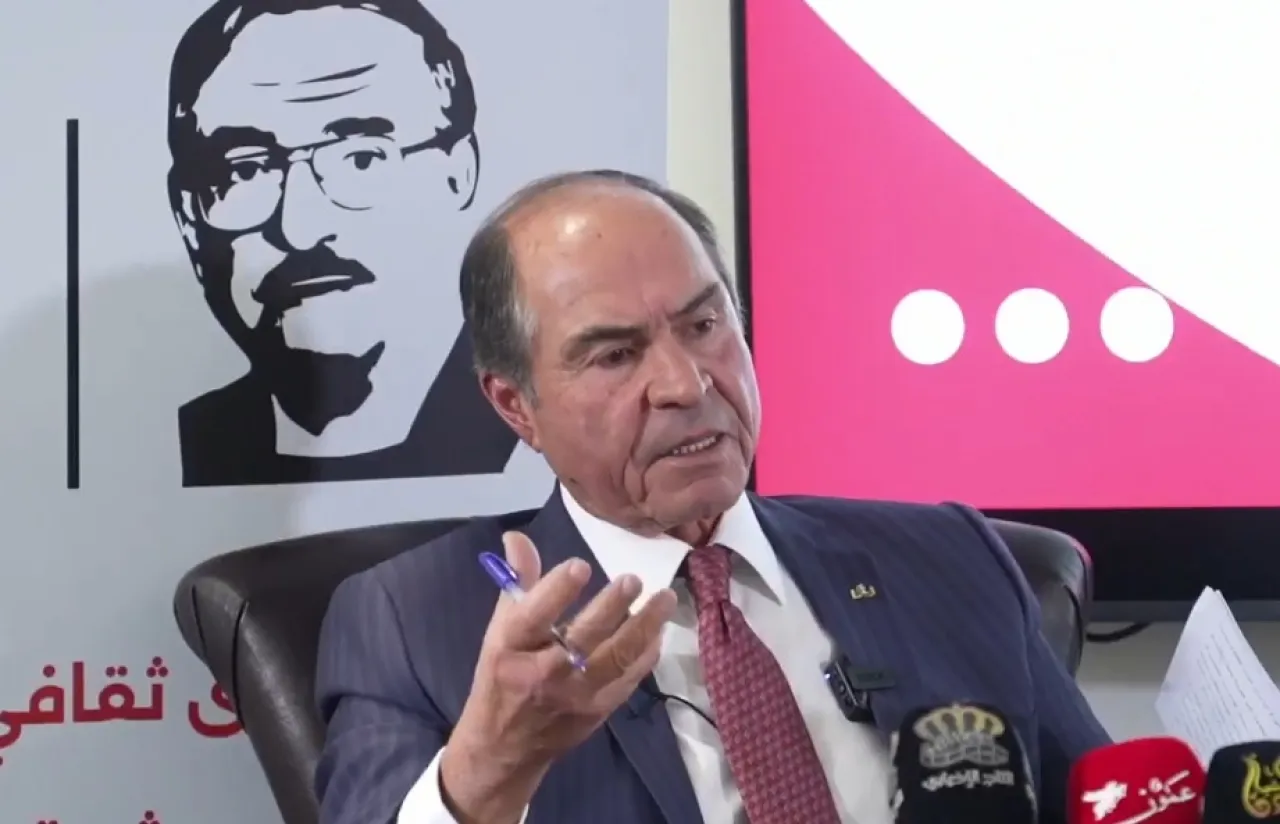
Khaberni - The Dr. Mohammed Al-Hammouri Forum for Cultural Development held an intellectual dialogue entitled "Reading in the Current Situation", as part of its series "War of Awareness and Narrative". The event included the participation of Hani Al-Mulki, the former prime minister, and was attended by a selection of intellectuals, researchers, and those interested in Jordanian and regional affairs, with Mohannad Mubaidin, the former minister of government communication, moderating the dialogue.
The event began with Al-Mulki's analysis of the transformations the region has undergone since the late 1970s, considering 1977 a pivotal turning point in the course of Arab awareness. This marked the shift from the concept of "existential risks" to managing "possible risks", accompanied by changes in political and economic thinking patterns and their impacts on public policies in the region.
Al-Mulki discussed the imbalanced relationship between economics and politics in the Arab experience, noting that economic issues were often handled partially and separately from the broader social and developmental context. This contributed to deepening economic and social crises and eroding public trust in government policies and their outcomes.
In this context, he emphasized that managing economic affairs cannot be reduced to fiscal policy alone. He warned against dealing with the economy solely from the perspective of the general budget, while economic policy requires a comprehensive vision that includes production, education, labor markets, investment, and social development. He pointed out that the unconscious separation between fiscal and economic policies led to high-cost decisions for the state and society without real developmental returns in the medium and long term, further deepening structural imbalances instead of addressing them.
Al-Mulki also addressed the issue of corruption, considering its approach cannot be selective or circumstantial, but requires a comprehensive solution based on enforcing the rule of law, administrative reform, good governance, and linking accountability with transparency. He warned against reducing corruption to a moral or individual dimension, instead of dealing with it as a structural phenomenon with political, economic, and social roots.
On development, he noted that weak strategic planning and the absence of genuine evaluation of public projects contributed to increasing indebtedness without achieving sustainable developmental impact. He affirmed that any real economic reform remains incomplete unless linked to comprehensive educational reform that rebuilds human capital and prepares youth for a changing and complex job market.
The meeting also discussed education as a fundamental entry point for reform, pointing out that the education system is no longer capable of meeting the demands of the era or addressing the causes of social frustration. This calls for a comprehensive reassessment of educational philosophy, curricula, and their direct link to economic and social development.
In the regional dimension, Al-Mulki affirmed that the economic shifts in the region, including energy and trade paths and changes in power centers, have profound effects on state choices and policies. He stressed that understanding these dynamics is a fundamental condition for developing realistic policies capable of enduring in a highly volatile regional environment.
The dialogue witnessed interactive discussions with the audience, focusing on the relationship between economics and legitimacy, the role of the state in protecting social cohesion, and the importance of rebuilding trust between citizens and institutions, away from oversimplified or populist rhetoric.
This meeting is part of the "War of Awareness and Narrative" series launched by the Mohammed Al-Hammouri Forum for Cultural Development, aiming to open deep discussions about the intellectual, political, and economic transformations facing Jordan and the region, through critical readings based on experience, practice, and cognitive analysis.