Khaberni - Health Minister Ibrahim Al-Bdoor confirmed that the congestion problem in the emergency department of Prince Hamzah Hospital will be resolved by working on expanding the department and utilizing the Amman field hospital, in addition to preparing a comprehensive plan for the development of the hospital in all organizational and constructional aspects aimed at improving the level of services provided.
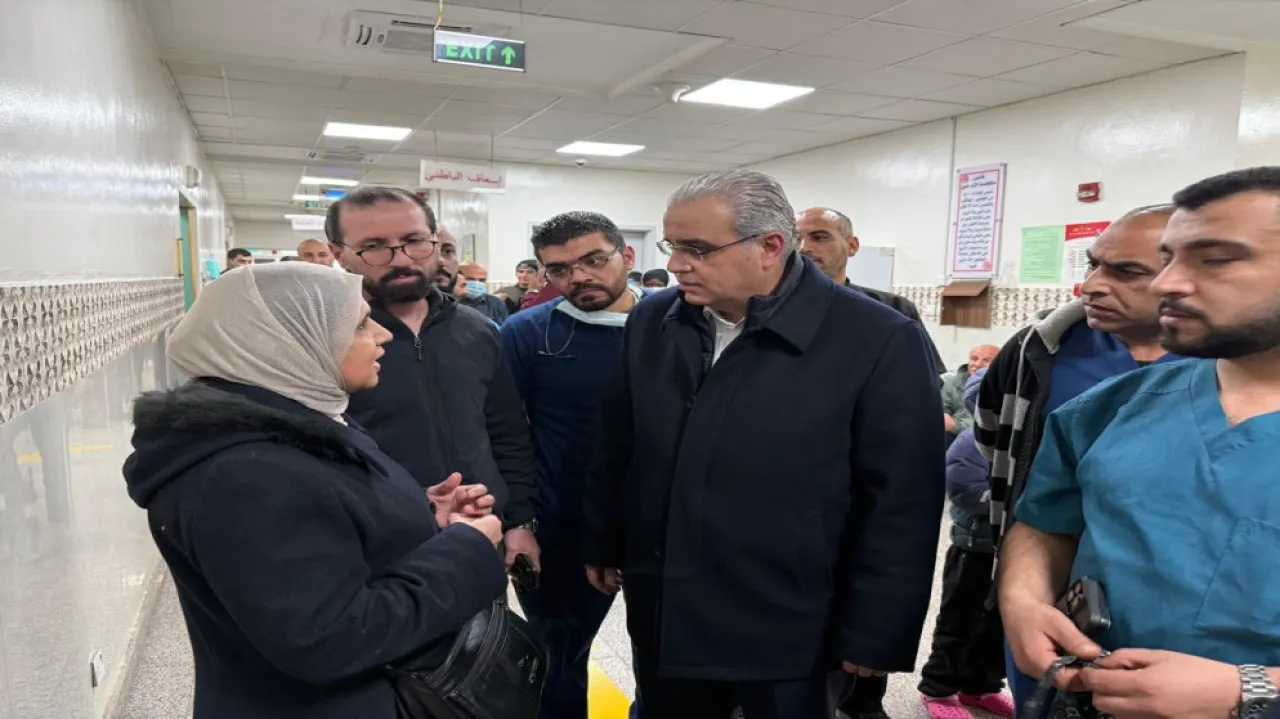
This came during his unexpected nocturnal inspection tour of the hospital’s emergency department, as part of his ongoing field follow-up to closely monitor the reality of the health services provided, and verify the readiness of the hospital and its various departments during night shifts.
The minister reviewed the readiness of the emergency department, workflow, and the level of compliance with approved medical protocols, as well as the regularity of the medical and nursing staff on duty.
During his tour, Al-Bdoor listened to remarks from a number of patients and their relatives about the services provided, emphasizing the importance of direct communication with the service recipients, and considering their feedback to improve the quality of healthcare.
Health Minister gave immediate instructions to address any observations detected during the visit, stressing the need to enhance performance, and ensure the provision of safe and proper health services around the clock.
He also appreciated the efforts of the medical, nursing, and administrative staff on duty, their commitment, and their keenness to serve the patients, affirming that these efforts form a fundamental pillar in the continuity of work in health institutions.
Al-Bdoor confirmed that surprise visits will continue and include various hospitals and health centers, at different times, reinforcing the principles of oversight and accountability, in line with the ministry's priority to preserve patient safety and enhance the level of health services provided, and in the context of the approach enshrined by Prime Minister Jafar Hassan in intensifying field visits and direct monitoring of the reality of services provided to citizens.