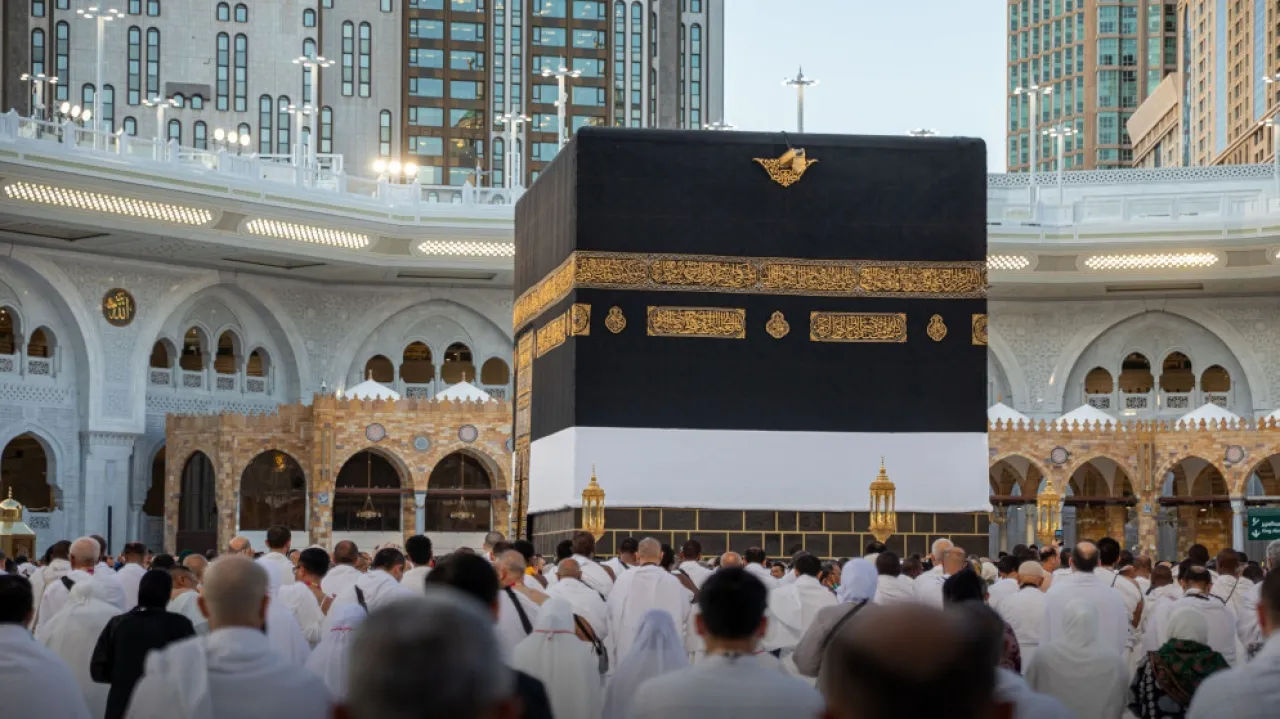
Khaberni - The Awqaf Directorates in various regions will, on Saturday, conclude the delivery of Hajj permits to the citizens who have been selected to perform the Hajj for this year, an event that lasted for a week.
The Ministry of Awqaf and Islamic Affairs and Holy Places has called upon the necessity of adhering to the health requirements set by Saudi authorities and reviewing approved health centers to obtain a health certificate, as it is a principal condition for receiving the permit.
The Saudi Ministry of Hajj and Umrah stipulates for issuing a Hajj visa the need to present a certificate proving the absence of diseases, including failure of major organs (heart, lungs, liver, or kidneys), neurological and psychiatric diseases that impair cognition or are accompanied by severe mobility disabilities, senility with dementia, pregnancy in the last two months or at-risk pregnancy at all stages, active cancer requiring chemotherapy, biological or radiation treatment, and active contagious diseases with public health impact such as open tuberculosis (pulmonary tuberculosis).
The Ministry adopted the selection of pilgrims based on the criterion of the oldest age, which included those born on or before March 31, 1954, while the lottery selected 1300 pilgrims among those registered on the website from those born in 1980 or earlier, from about 28,000 citizens who applied for registration.
The Minister of Awqaf and Islamic Affairs and Holy Places, Mohammad Al-Khalaileh, announced that Jordan's quota for the upcoming Hajj season is 8,000 pilgrims, in addition to 4,500 pilgrims from the Arabs of '48.
For inquiries about the names of the pilgrims who were selected, click here.