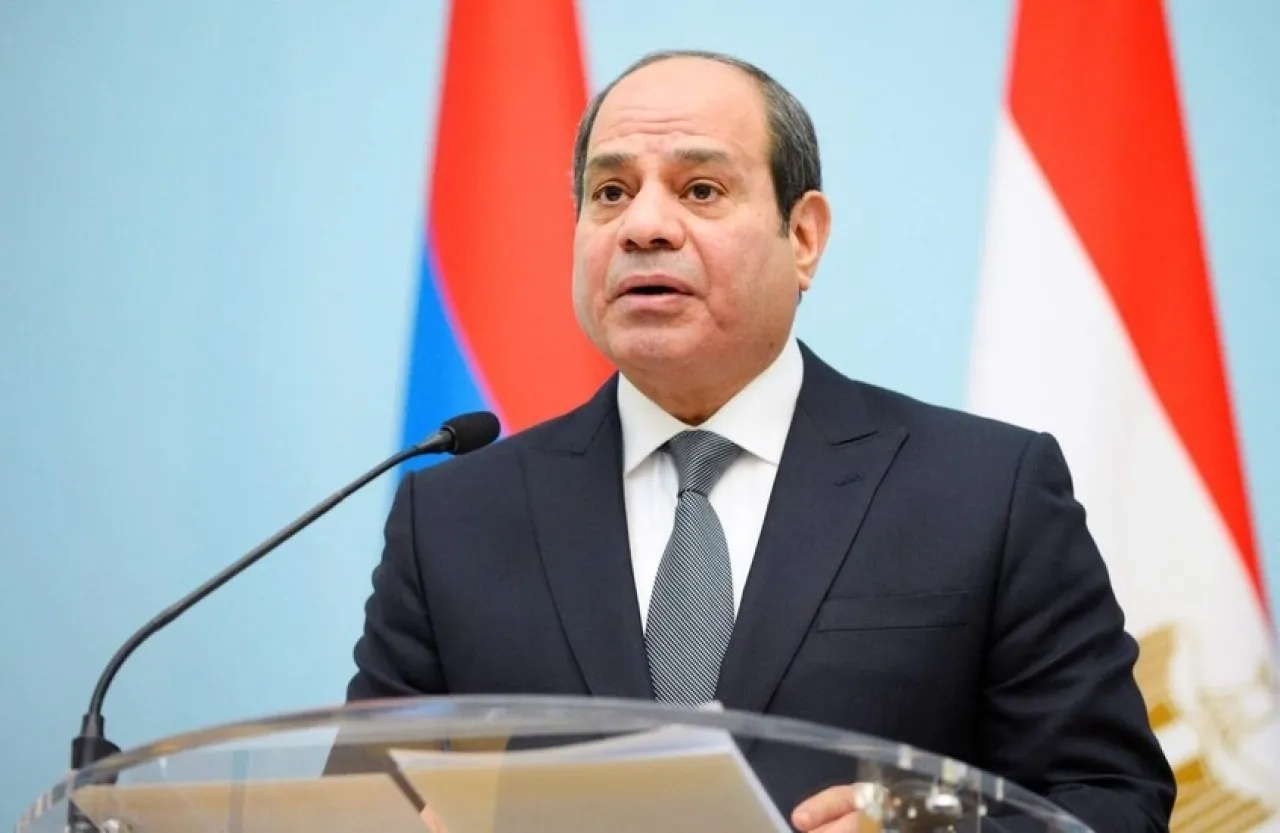
Khaberni - Egyptian President Abdel Fattah el-Sisi issued a presidential decree pardoning the remaining sentences of some prisoners on the occasion of the Police Day and January 25 Revolution celebrations.
The Sisi decree was published in the country's official gazette, as part of the annual tradition of presidential pardons on major national occasions, aimed at promoting values of mercy and tolerance and providing a new opportunity for the released to reintegrate into society.
Article One of the Sisi decree states that the remaining punitive imprisonment for certain individuals is to be pardoned, in celebration of the Police Day and January 25 Revolution, both falling on January 25, 2026.
Release is granted to those sentenced to life imprisonment if they have served fifteen years by January 25, 2026, provided the released are placed under police surveillance for five years according to paragraph two of Article (75) of the Penal Code.
The decree also stipulates that those sentenced to deprivative punishment before January 25, 2026, are to be released if they have served up to that date one-third of its duration in calendar years, provided that the execution period is not less than four months, as well as those sentenced to several deprivative punishments for crimes committed before their admission to the rehabilitation and reform center and have served one-third of the total durations of these punishments at the center.
The decree clarifies that the released shall not be placed under police surveillance unless the punishment is imposed by the force of law or was sentenced to it, and provided that its duration does not exceed five years or the duration covered by the pardon as per this decree, whichever is lesser.
In recent years, Egypt has seen a significant expansion in presidential pardon decrees, which have included thousands of prisoners annually with a special focus on the elderly, the sick, those who have served long periods of the sentence, and humanitarian and social cases.
This decision is part of the Egyptian state's policy to reduce overcrowding in reform and rehabilitation centers, enhance opportunities for rehabilitation and social reintegration of the released, while maintaining strict security measures such as police surveillance in serious cases.