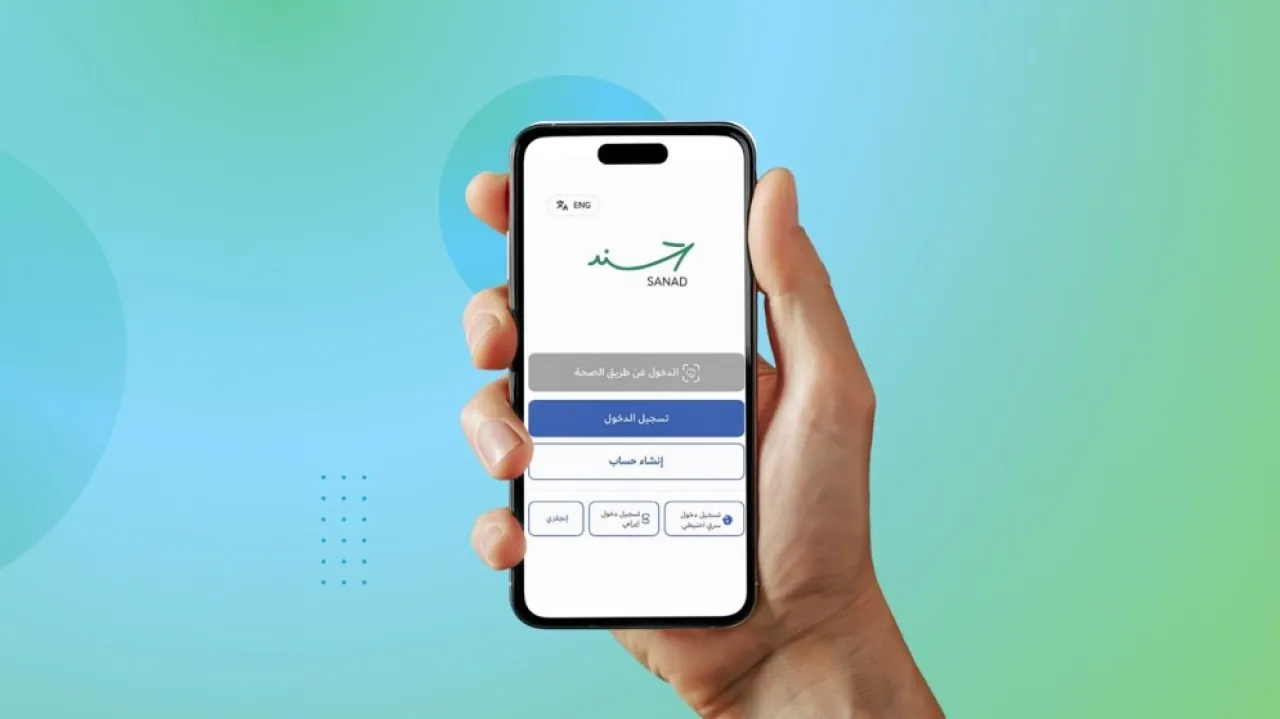
Khaberni - Minister of Digital Economy and Entrepreneurship, Sami Samirat, confirmed on Monday that Jordanians have an excellent technological culture, noting that the launch of the "Sanad" app is a clear proof of this advanced level of digital awareness.
Samirat explained through (Al Mamlaka), that 1.3 million citizens who have activated digital identities use the "Sanad" app monthly, reflecting the growing reliance on digital government services.
He pointed out that when the app was updated, the expectation was to reach 500,000 users in the first hour, but the number reached 750,000 users, which exceeded expectations and led to technical problems due to the high pressure on the system.
He indicated that the number of digital identities activated on the "Sanad" app reached 2.1 million digital identities, while 850,000 citizens updated the app. The app also recorded 18,000 electronic payment transactions worth 300,000 dinars, highlighting that the app now allows payment of bills and social security contributions.
Regarding Jordanian expatriates, Samirat explained that 27,000 digital identities were activated within the first 10 days of the month, indicating that the previous average cost of activating a digital identity was 6 dinars, in addition to the inconvenience of citizens having to go to "Sanad" activation stations.
He added that expatriates are now able to activate their digital identity, and that the cost of each activation does not exceed 30 fils, confirming that "Sanad" activation stations will gradually be reduced and eventually phased out.
* Digital Transformation in Education
Regarding the education sector, Samirat said that the ministry is working on digitizing curricula and digital skills through the "Ajyal" platform, which was launched and is a comprehensive platform that includes artificial intelligence technologies.
He explained that the smart assistant "Siraj" is currently used by approximately 200,000 users including students, teachers, and parents through the application, noting that the goal is to generalize the "Siraj" experience on a broader scale.
He pointed out that all curricula will be digitized, drawing attention to the fact that digital curricula have begun and will gradually expand to include other curricula.
Samirat noted that 700 schools are not equipped with high-speed broadband internet services, explaining that a contract will be signed with "Starlink" to provide internet services via satellites, noting that as part of corporate social responsibility programs, some telecommunications companies have donated wi-fi services within schools.
He added that work is ongoing to develop computer services in schools, starting with the upper secondary grades, confirming that the general secondary education certificate exam (tawjihi) will become digital.
He clarified that the digitization of curricula is still underway, explaining that the Ministry of Education is working on digitizing the curricula completely, and a final timeframe for completing this process cannot currently be determined.
He noted that the Ministry of Digital Economy and Entrepreneurship is working on preparing the infrastructure for the Ministry of Education in all its forms, confirming that the final decision regarding implementation rests with the Ministry of Education.
* Digital Transformation in the Health Sector
Regarding the digital health program and digitization of the health sector, Samirat said that His Highness Prince Hussein bin Abdullah II, Crown Prince inaugurated the Digital Health Centre in Al-Salt, noting that five peripheral hospitals were initially connected to the Digital Health Centre through three basic services, and work is ongoing within the program to add 12 more hospitals.
He explained that digital clinics have been started in 3 clinics, while the program aims to reach 14 digital clinics remotely, clarifying that the digital clinic will provide all services, including performing examinations, linking them to the patient's medical record, and enabling the doctor to issue medical orders electronically.
Samirat pointed out the implementation of the drug inventory management system, where it has been applied to 23% of the Ministry of Health's warehouses, hospitals, and primary health centers, confirming that significant savings were achieved within three months. He added that the government committed to the Crown Prince to implement this program, and under the plans of the National Future Technology Council, the application of the drug inventory management system in primary health centers will be completed by the end of April.
He clarified that the work also included launching a platform for births and deaths, which plays a role in facilitating procedures for citizens, explaining that the platform is applied in 117 public and private hospitals, and it is linked to civil retirement and social security.
He added that work will expand to include municipalities, where burial permits will be issued through the platform for births and deaths.