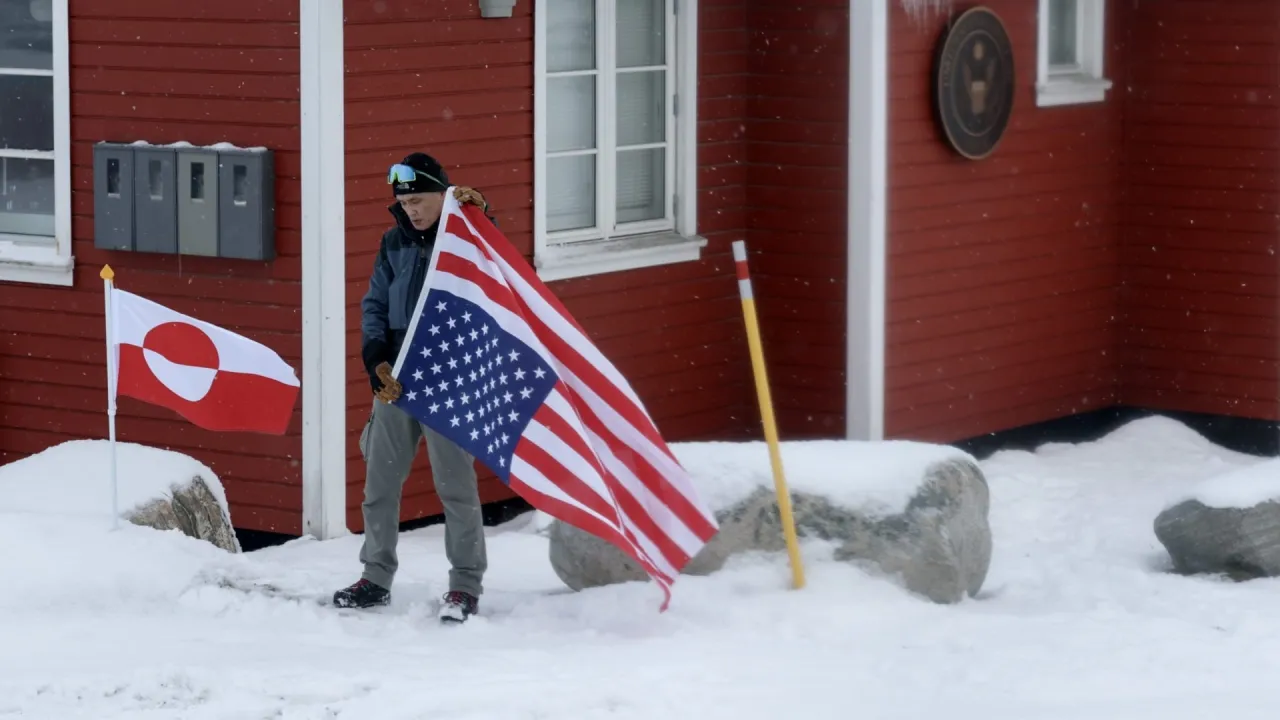
Khaberni - Pele Broberg, leader of Greenland’s opposition party "Naleraq", considers that Greenland’s signing of a new defense treaty with the United States could lead to a reduction in tensions.
Broberg said in an interview with Danish television channel TV2: "We need a new defense treaty between the United States and Greenland, and I think that would help calm the situation down."
He added: "What the people of Greenland want concerns Greenland’s inhabitants. It has nothing to do with Denmark," adding that Greenland's Foreign Minister Vivian Motzfeldt should hold her next meeting with American Secretary of State Mark Rubio without the Danish Foreign Minister Lars Løkke Rasmussen.
Broberg also stated that the people of Greenland alone hold the key to "calming" the current tense situation.
He expressed hope that Washington would offer Greenland a path towards independence under which the people of Greenland would be "under the protection" of the United States, and sees Trump's statements about his intention to take over the island as solely directed at the press, and not at the people of Greenland.
He continued: "This is panic and hysteria created by the media."
It is worth noting that Rubio said last Wednesday to journalists in response to a question about the reasons for the American administration's lack of response to Copenhagen's proposal to discuss developments related to Greenland, and whether the United States was prepared to exclude a military intervention scenario: "I will meet with them next week, and we will have these discussions."
The American president also confirmed last Friday that he would do something about Greenland, "whether they like it or not, I want to make the deal the easy way, and if the easy way doesn’t work, it will be done the hard way."
Trump emphasized that the United States needs to own Greenland to ensure national security. He confirmed that merely leasing the island would not be sufficient and would not "satisfy" his demands.
The island was a Danish colony until 1953, and remains part of the kingdom to this day, but was granted autonomy in 2009, allowing it to manage its affairs and set its internal policy.