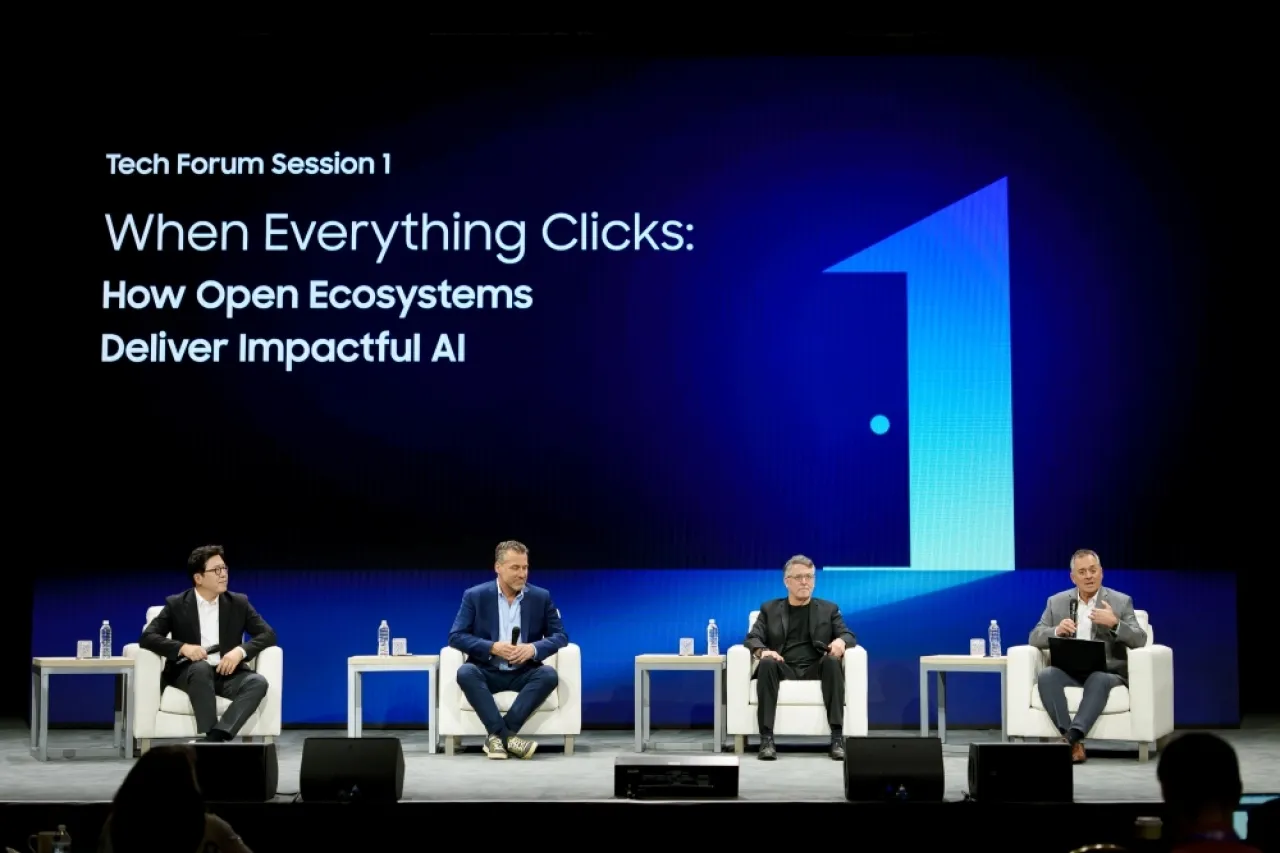
Khaberni - Samsung Electronics recently gathered leaders from various sectors to discuss the seamless integration of different devices and services in smart homes, as part of the first sessions of the technical forum (Tech Forum) on the sidelines of the consumer electronics show CES 2026 at the Wynn in Las Vegas, Nevada.
The session was held under the title "When all elements integrate: How open systems contribute to impactful artificial intelligence", where participants discussed the role of cross-sector partnerships in transforming connected homes into integrated smart environments that meet individual needs and enhance daily life quality.
Openness is the basis of smart homes
Participants agreed that the next phase of smart home systems should be based on open collaboration rather than closed systems. As homes increasingly rely on devices and services from various brands and sectors, openness enables AI systems to work together, resulting in a tangible impact on daily life.
In this context, Samsung expressed its conviction that open connectivity enables home appliances, energy systems, and safety services, along with partners from various sectors, to offer integrated experiences that would be impossible in isolated environments.
Commenting on this matter, the president of the Home Connectivity Alliance and head of strategic alliances at Samsung Electronics, Yoon Ho Choi, said: "The home is the most private place in our lives, and therefore, home AI should earn users' trust quietly and respectfully, and through real and tangible value. This requires the integration of devices and services across different brands, so the home operates as one integrated system, not as a collection of isolated features. Through our cooperation with the Home Connectivity Alliance and our partners across different sectors, we transform the principle of openness into practical outcomes: safer homes, simpler daily routines, and tangible savings, within a framework of transparency and respect for user choices."
Operating the largest connected home ecosystem in the world
Samsung highlighted the vast scale and technical depth of its connected ecosystem, noting that over 500 million users worldwide are part of the SmartThings community. With more than a decade of leadership in connected living, Samsung offers an in-depth vision for the evolution of AI as a partner within the home, from current smart devices to comprehensive system-level intelligence in future homes.
This foundation enables Samsung to design AI experiences that operate in harmony across different home devices and services, providing tangible value felt by the user smoothly and naturally, away from technical complexity.
Furthermore, the founder and editor-in-chief of "The Spoon," Michael Wolf, added: "It's essential to provide tangible benefits to users that truly enhance their lives. In this context, no area can deliver more value than a widely connected kitchen that allows users to know the contents of the refrigerator, while also integrating with water and heating networks, providing a broader understanding that enables proactive and preventive actions."
Transforming collaboration into tangible and measurable benefits for consumers
The session also discussed how open systems, through partnerships between different sectors, achieve clear and measurable benefits for consumers. In this context, Samsung highlighted its collaboration with Hartford Steam Boiler (HSB) as a leading example demonstrating how smart home data, when used responsibly and transparently, can lead to outcomes of real value for users.
Additionally, the first vice president for strategic growth solutions at HSB, Jed Osetich, said: "Today, we are at a stage where the connected home can seamlessly integrate into users' lifestyles, contributing to building trust in smart home technologies and directly translating into tangible benefits for consumers. Through our partnership with Samsung, we have created a bridge that connects smart homes to the insurance sector, where we turn simple data into actual savings that directly benefit users."
AI that makes the user feel comfortable and becomes a natural part of their life
During the discussion, participants emphasized that the success of home AI depends on emotional intelligence and natural integration into daily routines, whether while cooking, relaxing, entertaining, or caring for the family. Design elements, storytelling, and understanding user behavior play a central role in making connected devices reliable and smooth in daily use.
Participants in the session also concurred that the future of home AI relies on the integration of devices and services, responsible use of data, and cross-sector cooperation, ensuring that smart homes provide real value to users without compromising trust.
With the expanding role of AI to include all devices and systems, Samsung continues to focus on building open ecosystems that make connected living simpler and safer, proving that when all elements integrate, home AI can truly enhance the daily lives of users.