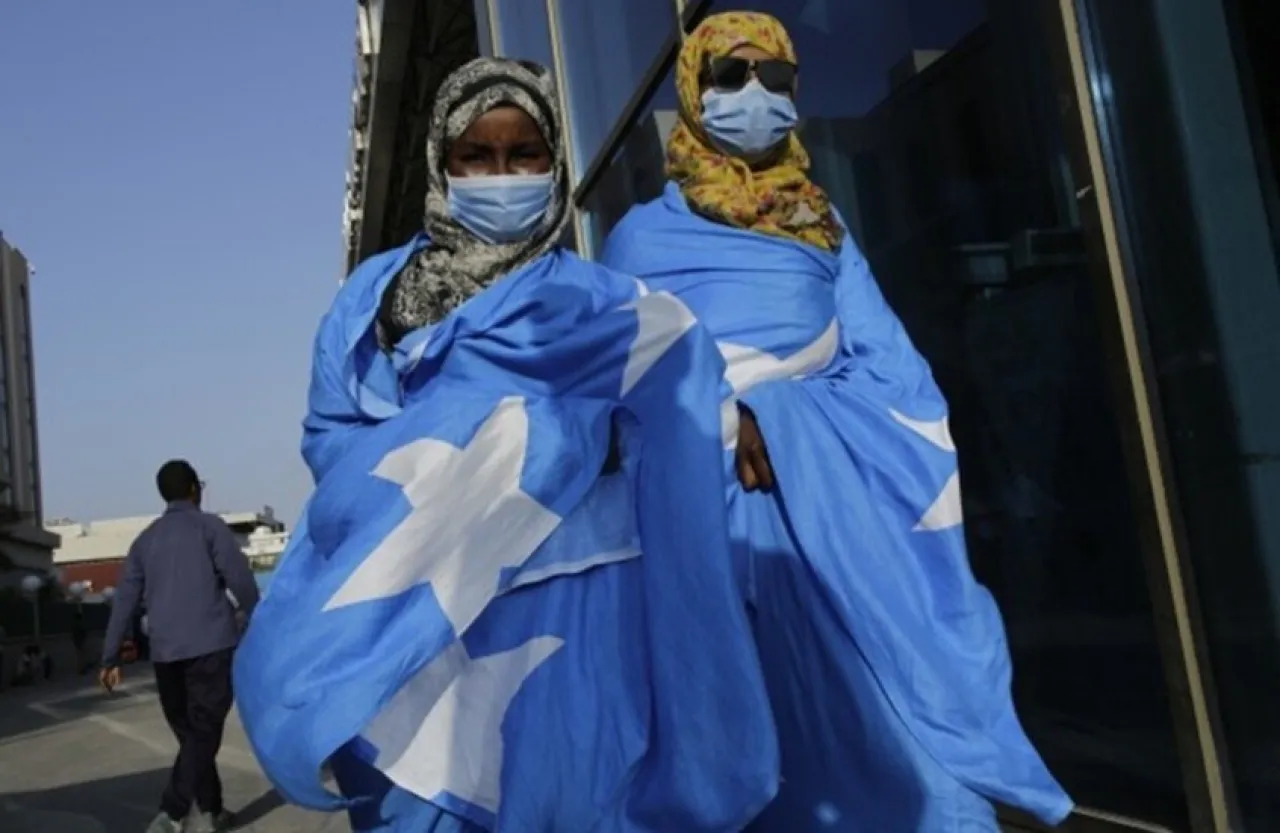
Khaberni - Qatar participated in an extraordinary meeting of the Council of Foreign Ministers of the member states of the Organization of Islamic Cooperation to discuss the repercussions of the situation in the Federal Republic of Somalia, which was held on Saturday in Jeddah in Saudi Arabia.
The Qatari delegation in the meeting was chaired by the State Minister for Foreign Affairs, Sultan bin Saad Al Muraikhi, according to the official website of the Ministry of Foreign Affairs of Qatar.
Al Muraikhi pointed out in Qatar's speech at the meeting that it took place at a time of extreme sensitivity, with rapid developments that impose a collective responsibility on the member states of the organization to defend the principles of sovereignty and respect for international law, and to safeguard security and stability in the region and in the Horn of Africa and the Red Sea area.
He renewed the State Minister for Foreign Affairs Qatar’s strong condemnation of Israel's recognition of "Somaliland" in the Federal Republic of Somalia as an independent state, as it is a unilateral action that contradicts the principles of international law and encroaches on the sovereignty of the Federal Republic of Somalia, its national unity, territorial integrity, and internationally recognized boundaries, besides being a dangerous precedent that conflicts with the principles of international law, the United Nations Charter, and the Charter of the Organization of Islamic Cooperation.
He emphasized Qatar's full support for the sovereignty of the Federal Republic of Somalia, its commitment to its unity and territorial integrity, its rejection of any attempts to affect these constants, and its affirmation that the "Somaliland" region is an integral part of the Federal Republic of Somalia and does not possess any international legal status, and that any attempt at recognition of its separation is null and void under international law, consistent with the outcomes of the fifteenth Islamic Summit in Banjul last year, which called for the rejection of any violation of Somalia's sovereignty and support for the sovereign rights of the Federal Republic of Somalia over all its territories, airspace, and territorial waters.
He confirmed that Qatar supports the legitimate state institutions of Somalia, and is keen to preserve Somalia's security and stability, and to protect the interests of its people.
In this regard, he noted that Doha has made continuous efforts to play a pivotal role in supporting peace, security, stability, and development in Somalia, including providing developmental support in fields such as health and education, and economic empowerment, in addition to responding to emergency relief needs, and other forms of support, as well as continuing to develop diplomatic relations with the Federal Republic of Somalia to serve the interests, goals, and shared aspirations.
The State Minister of Foreign Affairs also renewed Qatar's stance with Somalia and its government in rejecting any actions that may disrupt the unity of Somalia, and its territorial integrity, and sovereignty over its entire territories, and reiterated Doha's call for the international community's concerted efforts to maintain security and stability in the Horn of Africa region.
Sultan bin Saad Al Muraikhi explained that the recognition by the occupying Israeli authorities of the "Somaliland" region continues a series of acts that violate the rights of the Palestinian people, extending to countries in the region, warning that these practices will only lead to serious implications for regional and international security.
The State Minister of Foreign Affairs unequivocally rejected any attempt to associate this action with any plans to displace the Palestinian people from their land, reiterating the steadfast and permanent stance in supporting the Palestinian cause and the resilience of the Palestinian people based on international legitimacy resolutions and the two-state solution, ensuring the establishment of an independent Palestinian state within the 1967 borders, with East Jerusalem as its capital.
It is worth mentioning that the Israeli Prime Minister Benjamin Netanyahu announced Israel's recognition of "Somaliland as an independent and sovereign state".
Netanyahu, the Israeli Foreign Minister Gideon Saar, and the one-sidedly declared President of "Somaliland", Abdul Rahman Mohamed Abdullah, signed a joint declaration to this effect.
The President of Somaliland announced that "after more than 3 decades of self-rule, the region has received its first official recognition as an independent state".
Foreign ministers of 21 countries including Egypt, Turkey, Saudi Arabia, and Iran, in a joint statement expressed their complete rejection of Israel's recognition of the Somaliland region, emphasizing that "such a step has serious implications for the Horn of Africa region".