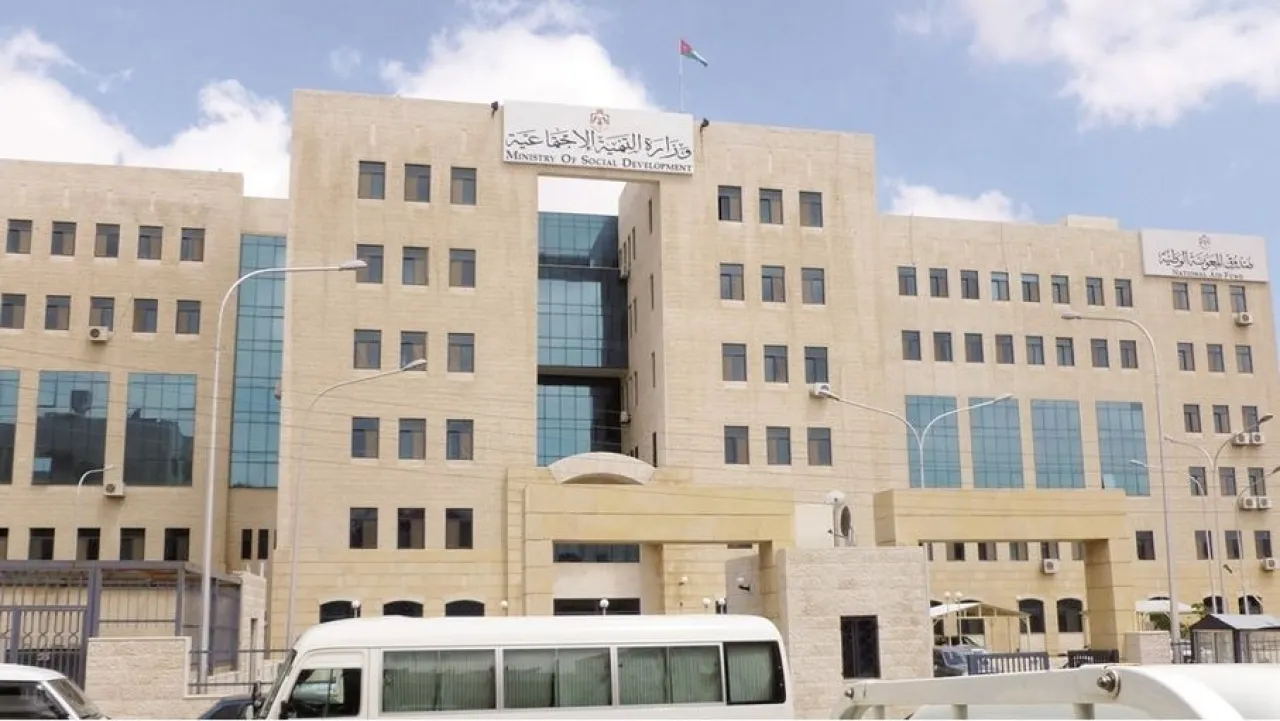
Khaberni - The Ministry of Social Development stated, "We have not announced the mass or random termination of contracts for beneficiaries of disability shelters, nor have we handed beneficiaries over to their families in exchange for financial support as a general measure."
The ministry emphasized "that any talk of emptying shelters or ending care in exchange for money is inaccurate and does not reflect the reality of the adopted policy. Instead, financial allocations are part of a set of services required by an individual’s needs and abilities, and family needs," according to Al-Ghad.
The denial came following journalistic reports about a protest by families of disabled individuals, rejecting the reception of their children from shelters after attempts by those shelters to forcibly hand them over to families in exchange for cash support, and ending sheltering in private centers.
No official closures of private centers
The ministry stated that there are no official closures of the 18 private shelters for individuals with disabilities; however, there is currently an implementation of a planned and gradual transition strategy to end shelter services, according to the national strategy for shelter alternatives.
It affirmed, "The discussion about the closure of 'New Hope' center, a governmental facility among five others of its type, fits within the framework of ending shelter services while maintaining day services, as part of the same transformation program in a studied and methodical manner."
In the same context, the ministry in its clarification stated, "What is being implemented with 'the private centers' is a gradual and studied plan to move from institutional care to family and community integration, responding to the Disability Rights Law No. 20 of 2017, and includes: specific cases that were technically and socially assessed within clear criteria." The national strategy for shelter alternatives was launched in 2019 in partnership between the Ministry of Social Development and the Higher Council for the Rights of Persons with Disabilities, accompanied by an implementation plan for ending sheltering in the last quarter of next year 2027 according to the strategy, while the ministry operates an annual plan in this context for this year.
Gradual transition plan for all centers
The shelter alternative strategy is based on ending sheltering, and reintegrating individuals with disabilities into alternative families or their biological families or group homes. The five governmental centers include 475 disabled individuals, of whom 311 are covered by the transitional plan until the end of 2027 according to the ministry, while the 18 private centers include 963 cases, among them more than 780 non-Jordanians.
The ministry noted that the New Hope center's capacity for sheltering was 50 cases, but currently, 284 individuals will benefit from day services, as alternatives for shelter service beneficiaries are being sought in alternative families.
Coordination is underway between the ministry, the Supreme Council, and Sharia courts to endorse alternative families, and ending sheltering for persons with disabilities in centers is considered one of the new global trends within the framework of disability rights, as was emphasized in the outputs of the Global Disability Summit held in Berlin last year, in partnership between Jordan and Germany.
Regarding governmental centers, the ministry confirmed that New Hope center has been transformed into an inclusive day center, while three other centers will be included in the plan to transition to day services, located in Dhlail, Karak, and Tafila.
The ministry also indicated that the total number of beneficiaries who were purchasing services from private shelters reached 82 individuals with disabilities, explaining that those who voluntarily applied for the shelter alternatives program in the last quarter of last year were 23 families. It stated, "We are working with them to transfer their children from institutional care, according to a transitional plan to the appropriate alternatives, in a cooperative framework from the ministry, the families, the Supreme Council, and Sharia judiciary as a key partner," clarifying that if an alternative family is available, it undergoes "evaluation of its suitability and the family environment, and if the alternative family is appropriate, they are involved in the training, preparation, and habilitation process."
The ministry, in implementing the family reintegration plan whether in the framework of biological or alternative families, relies on a set of key criteria foremost of which are: the best interest of the person, mental and social readiness of the person, and the biological or alternative family’s ability to care, in addition to having a safe and stable environment."
In the same context, it outlined that this file is being worked on through "a follow-up plan and support services through comprehensive evaluation, determining the requirements of the person with a disability and the family, including: the health assessment and rehabilitation of the case."
The ministry in its comments emphasized that "the alternatives are not mandatory or compulsory," instead, "they are agreed upon based on the assessment of the beneficiary and the person with disability, with family participation, and are not imposed on the person or their family," explaining that "the decision is based on a joint assessment, and after a preparation and empowerment period for the beneficiary and their family, and is not taken immediately."
Regarding the preparation period preceding the reintegration process, the ministry said, "The preparation duration varies from case to case, and may extend to months depending on the nature of the disability, its severity, and family circumstances, which are a fundamental pillar in the reintegration process."
Timeline
Regarding the timeline for implementing shelter alternatives, the ministry said, "The plan in general is not linked to the end of this year as a mandatory deadline for completion; it is part of a national strategy until the year 2027 for transitioning from institutional care to family and community care, while taking into account the success of the transition phases and achieving the best interest of the person with a disability."
Regarding the mechanism of action in case families reject before reintegration of persons with disabilities, the ministry stated that it communicates with the family, reaching solutions that serve the interest of persons with disabilities based on the principle of cooperation in adopting suitable alternatives. It added, "No coercive action is taken, and communication with the family occurs to choose the most suitable alternative, working on awareness and exploring options of alternatives in a way that serves the beneficiary's interest first, and considers family circumstances second."
Ongoing supervision of care
Regarding how the ministry operates in supervising persons with disabilities who are beneficiaries of the reintegration program, it stated that this is done "through regular follow-up visits to families hosting them, not less than two announced visits weekly, to provide services within the family," such as special education, physical and occupational therapy, guidance and psychological support, according to each case’s needs, by a multi-disciplinary team, involving local organizations, and also "surprise visits" to families and preparing social reports, in coordination with health and rehabilitation agencies, and reassessing the case when needed, according to the ministry.
In the context of details related to the cases that were integrated either into alternative families or biological families, the ministry said that so far since the start of the plan, 545 cases of persons with disabilities have been integrated and reintegrated, spread between special governmental centers and service applicants meeting the accommodation conditions, and those who voluntarily applied for it.
The ministry renewed its confirmation that "as of this moment, there is no official announcement of the closure of special shelter homes due to integration," saying, "It is a redirection and development in the nature of services, though Article 27 of the Disability Rights Law No. 20 of 2017 specified ten years for transitioning