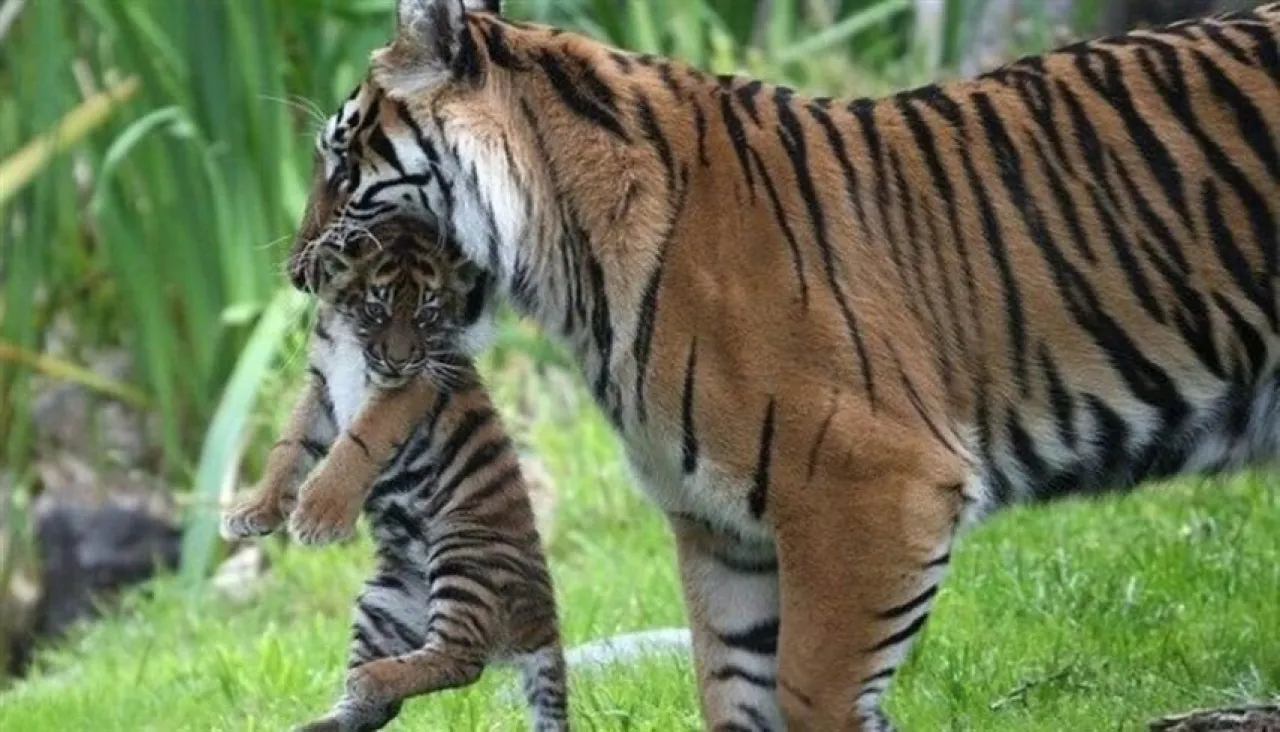
Khaberni - Animal science specialists confirm that the predation of some animals on their young is not a rare behavior as thought, but rather a widely spread phenomenon that has been documented in more than 1500 species of mammals, insects, and fish, including known types such as guppies, beetles, and even some pets.
Behavioral ecology experts point out that this behavior is linked to reproductive strategies, where birthing and caring for the young is a significant investment in terms of energy and resources. Animals that give birth to few young, such as elephants and whales, rarely show this behavior, unlike species that reproduce quickly or give birth to large numbers, where the importance of each individual offspring's survival diminishes in the context of overall reproductive success.
Ears and beaks grow larger... Climate change drives animals to «alter their forms»
The reasons for predation on the young vary between partial and complete. Partial predation is common in insects and fish that give birth to hundreds of young and often occurs when there is a shortage of food or to regulate the number of offspring to match available resources. Some animals may also resort to eating their young if they are ill, weak, or born dead, attempting to recover the energy spent during the birthing process.
This behavior is sometimes linked to genetic factors, as some males can distinguish between their offspring and those of other males, leading them to prey on unrelated young, which can lead to conflict between them and the females striving to protect their offspring. As for complete predation, it often happens when a young is weak or smaller than required, leading the mother to prefer eliminating it and trying to give birth anew with higher survival chances.
Riyadh Newspaper | Deforestation threatens rare animals in Papua New Guinea
In other cases, stress and living in dangerous environments may lead mothers to prey on their young as a means to increase their survival chances and reproduce another offspring when conditions improve. Scientists conclude that predation of the young is a complex phenomenon governed by multiple factors, with ongoing research gradually revealing its causes and deep motivations.