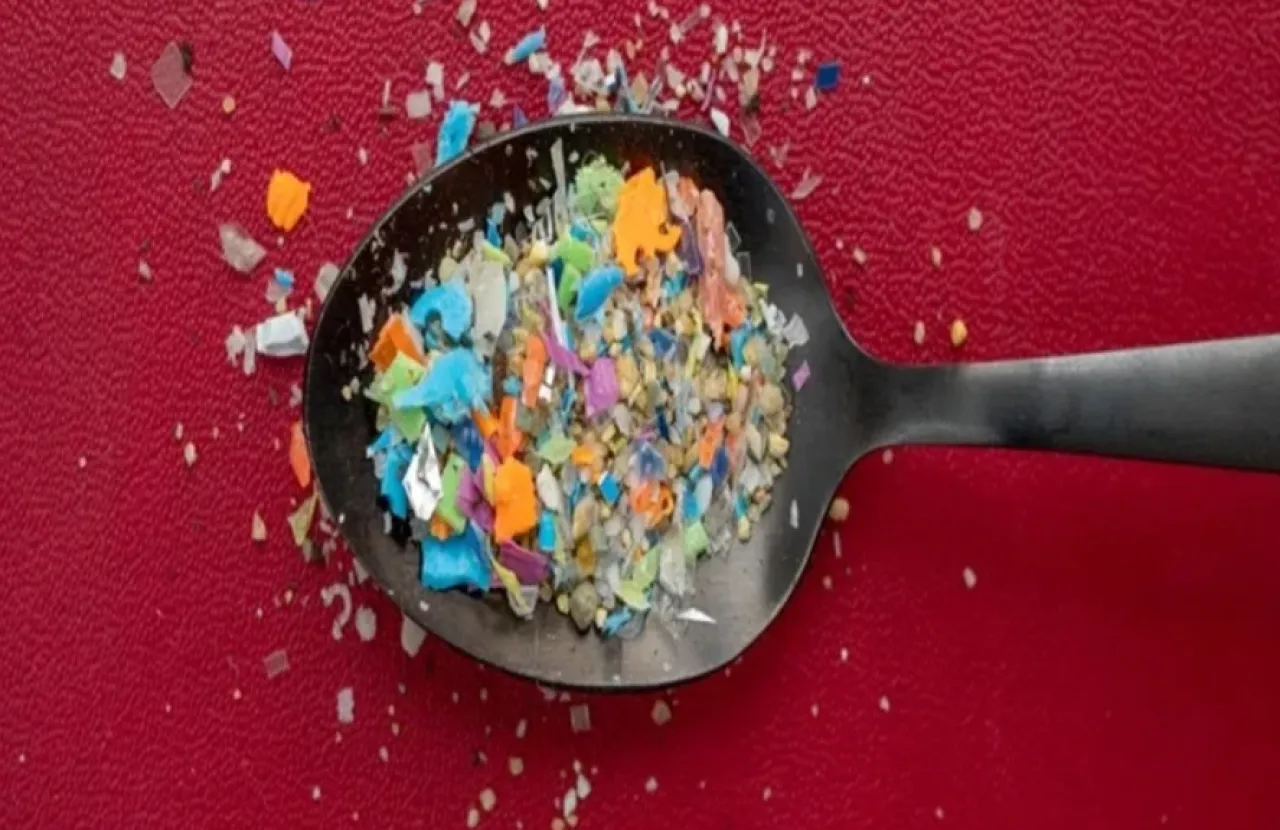
Khaberni - Public awareness is increasing regarding the presence of microplastic particles in food, especially seafood, although recent studies reveal that exposure through other, more common foods and drinks is more common than many think.
Research indicates that the daily intake of microplastics through food and drinks could reach about 1.5 million particles, with bottled water being the most significant source of these particles.
Chewing Gum.. A piece of plastic you chew
According to the Independent, most types of chewing gum are made from a rubber base that contains plastic materials, added to which are sweeteners and flavorings. During chewing, microplastic particles are released; a single gram of gum can release hundreds of particles. Natural gum is not less polluting, which suggests that the source of microplastics could be from manufacturing or packaging processes. Experts recommend chewing one piece longer instead of replacing it continuously to reduce exposure.
Salt.. Pollution on a large scale
Studies have shown that about 94% of salt products worldwide are contaminated with microplastics, even suggesting the use of sea salt as an indicator of environmental pollution. Surprisingly, terrestrial salts, such as Himalayan salt, have higher pollution levels than marine salts. Plastic salt mills also may contribute to the problem, making the use of metal or ceramic mills a safer choice.
Apples and Carrots.. Limited contamination, but it's still present
Research has found microplastics on the surfaces of some fruits and vegetables, in addition to nanoparticles that may enter plants through their roots. Studies have shown that apples and carrots were among the most contaminated compared to other crops, while lettuce was the least contaminated. Nonetheless, the level of pollution is much lower than in processed foods, and experts stress the importance of continuing to consume fruits and vegetables for their health benefits.
Tea and coffee.. Cups and tea bags are under scrutiny
Sources of microplastics in hot beverages are not limited to plastic tea bags, as particles can also transfer from single-use lined plastic cups, especially when exposed to heat. Studies suggest that hot beverages contain more particles than cold ones. It's recommended to use loose tea, packaged milk in glass bottles, and reusable cups made of glass or metal to reduce exposure.
Seafood.. Less dangerous than believed
Despite the common belief that seafood is one of the more dangerous sources of microplastics, studies show that the levels of pollution in it are lower than other sources, like tea brewed with plastic bags. However, seafood remains part of an ecosystem widely affected by plastic pollution.
How can you reduce your microplastic exposure?
Storing food in plastic containers and consuming processed foods contribute to higher microplastic levels in the body. It's advisable to store food in glass or metal containers, heat food in non-plastic containers, and reduce consumption of bottled water, which can contain hundreds of thousands of plastic particles per liter.
Although it is difficult to completely avoid plastics in food, making these simple changes in consumption patterns can contribute to reducing daily exposure to these harmful particles and maintaining long-term family health.