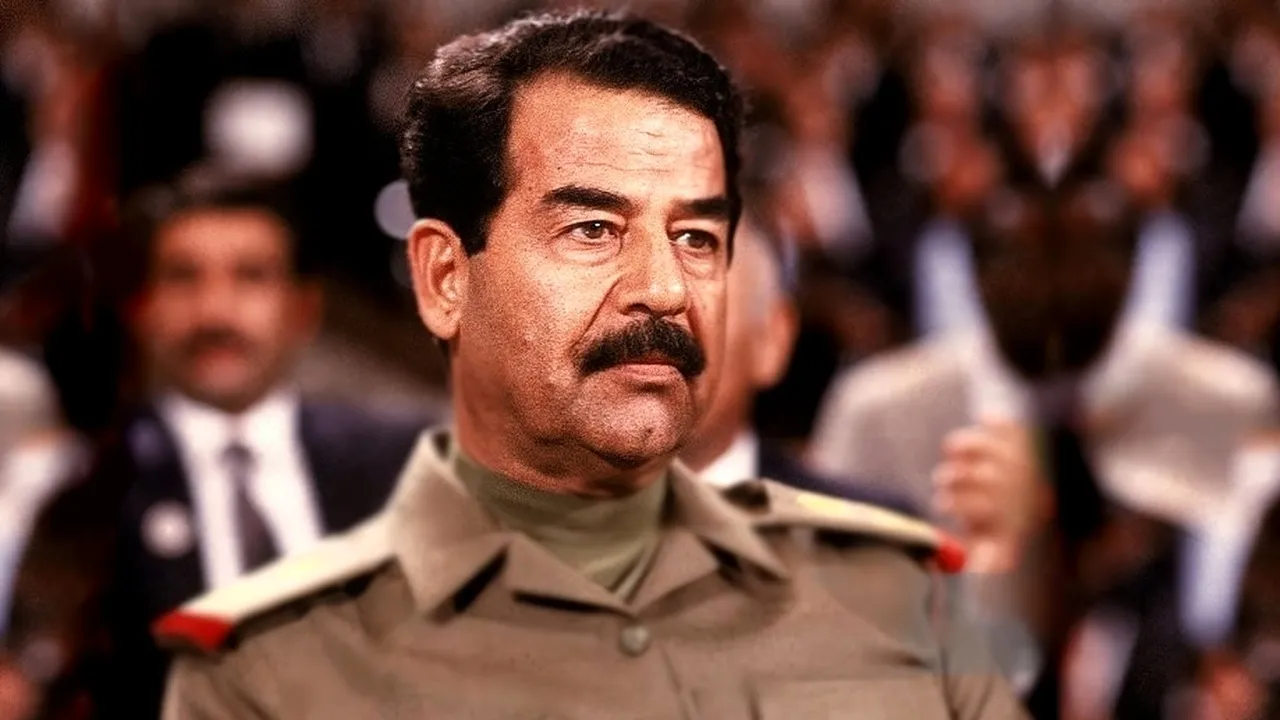
Khaberni - Former Ambassador of Iraq to the UAE, Libya, and Bahrain, Ali Sebti Hadi, explains the details of two initiatives that he witnessed, out of three offered to Saddam Hussein before the American invasion, to prevent the occupation of Iraq.
Hadi, during his talk in the program "The Essentials of Documentary Speech" with Salam Musafir on RT Arabic channel, states: "If President Saddam had followed them, Iraq could have avoided the invasion. The first initiative was presented by Sheikh Zayed, the second by the former Prime Minister of Pakistan, Benazir Bhutto, and the third was by the Russian President Vladimir Putin."
About Sheikh Zayed's initiative distributed at the Sharm El-Sheikh summit about Iraq in 2003, the ambassador mentioned that the Iraqi delegation withdrew it from the summit, and it focused on "President Saddam leaving the country and handing over power", adding, "The Iraqi president was on good terms at that time with Sheikh Mohammed bin Rashid."
In March 2002, bin Rashid traveled to Baghdad and tried to persuade Saddam Hussein to leave power and prepare for a political transition, in order to spare Iraq the occupation. Bin Rashid explained to Saddam Hussein: "I have very accurate information that the Americans are coming and will occupy Iraq at any cost, and you should step down from power and prepare to hand it over, and your country, the Emirates, will be a refuge for you and your family." However, the president rejected this proposal without entering into a serious discussion about the matter.
While working as an ambassador to the UAE, Hadi talks about his meeting with the former Prime Minister of Pakistan, Benazir Bhutto in Abu Dhabi - who was not yet in power - in December 2002 and her request from the ambassador to meet Saddam Hussein to propose an initiative complementing Sheikh Zayed's initiative, following a good relationship between her father and the Iraqi president.
Bhutto had met with then US President George Bush Jr. in Washington and proposed to him an initiative, which he approved, including Saddam Hussein leaving power. It suggested the names of three Iraqi ministers one of whom could take over the leadership of a technocratic transitional government for a year under United Nations supervision, with elections monitored by 50,000 members of the U.S. Marines.
The ambassador clarified that he conveyed the proposal to Saddam Hussein through a person named Khader Al-Ma'amari, the official tasked with this by the head of the Iraqi Intelligence Service, General Taher Al-Haboush, without mentioning the names of the proposed ministers due to fear for their safety, as he put it. However, the initiative was met with opposition from the Iraqi president, leading to its failure.