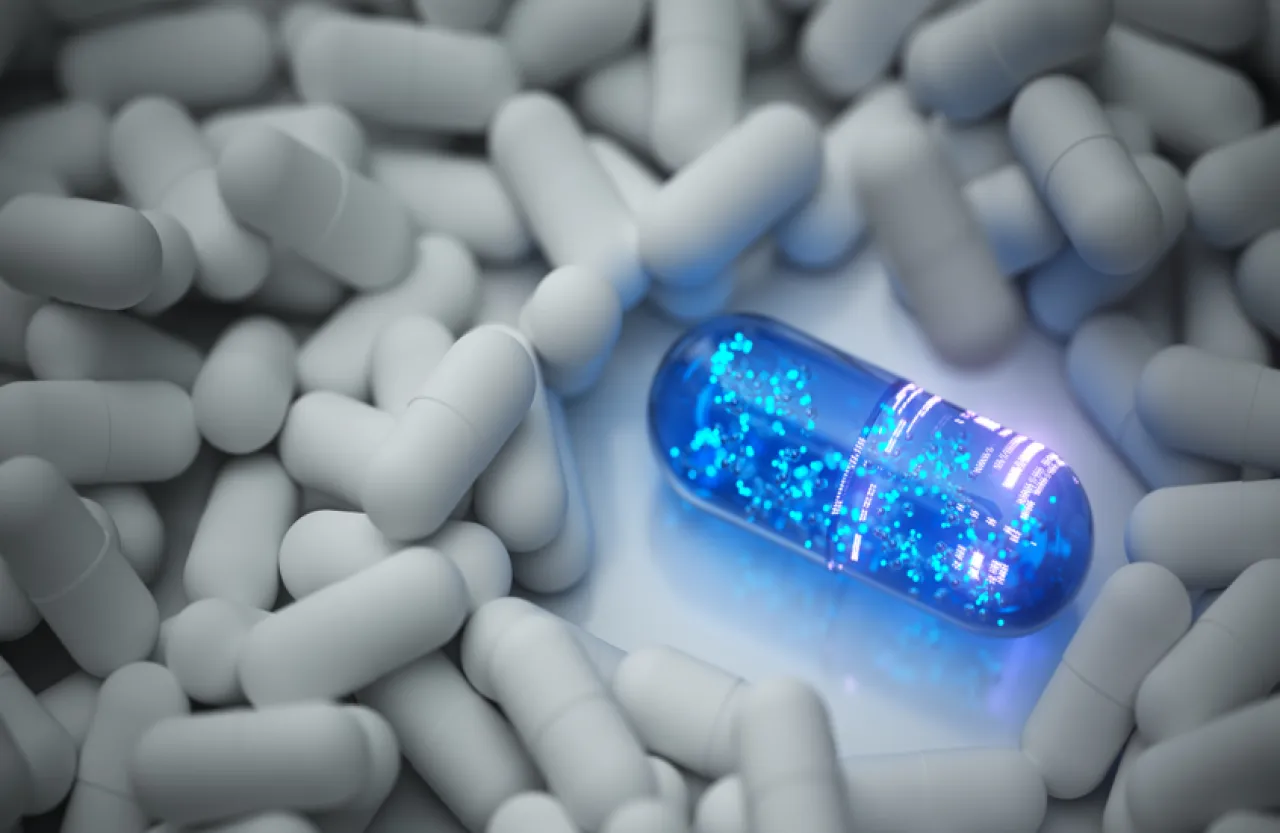
Khaberni - A team from the Massachusetts Institute of Technology (MIT) developed a smart medication capsule that sends signals when swallowed to ensure patient compliance with treatment and to improve health outcomes.
The system relies on a small component within the capsule that sends wireless signals upon swallowing, and can be integrated into existing medications. After the capsule is swallowed, most of its components dissolve in the stomach, while a tiny chip exits which sends the signal through the digestive system to confirm medication intake.
The researchers explained that this technology could be particularly useful for monitoring transplant patients who need immunosuppressive medications, as well as those with chronic diseases such as HIV or tuberculosis, who require long-term treatment.
Giovanni Traverso, Associate Professor in Mechanical Engineering at MIT and a gastroenterologist at Brigham and Women’s Hospital, said: "Our goal is to ensure that patients receive the necessary treatment to maximize their health."
How the smart capsule works
The capsule is coated with an outer layer that protects it from sending any signals before being swallowed. After ingestion, the coating dissolves releasing the medication and the transmission part, which sends the signal to confirm medication intake within ten minutes. Most components of the capsule dissolve and are easily absorbed by the body, while the small chip that sends the signal exits through the digestive system.
Animal testing has shown that the signal can be captured from a distance of up to 60 cm. The researchers plan to develop a small wearable device that can receive the signals and relay them to the healthcare team, before starting human trials.
Who might benefit from the system
The researchers expect that patients who have undergone organ transplants or stent placements, as well as those with chronic infectious diseases or mental or behavioral issues that affect their medication adherence, will benefit from this technology.
The study was published in the journal Nature Communications.
Source: Medical Xpress