Khaberni - An unprecedented scientific discovery in Al-Ula, Saudi Arabia, documents fossils dating back to 465 million years, and reveals new details about the ancient coastal environment of the region.
The Royal Commission for Al-Ula announced the documentation and publication of an exceptional scientific discovery of rare horseshoe crab fossils, dating back to approximately 465 million years ago, as part of a peer-reviewed scientific study published in the "Gondwana Research" journal specialized in geology sciences.
This discovery is the first of its kind globally, in terms of its antiquity and unique characteristics, which enhances Al-Ula's status as a pivotal location for geological research and the study of the Earth's history and biodiversity.
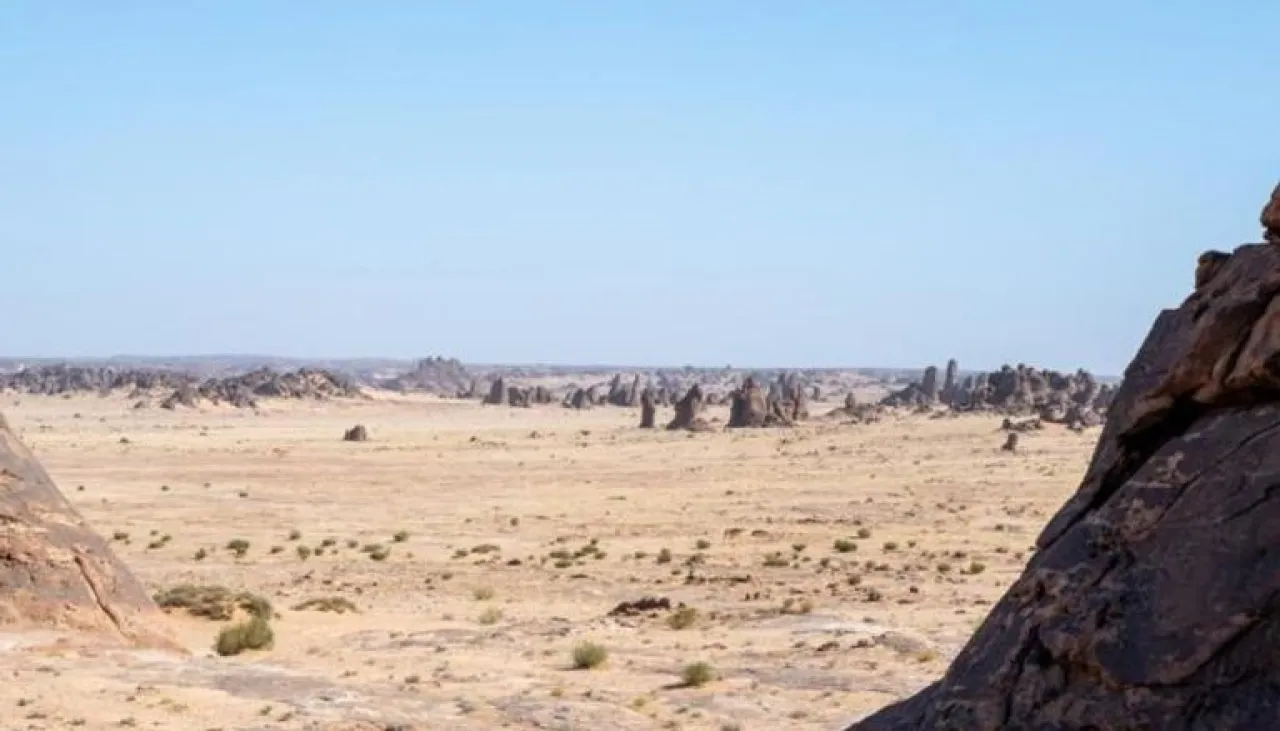
These fossils were found in the Gharameel reserve in Al-Ula, dating back to the Middle Ordovician period, a geological era that roughly spans between 485 and 444 million years ago.
These specimens are among the oldest known horseshoe crab fossils globally, and they are exceptionally large compared to other types from the same period.
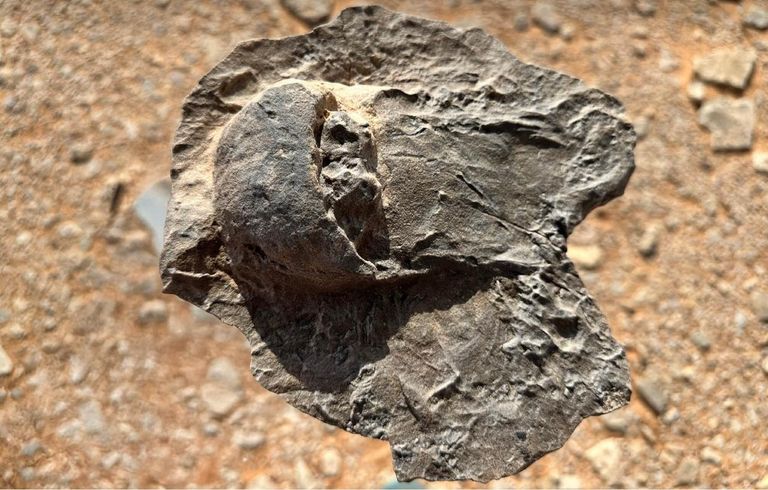
The scientific significance of the discovery is further enhanced by the fact that all the fossils were found in an upside-down position, a preservation pattern not previously recorded in this type of organism.
Traces of biomechanical activity also suggest attempts by these creatures to return to their natural position, allowing researchers to document ancient marine behaviors and connect them to contemporary biological knowledge, supporting advanced studies in the evolution of life.
Geological layer analyses at the site indicate recurrent strong seasonal storms during that era, suggesting that these creatures congregated in shallow coastal environments affected by these storms, contributing to their unique preservation within the sediments. These findings present a clear picture of the ancient nature of Al-Ula as a coastal area, adding a new scientific dimension to understanding its geological and environmental history.
The discovery also represents a new type of horseshoe crab not yet scientifically classified, with research on it being conducted in two phases in collaboration with an international scientific team led by Dr. Russell Bicknell, a scholar at Flinders University in Adelaide, Australia.
The second phase is scheduled for the first half of 2026, which will include collecting additional samples and conducting an extensive study of this type in preparation for its official classification. The samples have been preserved within the collections of the authority's museums to support scientific research and future educational programs.
This discovery reflects the Royal Commission for Al-Ula's commitment to supporting scientific transformation and enhancing the region's status as a global destination for geological discoveries, through enabling international partnerships and developing research and education programs related to natural heritage, in alignment with the goals of Saudi Vision 2030 to establish a presence of knowledge in scientific and cultural fields.