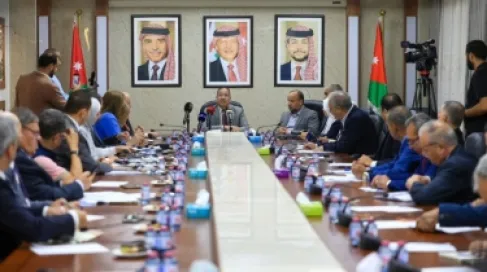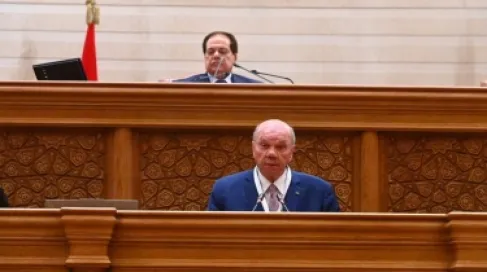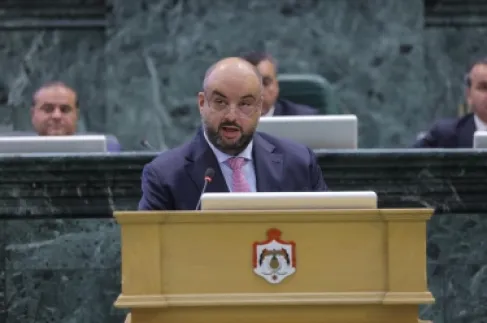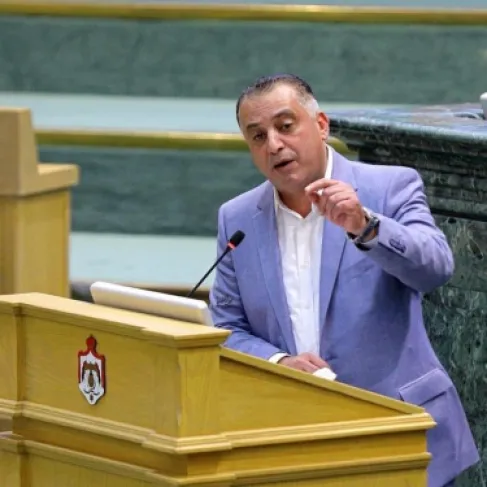
The Public Services Committee in the Senate, chaired by Mustafa Al-Hamarneh, discussed the operational reality of the Meteorological Department, its technical and human capabilities, in addition to the most prominent challenges it faces, and ways to support and enhance its role in serving various national sectors.
Raed Al-Khatab, Director of the Meteorological Department, referred to the expansion in weather monitoring networks and the increase in the number of stations, as part of a joint plan with the Ministry of Transport to develop and update weather stations, pointing to the introduction of meteorological services on the "Khaberni" app, and benefiting from artificial intelligence technologies in forecasting and early warning fields.
This was during a meeting held by the committee on Thursday, attended by Raed Al-Khatab, the Director of the Meteorological Department, and several officials from the department, where the committee listened to a presentation given by the director about the meteorological tasks and its developmental plans, and the importance of updating the technical infrastructure, expanding training programs and capacity building.
Al-Hamarneh spoke about the vital role played by the Meteorological Department in supporting the sectors of transportation, aviation, agriculture, and crisis management, emphasizing that the purpose of the meeting was to enhance the department's performance and elevate it to a higher level, given its significant importance in public life and the pivotal role it plays in various sectors.
He stressed the importance of enhancing the independence of the Meteorological Department, as it is a national department that is an integral part of the state's culture and institutions, due to its direct impact in supporting decision-making, risk management, and serving citizens, emphasizing the importance of enabling it to perform its duties according to the best scientific and professional standards.
Al-Khatab stated that the department is one of the oldest state institutions, the main national source specialized in climate and issuing weather bulletins and launching warnings, as it operates around the clock as a technically certified department in this vital role.
He explained that the Meteorological Department intersects in its work with various sectors, is an active member in the World Meteorological Organization, and the Meteorology Committee of the Arab League, and plays a fundamental role in the early warning systems, in addition to relying on the numerical model, a sophisticated computer program that helps improve the accuracy of weather forecasts.
He pointed out that the training center affiliated with the department currently offers specialized training services to various entities, with the certifications issued by it contributing to building national capacities and improving the efficiency of personnel working in meteorology.
For their part, the committee members emphasized the importance of enhancing coordination and integration between the Meteorological Department and the various relevant entities, contributing to improving readiness and response levels, and serving the public good.