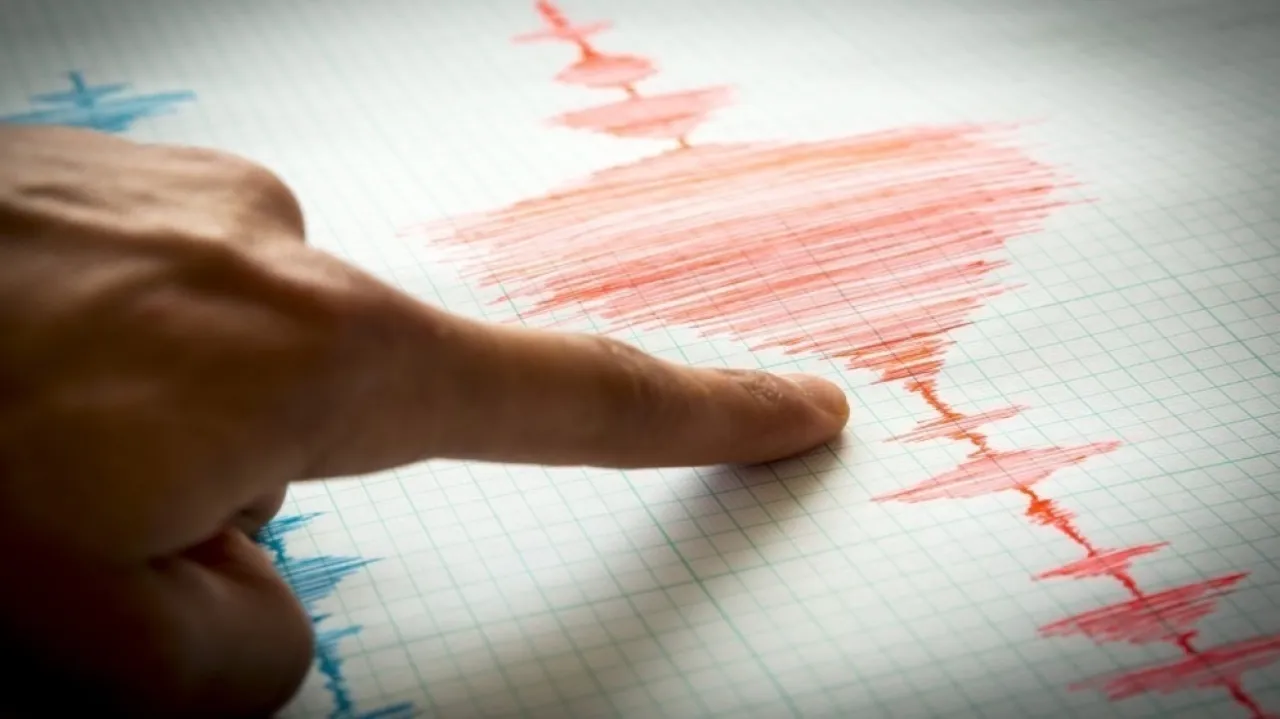
Khaberni - The Jordan Seismological Observatory recorded a total of (1316) seismic events during the year 2025, distributed among (106) local earthquakes, (618) regional earthquakes, and (592) distant earthquakes.
Ghassan Sweidan, the head of the Jordan Seismological Observatory, said that local earthquakes were concentrated in the Dead Sea, Aqaba Gulf, Araba Valley, Jordan Valley, Tiberias, and the adjacent border areas, with magnitudes ranging between (1.0–4.2) on the Richter scale, while regional earthquakes were concentrated in Turkey, Greece, Cyprus, the Mediterranean, and Iran, with magnitudes between (2.1–6.2) Richter.
Sweidan added that the majority of distant earthquakes were concentrated in the Pacific Ocean, the Indian Ocean, Japan, Kamchatka, and Indonesia with magnitudes ranging from (4.2–8.7) Richter.
Sweidan also noted that the number of local earthquakes was distributed as follows: (49) earthquakes in the Jordan Valley, Carmel, Tiberias, and the adjacent border areas with magnitudes between (1.5–3.4) Richter; (22) earthquakes in the Aqaba Gulf and the adjacent southern border areas with magnitudes between (1.6–4.2) Richter; (19) earthquakes in the Dead Sea with magnitudes between (1.0–2.5) Richter; and (13) earthquakes in the Araba Valley with magnitudes between (1.1–2.6) Richter; in addition to (3) earthquakes in the Sirhan Fault and Ruwaished area with magnitudes between (1.7–2.2) Richter.
The Jordan Seismological Observatory includes 23 seismic monitoring stations distributed across different parts of the kingdom, including 20 Jordanian stations whose data is transmitted via (GPRS) service, in addition to two stations affiliated with the German Geophysical Institute (Hamra Al-Sahen station/Salt and Ghor Al-Haditha station), and one station affiliated with the Comprehensive Nuclear-Test-Ban Treaty Organization located in the Asfar area east of Safawi, enhancing the accuracy of monitoring and rapid response to seismic activity.